
Lieferung heute & morgen

Qualitätsgarantie

Willkommens-Angebote freischalten: KOSTENLOSE Lieferung | Bis zu 80 % RABATT | Kostenlose 30-Tage-JoyPlus-Testphase
App herunterladen
An inhaler for children and adults can be used at home as part of inhalation therapy recommended by a doctor. Before buying, however, families should look beyond terms such as “ultra-quiet inhaler” or “fine mist”. The technology, accessories, cleaning requirements and your specific everyday needs are what really matter.
A low decibel rating can make operation more comfortable, but it does not tell you everything. The duration of each treatment, the device’s position on the table and the noise produced by the airflow also play a role. For children or evening use, devices with a stated operating noise level of under 50 to around 60 dB may be suitable. The manufacturer’s figure should explicitly refer to the device in operation.
Particle size affects which areas of the respiratory tract an aerosol can reach. A figure of around 1 to 5 micrometres is often quoted as a relevant technical specification for aerosols. However, this does not amount to a general promise of therapeutic benefit. The appropriate solution, dosage and treatment duration should be selected solely in accordance with medical advice and the instructions for use.
A budget inhaler is of limited practical use if it only comes with a mouthpiece and a suitable child’s mask has to be purchased separately. For families, adult and child masks, a mouthpiece, tubing and replacement filters are important considerations. It is equally important to clean, dry and store the medicine cup and removable parts after every use, following the instructions.
A compressor inhaler generates compressed air, which continuously nebulises the solution added to the device. This design is often suitable for a permanent place at home and provides continuous mains-powered operation. However, it is generally larger and noisier than a portable mesh nebuliser.
A mesh nebuliser uses a vibrating membrane. Devices of this type are often lighter, quieter and more flexible, with operation via USB or batteries. The membrane and medicine container do, however, require particularly careful cleaning. Not every solution is suitable for every nebuliser technology. Check the manufacturer’s information or seek medical advice before use.
The nebulisation rate is often given in millilitres per minute, for example ≥ 0.2 ml/min, or as an adjustable range of 0.35 to 0.55 ml/min. A higher figure does not automatically mean that the device is more suitable for every user. What matters is whether the rate is appropriate for the intended application and how much liquid remains in the medicine cup.
A low residual volume can reduce material consumption. Figures such as 0.6 ml residual volume or a usage rate of around 90 per cent are manufacturer specifications. They should be treated as technical guidance, not as a guarantee of medical efficacy.
For an inhaler intended for home use, reliable mains operation is practical. When travelling, USB-C, batteries, a low weight and a storage bag can be decisive. Simple rotary or one-button operation makes use easier for children under supervision and for older people.
Also pay attention to:
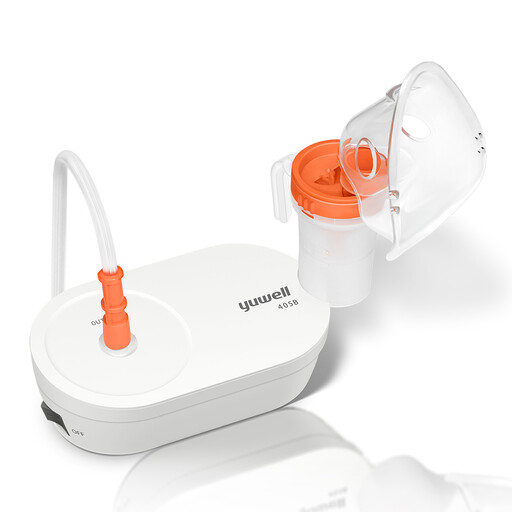
Why this product suits this profile: This compact compressor inhaler is aimed at households looking for straightforward basic equipment for children and adults.
The specifications state an adjustable mist output, a residual volume of 0.6 ml and an operating noise level below 45 dB.
220 g weight, 12 V DC power supply and adjustable mist output according to the product description.
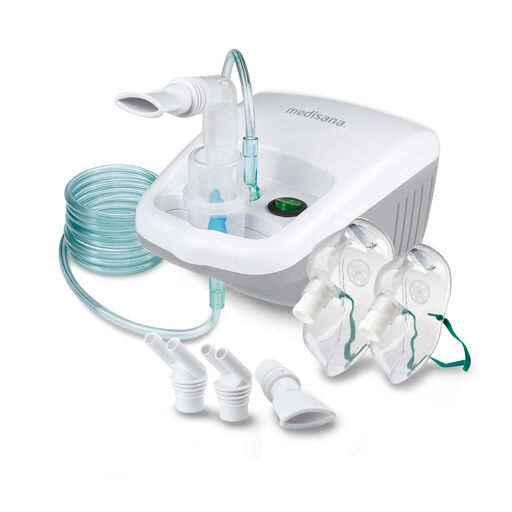
Why this product suits this profile: This mains-powered device comes with several attachments for different types of use and is designed for regular use at home.
The mouthpiece, nosepiece and masks for adults and children are included according to the specifications.
Compressor technology, 10 ml filling capacity, approximately 2 m of tubing, plus replacement filters and a storage bag.
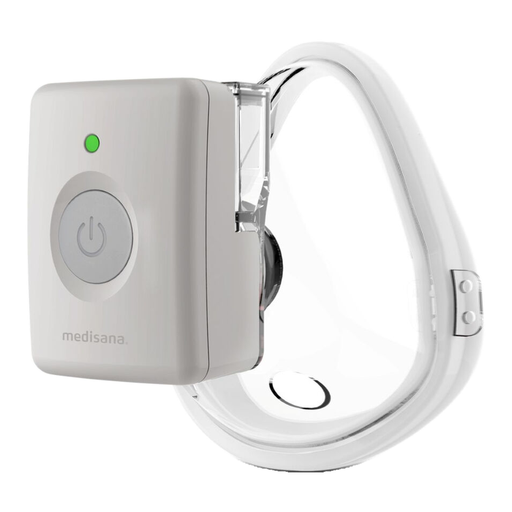
Why this product suits this profile: This portable device with vibrating mesh technology is designed for users who prefer mobile use at home, in the office or while travelling.
The design focuses on portability and includes masks for adults and children, as well as a mouthpiece.
45 g weight, rechargeable power supply, self-cleaning mode and automatic shut-off according to the product data.
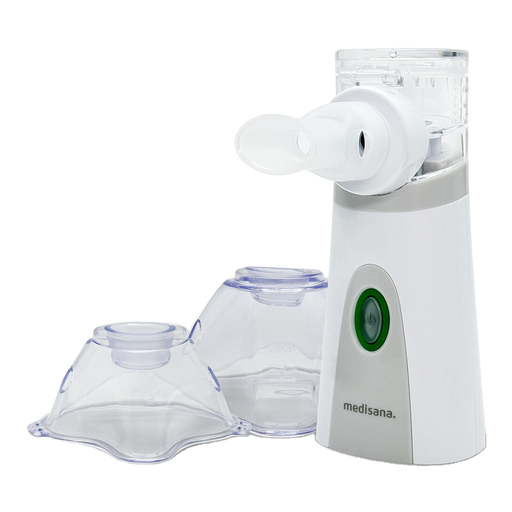
Why this product suits this profile: This compact inhaler combines USB-C operation with AA batteries, making it flexible to use in everyday situations.
Alongside its mobile power options, it includes a child’s and an adult’s mask, as well as a mouthpiece.
Particle size below 5 μm according to the manufacturer, weight of approximately 108 g without batteries and one-button operation.
We have put together a complete, regularly updated list of products that fully meet these strict selection criteria and the safety regulations applicable in the EU.
Before using the device for the first time, assemble all parts according to the instructions. Only fill it with the designated solution recommended by a doctor. The mask or mouthpiece must fit correctly, while the medicine cup should be kept as upright as possible.
After every use, removable parts should be taken apart, cleaned and dried completely. Filters, tubing and masks should be checked according to the manufacturer’s instructions and replaced when necessary. Children should only use a nebuliser under supervision. If you experience discomfort, intolerance or have questions about the treatment, seek medical advice.
For evening use, a model with a manufacturer’s stated noise level of under 50 to 60 dB may be more comfortable. Mesh devices are often quieter than compressor devices. However, the actual noise level depends on the model, the surface it is placed on and its operating condition.
There is no single standard service life. It depends on how often the device is used, cleaning, filter replacement and care of the medicine container. If replacement parts are available and the cleaning instructions are followed, maintenance requirements can be planned more effectively.
With compressor inhalers, the main running costs are electricity and, where applicable, replacement filters. Mesh nebulisers can be powered via USB or batteries; depending on the power source, this adds charging or battery costs. The cost of the inhalation solution itself is not part of operating the device and should be discussed with a doctor’s surgery or pharmacy.