
Lieferung heute & morgen

Qualitätsgarantie

Willkommens-Angebote freischalten: KOSTENLOSE Lieferung | Bis zu 80 % RABATT | Kostenlose 30-Tage-JoyPlus-Testphase
App herunterladen
An inhaler for adults and children shouldn't be chosen based solely on price, design or marketing claims. What really matters is whether the device fits your daily routine, the intended use and the available accessories. Families often need a different solution from individuals looking for a portable nebuliser to take on the go.
Before you buy, it's worth considering three common pitfalls:
A mesh nebuliser creates the aerosol mist using a vibrating membrane. These devices are often compact, battery-powered or rechargeable via USB, making them ideal for travel, the office and the bedroom. A quiet inhaler can be particularly useful for children or for evening use.
Things to check:
The operating noise should be stated in dB(A). A low figure is an objective indicator of quieter operation, but it doesn't replace checking the ease of use and cleaning.
A compressor nebuliser works with compressed air and usually needs to be plugged into a mains socket. It's less flexible than a battery-powered inhaler, but offers continuous nebulisation and is designed for regular use at home.
Look out for:
A medical inhaler should only be used in accordance with the instructions for use. Medications or inhalation solutions should only be placed in the medication cup on medical advice. This also applies to an inhaler for asthma and colds.
Particle size affects how the mist is distributed. Product specifications such as MMAD around 3 to 4 micrometres or a particle fraction up to 5 micrometres are more concrete than the term "ultra-fine". The nebulisation rate shows how much liquid is processed per minute. A higher rate doesn't automatically shorten every session, as the appropriate duration depends on the solution and your doctor's instructions.
An inhaler with a mask should ideally include one mask for adults and one for children. For older children and adults, a mouthpiece can be more practical; for young children, a well-fitting mask is often easier. Check whether the parts are removable, washable and available as replacements.
After each use, the removable parts should be cleaned according to the instructions and dried thoroughly. A removable medication cup or a self-cleaning mode can make this process easier, but doesn't replace manual care.
For the power supply:
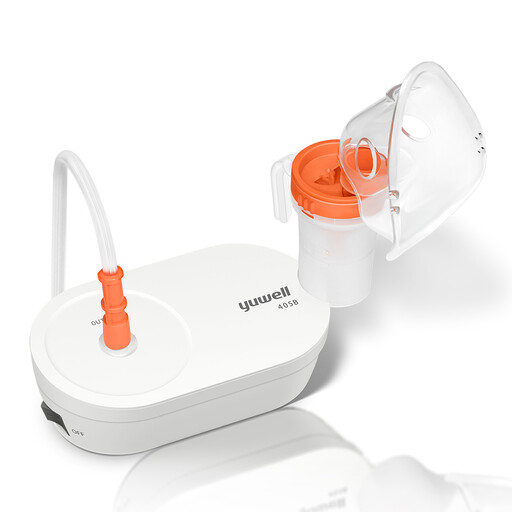
Why this product fits the profile: The mains-powered compressor is designed for regular use at home and features stepless airflow adjustment via a rotary knob. This can make operation simpler for families and older users.
The product specifications state a noise level below 45 dB, a nebulisation rate from 0.2 ml/min and a rotary control instead of only pre-set programmes.
Adult and child masks, 12-volt operation, compact housing and, according to the product description, a particle size of around 3.9 micrometres.
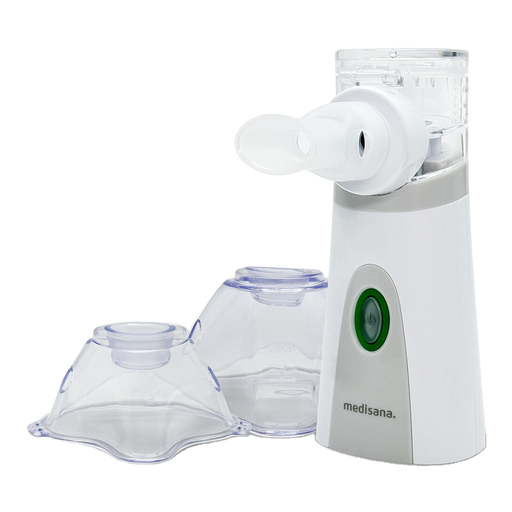
Why this product fits the profile: The mesh nebuliser combines a weight of around 108 g with USB-C or battery operation. This makes it suitable for users who want the same solution at home and on the go.
The specifications state a maximum fill volume of 10 ml, a nebulisation rate from 0.2 ml/min and a defined particle size below 5 micrometres.
Adult and child masks, mouthpiece, storage pouch and two power options. The product is stated to be suitable for children and adults.
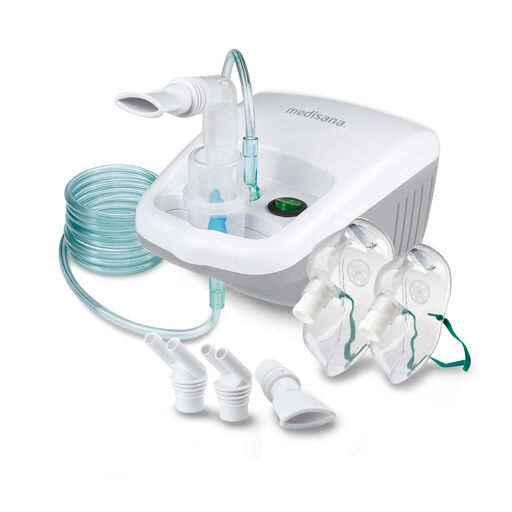
Why this product fits the profile: The compressor nebuliser offers several application attachments and a tube around 2 m long. This is handy when adults and children need different masks or a mouthpiece.
Instead of including just one universal mask, the set is stated to include a mouthpiece, nasal adapter and masks for adults and children.
10 ml fill volume, 230-volt operation, replaceable filters and, according to the specifications, more than 60% of particles up to 5 micrometres.
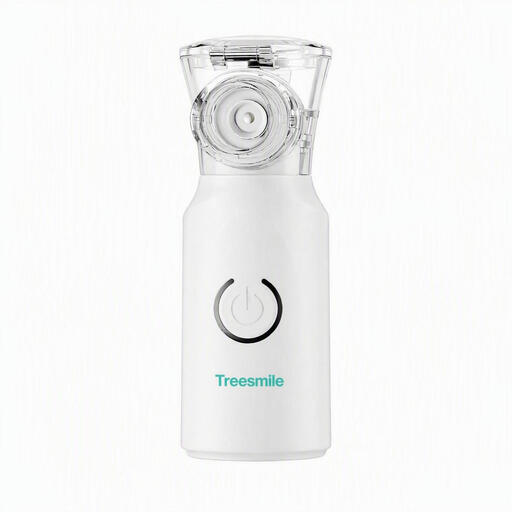
Why this product fits the profile: The handheld device is ideal for families looking for a compact, battery-powered and quiet inhaler. Two mist levels allow you to adapt to different usage situations.
The stated noise level of no more than 25 dB(A), the automatic shut-off after 15 minutes and the low liquid detection address typical comfort and usability issues.
8 ml medication cup, two nebulisation levels, removable mesh insert and automatic cleaning programme.
We've put together a full, regularly updated list of products that fully meet these strict selection criteria and the safety regulations in force in the EU.
The removable parts should be cleaned according to the instructions for use after each session and dried thoroughly. Disinfection should only be carried out as specified by the manufacturer. Filters, the mesh insert and the medication cup should be checked regularly for residue or damage.
The lifespan depends on how often it's used, how it's cleaned and stored, and the wear and tear on filters or mesh components. A general time frame is therefore not reliable. What matters is the availability of spare parts, clear instructions and the maintenance intervals stated by the manufacturer.
With a compressor nebuliser, the main costs are for electricity, filters and, if necessary, replacement tubes or masks. Battery and USB devices need electricity to charge; battery-powered models also incur the ongoing cost of batteries. Before you buy, check whether consumable parts are available individually.