
Lieferung heute & morgen

Qualitätsgarantie

Willkommens-Angebote freischalten: KOSTENLOSE Lieferung | Bis zu 80 % RABATT | Kostenlose 30-Tage-JoyPlus-Testphase
App herunterladen
As a responsible cat owner, you're looking for ways to keep your cat not only happy but also healthy, with a diet that's sustainable. Insect protein cat treats are increasingly coming into focus. However, the market is flooded with products whose promises often outweigh their actual benefits. Before you make a decision, it's crucial to understand the most common pitfalls so you don't fall for empty marketing claims.
Many products are advertised as healthy or eco-friendly, but a closer look at the details often reveals the opposite. Here are three typical issues that can lead to a poor choice:
To ensure you select a high-quality and suitable snack for your cat, you should check three core parameters. These will help you objectively assess quality and see through advertising promises.
The heart of any good snack is its protein source. Cat food with insect protein typically uses the larvae of the Black Soldier Fly (Hermetia illucens). This protein is not only a novel option but also nutritionally valuable. It provides all the essential amino acids a cat needs and is generally easy to digest. Make sure that insects are listed as high as possible on the ingredient list and that the protein content is clearly declared.
A species-appropriate cat diet is based on their natural prey. Grain-free cat sticks are therefore a sensible choice, as cats can only process carbohydrates to a limited extent. A grain-free formula is easier on the digestive tract and is particularly beneficial for cats with dietary sensitivities. The absence of added sugar is equally important. A quick look at the "Composition" and "Analytical Constituents" sections on the packaging will provide clarity.
Many cats suffer from food intolerances, which can manifest as itching, gastrointestinal issues, or a dull coat. Since insects are a novel protein source to which most cats' immune systems have not yet been exposed, insect-based hypoallergenic cat treats are considered particularly well-tolerated. They are an excellent alternative to conventional snacks containing chicken, beef, or fish and are often suitable for use in an elimination diet.
Based on the objective criteria mentioned above, we have identified products that are well-suited for specific needs and preferences.
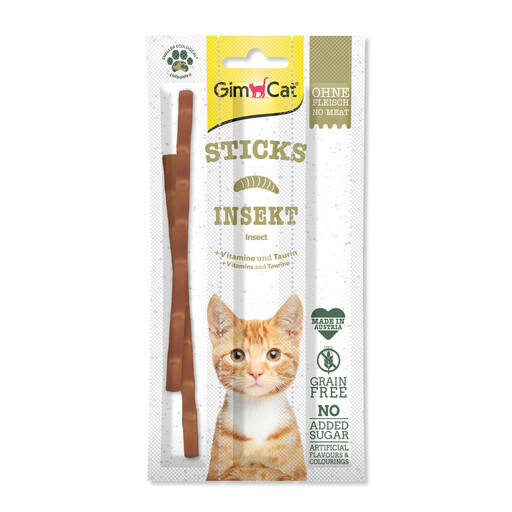
Why it's a good fit: This product is aimed directly at owners seeking a combination of species-appropriate nutrition and sustainability. The formula is based on insect protein and deliberately avoids meat, making it one of the most dedicated sustainable cat snacks available.
The formula is explicitly grain- and sugar-free, thereby avoiding the trap of hidden fillers and sweeteners. According to the manufacturer, the carbon footprint is up to 24 times lower than that of a comparable stick with poultry, replacing vague sustainability promises with a concrete metric.
The high insect content (85%) ensures a solid protein level of 22%. It is also fortified with taurine, an essential amino acid for cats that supports heart function and vision.
We've compiled an up-to-date list of products that fully meet these strict selection criteria and quality standards.
Are insect-based cat treats suitable for all cats? Generally, yes. Insect-based products are suitable for cats of all ages. They are an especially good option for pets with known intolerances to common meats like chicken or beef. As with any dietary change, a gradual introduction is recommended to avoid upsetting the digestive system.
How sustainable is insect protein, really? Farming insects requires significantly less land, water, and feed compared to traditional livestock farming. It also emits considerably fewer greenhouse gases. Concrete figures, such as the carbon footprint reduction cited by the manufacturer GimCat, help to objectively quantify the environmental benefits, making it a transparent choice for eco-conscious consumers.
How can I identify high-quality, grain-free cat sticks? A key indicator is the ingredient list. The declared protein source (e.g., "insects") should be listed first. Check the list for the absence of terms like grain, wheat, corn, as well as sugar or glucose syrup. A high declared crude protein content in the analytical constituents is also a positive sign of the product's quality.