
Lieferung heute & morgen

Qualitätsgarantie

Willkommens-Angebote freischalten: KOSTENLOSE Lieferung | Bis zu 80 % RABATT | Kostenlose 30-Tage-JoyPlus-Testphase
App herunterladen
Instant noodles are a convenient choice for students, working professionals, households and fans of Asian cuisine. You can have a hot meal on the table in just a few minutes. There’s plenty of choice, from Korean ramen and Chinese instant noodles to Vietnamese instant noodles, Cup Noodles and fried varieties such as Mi Goreng.
However, a low price per pack can be misleading. A large pack isn’t automatically the right choice, and claims such as ‘extra hot’ or ‘authentic flavour’ don’t tell you much about the ingredients, portion size or preparation method. Use the following criteria to narrow down your options.
A large pack of instant noodles can look appealing when you compare the price per pack. What matters, though, is the net weight per portion. A carton of 20 packs at 120 g each gives you a different amount of stock from a multipack of five 55 g packs. A large carton may be too much for one person, but could be a good choice for a household or office.
So, compare:
Labels such as ‘spicy’, ‘hot’ or ‘extra hot’ aren’t part of a standard heat scale. Korean ramen such as Buldak Ramen and Shin Ramyun can vary considerably in heat, seasoning and preparation. With some products, you mix in all the sauce; with others, you can leave out some of the seasoning powder or chilli oil.
If you’re not used to spicy ramen, start with a milder variety or a pack with just a few portions. Dairy products, egg or vegetables can change the flavour, but they won’t necessarily reduce the salt content.
Many Asian instant noodles contain wheat and gluten. They may also contain soya, fish, crustaceans, milk, celery, mustard or sesame. If a product is described as beef, chicken or seafood flavour, don’t rely on the flavour label alone to assess its ingredients.
Before buying, check:
Always refer to the information on the product packaging, as recipes and labels can change.
The country of origin can give you a starting point, but it’s no substitute for checking the ingredients. Korean ramen often features rich broths, chilli and vegetable flakes. Chinese instant noodles often have beef, braised-meat or soya sauce flavours. Vietnamese instant noodles may contain fish sauce, prawns, lemongrass or tangy seasonings.
These categories can help you find what you’re looking for:
Not all noodle soups are prepared in the same way. Some need to be cooked in a saucepan, while others just need boiling water. The amount of water also varies, usually between around 400 and 500 ml.
So, check:
Mi Goreng, for example, is cooked, drained and then mixed with the seasoning sachets. With a classic noodle soup, the broth stays in the bowl.
The products featured here show just how much the nutritional values can vary. According to the product information, Nongshim Kimchi Instant Noodle Soup contains 415 kcal and 4.7 g of salt per 100 g. Shin Ramyun is listed as containing 445 kcal and 5.6 g of salt per 100 g. A serving of Buldak Carbonara is listed as containing 508 kcal and 4.9 g of salt per 100 g.
These figures aren’t a rating of the products, but they can help you compare them. If you eat instant noodles regularly, you could add fresh vegetables, egg or tofu to your meal. This will change the total energy and nutritional values of the finished meal.
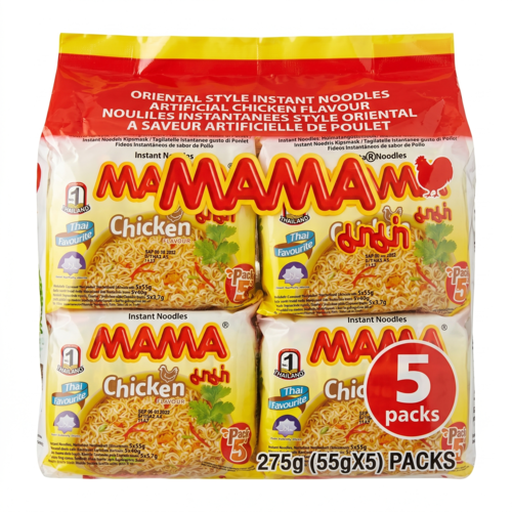
Why it suits this shopper: The five-pack, with 55 g per portion, is a manageable introduction to Asian instant noodles, without having to buy a large pack straight away.
The smaller pack size reduces the risk of ordering too much of a flavour you might not enjoy.
Five individual portions, chicken flavour and a preparation time of just a few minutes.
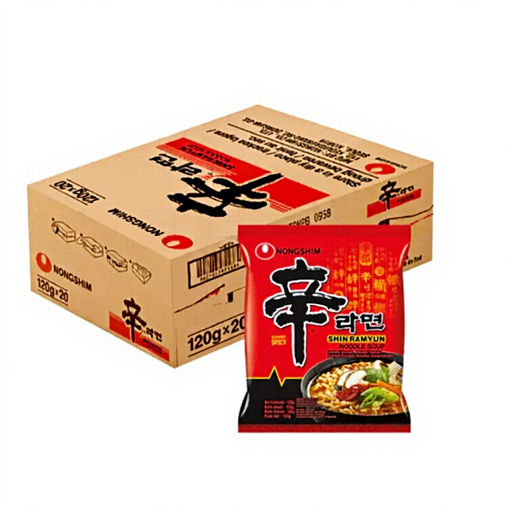
Why it suits this shopper: This pack contains 20 portions of 120 g each, making it a good choice for anyone who wants to prepare Korean ramen regularly and consistently.
The product information clearly states the portion size, allergens and preparation method, making it easier to plan for a large pack.
Made in Korea, with 120 g portions and a broth featuring chilli and vegetables.
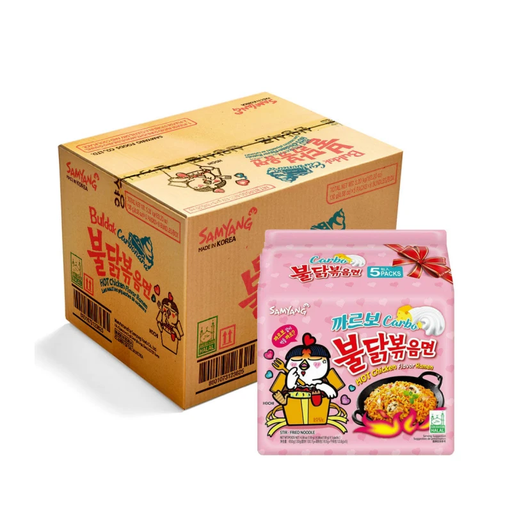
Why it suits this shopper: The 40 individual portions are suited to regular use, shared houses, offices or cooking evenings with fellow spicy ramen fans.
The stated heat level and exact number of portions make it easier to see whether the product suits your needs before you buy.
40 portions, Carbonara seasoning and separate seasoning components; according to the product information, the recipe contains wheat, soya, milk and celery, among other ingredients.
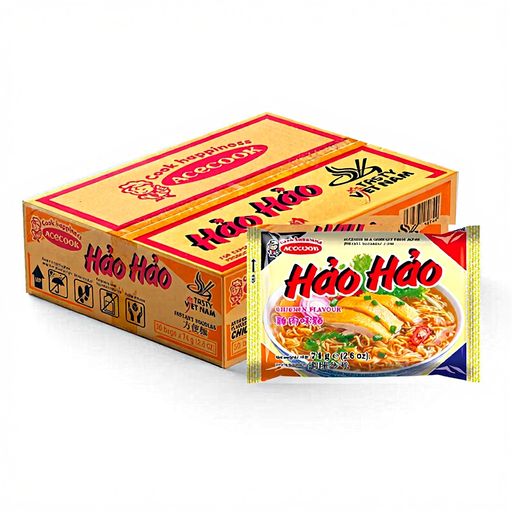
Why it suits this shopper: This carton of 30 individual packs is designed for stocking up and making a quick noodle soup whenever you need one.
The pack states the weight of each portion and the total number of packs, so you can make a realistic estimate of how much you need and how much storage space you have.
30 portions, chicken flavour and a preparation method using around 400 ml of boiling water and a three-minute standing time.
We’ve put together a complete, regularly updated list of products that meet these strict selection criteria and the safety regulations in force in the EU.
Follow the instructions on the packaging. Depending on the product, the noodles may need to be boiled for three to five minutes or covered with boiling water. For Cup Noodles, fill to the marked line. Add seasoning powder and sauces before the water, afterwards or once you’ve drained the noodles, depending on the instructions.
The best-before date is printed on the packaging. Store unopened products in a cool, dry place away from direct sunlight. Once opened, use the seasoning sachets and noodles promptly. Prepared instant noodles are intended to be eaten straight away.
Yes, as long as the pack size, storage conditions and how quickly you’ll use them all match your needs. A large pack of instant noodles is suitable for households and frequent users. Smaller multipacks are easier to manage if you only eat them occasionally. Before buying, check the allergens, salt content, country of origin, total weight and best-before date.