For individual meals in a care home, sachets are a good choice when you need to serve a set amount without weighing it out, provided the recipe fits the person’s individual diet plan. Plain instant or finely milled oats in larger packs offer more flexibility over quantities and preparation, but require a consistent portioning process. If someone has difficulty chewing or swallowing, the key consideration is the texture specified by their care team, not the type of packaging.
Who needs to make this choice?
Care staff serving individual meals
When you’re preparing porridge for just one person, it helps to have a clearly defined amount and as few steps as possible. A sachet can save you weighing out dry oats; with a larger pack, you’ll need to decide on the quantity before serving.
Kitchen teams preparing tailored recipes
If you need to adjust the amount of dry oats, liquid and other ingredients for each person, plain oats can be portioned as needed. Your team will need a reliable process for measuring and preparing them.
Teams working to specified food textures
If someone has difficulty chewing or swallowing, the prepared meal must match their individual requirements. The German Nutrition Society notes that the appropriate texture for people with swallowing difficulties depends on the severity of the condition; the word ‘instant’ alone doesn’t tell you whether it’s suitable.
What should you look for when buying?
First, decide whether you need a ready-measured individual portion or a flexible oat base that you can portion yourself. Then check that the recipe and prepared texture meet the requirements for the person who will be eating it.
Portioned porridge
A good fit if: You want to serve a single, pre-measured portion.
Consider: A portioned porridge may contain a set mix rather than plain oats, so its ingredients and nutritional information need to fit the person’s diet plan. For example, Kölln sells a high-protein porridge in individual sachets.
Portioning oats yourself
A good fit if: You want to decide on the quantity and preparation for each person individually.
Consider: The care home remains responsible for measuring portions and preparing them hygienically. Kölln and Alnatura describe their respective finely milled products as 250 g packs, not individual portions.
| Criteria |
What to check before buying |
Who it matters most to |
| Portion size and process |
Is it an individual sachet or a larger pack? How much dry product is in each unit, and how should it be prepared? |
If I’m serving just one meal, I want to provide the right amount without extra measuring steps. This kind of portion control is a priority for around 42% of consumers. |
| Prepared texture |
Check the person’s individual diet or swallowing plan and the texture after preparation. For severe swallowing difficulties, also look out for pieces and fibres. |
When a particular food texture is required, I need to be able to assess whether the prepared meal meets it. Around 33% of consumers consider this a key buying criterion. |
| Recipe and labelling |
Check the ingredients, allergen information and nutritional values on the specific pack. For mixes, also check the added ingredients and nutritional information per portion. |
If I’m putting together an individual meal, I need to be able to compare its ingredients with the person’s diet plan. This flexibility is a priority for around 25% of consumers. |
Which mistakes can you avoid?
-
Assuming ‘instant’ means it’s suitable for someone with swallowing difficulties
Even finely milled dry oats may have an unsuitable texture once prepared. According to the German Nutrition Society, the relevant puréed diet for people with severe swallowing difficulties must not contain any pieces or food fibres.
Check the person’s specified texture requirements before buying, then compare the prepared food with those requirements.
-
Treating portioned porridge as the same thing as plain instant oats
Pre-portioned porridge may be a set mix. A plain oat base gives you more flexibility when preparing it, but you’ll need to measure it out yourself.
Before switching product types, compare the ingredients list, allergen information and nutritional values per portion.
-
Assuming ‘oats’ means gluten-free
The type of grain alone doesn’t confirm that a product is labelled gluten-free. For example, one oat product described by EDEKA carries a warning that it may contain traces of other gluten-containing cereals. This information doesn’t automatically apply to other products.
Check the labelling on the pack you’ll actually be using against the person’s individual dietary requirements.
-
Using a larger pack as if it were a ready-measured portion
A 250 g pack of finely milled oats doesn’t specify the amount needed for an individual meal. Without an agreed process, quantities and preparation may vary from one serving to the next.
Set out the quantities of dry oats and liquid, the measuring tools to use, and the hygienic process for portioning in-house.
Portioning the oats yourself takes extra time for measuring and record-keeping.
Brands and retailers to consider
Kölln
According to its own product information, Kölln sells plain instant oats in a 250 g pack, as well as a high-protein porridge in individual sachets. These are different recipes, intended for portioning yourself or serving a set individual amount.
- Kölln says its instant oats are made from 100% wholegrain oats and dissolve quickly in cold or warm liquid.
- For the portioned porridge, check the ingredients, nutritional values per sachet and how it fits the person’s individual diet requirements.
Alnatura
Alnatura describes its finely milled oats, sold in a 250 g pack, as an instantly dissolving base for porridge made with warm or cold liquid.
- The product description lists organic wholegrain oats as an ingredient.
- The 250 g pack described isn’t an individual portion. The quantity and final texture need to be set for each meal.
REWE
REWE lists Kölln instant oats in a 250 g pack. This can help you find that particular product; it doesn’t mean REWE sells its own-brand oats in individual sachets.
- The product listing clearly identifies the brand and pack size.
- Before placing an order, check the specific pack and its labelling.
EDEKA
An EDEKA product page for oats shows which ingredient and allergen details on a particular product may be relevant when checking it against a diet plan.
- The product described there may contain traces of other gluten-containing cereals, lupin, mustard and soya.
- These product-specific details can’t be applied to other EDEKA oats or to instant products.
Joybuy products for individual portions and flexible serving sizes
The oat products below include packs you can portion yourself and porridge in smaller units. Compare the labelling on the specific pack with the person’s diet plan, and always check the prepared meal if a particular texture is required.
 No image available
Kölln instant oats 250 g
For measuring out an individual portion from a plain oat base. The 250 g pack needs to be portioned in-house; the quantities of dry oats and liquid, as well as the final texture, should follow the person’s individual plan.
Kölln says its instant oats are made from 100% wholegrain oats and dissolve in cold or warm liquid.
View at Joybuy
 No image available
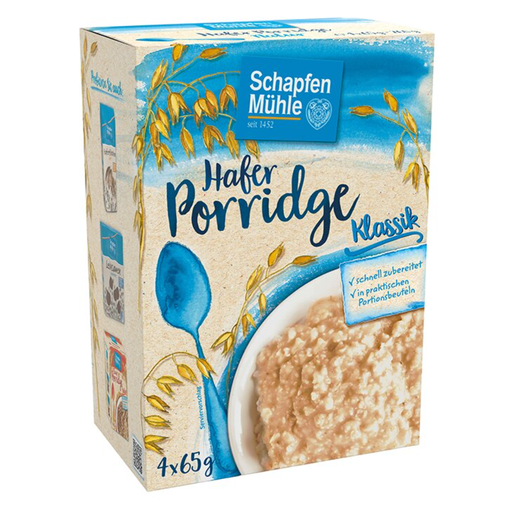
Schapfenmühle Natural Porridge Oats 4 × 65 g
The product name specifies four 65 g portions. If you need a set amount for each serving, check the preparation instructions, ingredients, allergen information and nutritional values on the pack before using it.
Even a pre-measured portion needs to be prepared so that its final texture meets the person’s individual requirements.
View at Joybuy
 No image available
Steamed instant oats 700 g
The 700 g pack is suitable for portioning in-house, not as a ready-measured individual portion. Set the quantity for each meal in line with the person’s diet plan, and check the preparation and allergen information on the pack you receive.
View at Joybuy
 No image available
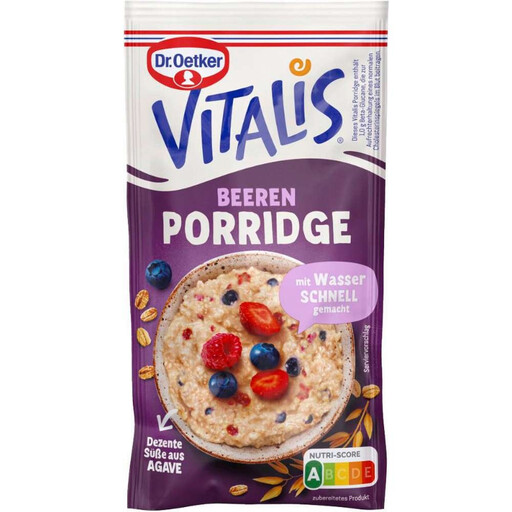
Dr. Oetker Vitalis Berries Porridge Oats 53 g
The product name specifies 53 g and a berry variety. For an individual meal, check that the recipe and preparation instructions fit the person’s diet plan.
If someone has difficulty chewing or swallowing, the texture of the prepared food is especially important.
View at Joybuy
 No image available
Alnatura organic finely rolled oats, 400 g
The finely rolled oats in the 400 g pack can be measured out for meals prepared to your own specifications. Check the preparation instructions to make sure they suit your serving process: ‘finely rolled’ doesn’t mean the oats will dissolve instantly.
The ingredients and allergen information on the specific pack, as well as the final texture, must meet the person’s individual requirements.
View at Joybuy
Frequently asked questions
Is a sachet automatically suitable for someone with swallowing difficulties?
No. What matters is the texture specified for the prepared food, not its packaging. The German Nutrition Society says the appropriate texture depends on the severity of the swallowing difficulty. For severe difficulties, it also notes that the relevant puréed diet must not contain any pieces or food fibres.
How do you turn a larger pack into an individual portion?
Set the quantities of dry oats and liquid for each meal according to the person’s individual diet plan, and follow a consistent portioning process. A 250 g pack, such as those Kölln and Alnatura describe for their respective finely milled products, is not itself an individual portion.
Are oats automatically gluten-free?
No. You can’t tell from the words ‘oats’ or ‘oat flakes’ alone. Check the labelling on the specific pack against the person’s individual dietary requirements. For example, one oat product described by EDEKA may contain traces of other gluten-containing cereals.


