People comparing fibre content
You want to compare nutritional information per 100 g and are considering oat bran as a separate type of product if its figures suit your needs.


If you want to stir your oat base into liquid without lengthy preparation, Kölln Instant Oat Flakes are one option: the manufacturer states that they contain 12 g of fibre per 100 g. If fibre content per 100 g is your priority, Kölln Oat Bran Flakes are worth considering; REWE lists them as containing 19 g per 100 g. However, oat bran is a different type of product, and the portion you use and the other ingredients also matter when making lunch.
You want to compare nutritional information per 100 g and are considering oat bran as a separate type of product if its figures suit your needs.
You’re looking for an oat base that can be quickly stirred into cold or warm liquid to make a drink or porridge.
You look for organic claims or a short ingredients list, and check the fibre content and allergen information separately on the specific pack.
A good choice if: you want to stir wholegrain oats straight into cold or warm liquid; Kölln describes its Instant Oat Flakes as dissolving instantly.
Worth bearing in mind: the fibre content per 100 g is not the same as the amount in the portion you actually use.
A good choice if: fibre content per 100 g is your priority; REWE lists Kölln Oat Bran Flakes as containing 19 g per 100 g.
Worth bearing in mind: oat bran is not the same type of product or texture as classic instant wholegrain flakes.
| Criteria | What to check when buying | Who it matters to |
|---|---|---|
| Fibre | Compare the fibre content per 100 g and the type of product – oat bran or instant wholegrain flakes. | If fibre content matters more to me than the classic flake texture, I compare oat bran and instant flakes separately. Around 42% of consumers put this figure first when choosing. |
| Preparation | Read the information on how easily the product dissolves and whether it can be used with cold or warm liquid. | For a lunch that doesn’t need lengthy preparation, I need flakes that can be stirred straight in. Around 33% of consumers prioritise this. |
| Ingredients and labelling | Check the organic claims, ingredients list and allergen information on the current pack. | If organic origin or the ingredients and allergen labelling determines my choice, I check these details before comparing fibre content. They are the main buying criterion for around 25% of consumers. |
The name describes how the product is prepared, not its fibre content. Kölln states that its Instant Oat Flakes contain 12 g per 100 g; the Kölln Oat Bran Flakes listed by REWE contain 19 g per 100 g and are a different type of product.
Compare the nutritional information per 100 g first, then decide which texture you’d prefer.
REWE states that a 20 g portion of Kölln Instant Oat Flakes contains 2.3 g of fibre. The amount in your lunch depends on how much you use and what other ingredients you add.
Use the nutritional information to work out the amount in your actual portion, rather than treating the pack’s figure per 100 g as the amount in one serving.
Organic claims and the type of flake describe different qualities from the amount of fibre. Extra-fine flakes are not necessarily instant oats that dissolve straight away.
Check the fibre content in the nutrition table and read the preparation instructions for the specific product.
The German Celiac Society distinguishes between standard commercial oats and products specifically suitable for people avoiding gluten. EDEKA also notes that some oat flakes may contain traces of other gluten-containing cereals.
If you need a gluten-free label, always check the current labelling on the specific pack.
Kölln offers both instant wholegrain oat flakes and oat bran flakes. The figures refer to these two different products.
Alnatura describes its melt-in-the-mouth organic oat flakes as instant flakes made from milled wholegrain oats. Its Fine Oat Flakes are a different product.
REWE Bio Oat Bran is an option for people who want to use oat bran instead of instant wholegrain flakes.
EDEKA sells extra-fine oat flakes, among other products; the name alone doesn’t tell you the fibre content or whether they’re suitable for instant preparation.
Crownfield Hearty Oat Flakes and Crownfield Organic Oat Flakes are different types of product from instant flakes that dissolve straight away.
Brüggen describes itself as a manufacturer of mill products and own-label cereals, rather than offering a specific instant oat flakes variety in this comparison.
This selection includes instant oat flakes, fine rolled oats and oat bran. If you want to stir your oats into liquid without waiting, distinguish products labelled instant from those simply described as “fine”; oat bran is a separate type of product.
 No image available
For an oat base that you can stir straight into liquid. Kölln describes its Instant Oat Flakes as dissolving instantly and states that this wholegrain product contains 12 g of fibre per 100 g. REWE lists 2.3 g of fibre per 20 g serving.
 No image available
For a fine-flaked oat base rather than flakes specifically labelled as instant. Alnatura describes its Fine Oat Flakes as a product made with German Bioland-certified oats. If the preparation instructions and fibre content matter to your choice, check the details on the specific pack.
 No image available
For people who want to use fine oat flakes as a base for porridge. The product name doesn’t identify this variety as instant oats. If a particular amount or the ability to stir them in straight away matters to you, check the fibre content and preparation time on the pack.
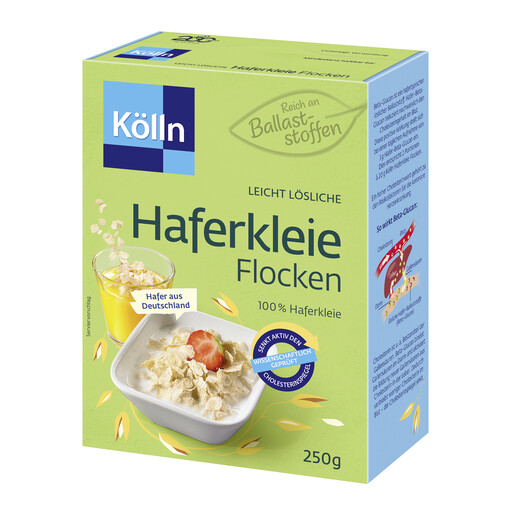 No image available
For choosing by fibre content per 100 g, if oat bran is the type of product you want. REWE states that Kölln Oat Bran Flakes contain 19 g of fibre per 100 g and describes them as easy to dissolve. They are not the same as instant wholegrain oat flakes.
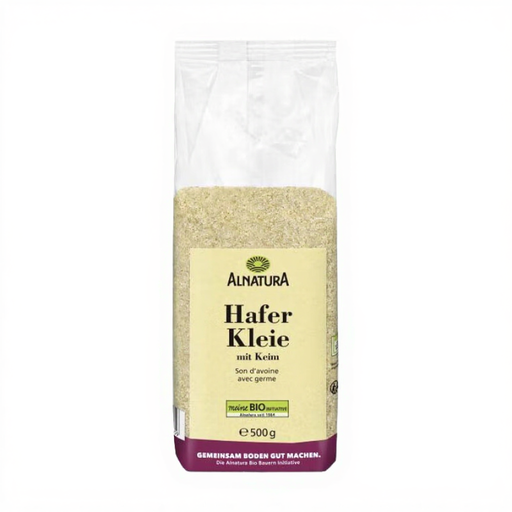 No image available
For people considering oat bran as an ingredient for lunch rather than looking for classic instant flakes. If fibre content, ingredients or quick preparation are important to you, check the relevant information on the current pack.
For this nutrition claim, EUR-Lex specifies at least 6 g of fibre per 100 g or at least 3 g per 100 kcal for solid foods. To check whether a specific pack can carry the claim, refer to its current labelling and nutritional information.
Kölln’s stated figure of 12 g of fibre applies to 100 g of Instant Oat Flakes, not a typical serving. REWE lists 2.3 g of fibre for 20 g of this product; what matters for your lunch is the amount you actually use.
Oat bran is an option if you want to use this type of product and are particularly interested in fibre content per 100 g. REWE states that Kölln Oat Bran Flakes contain 19 g per 100 g, while Kölln lists 12 g per 100 g for its instant wholegrain oats; the texture and type of product are different.
No. Oats as an ingredient alone don’t establish that a product is suitable for a gluten-free diet. The German Celiac Society highlights the issue with standard commercial oats, and EDEKA notes that some oat flakes may contain traces of other gluten-containing cereals. Always check the labelling on the specific pack.
The fibre content of the oats alone doesn’t tell you everything about the finished lunch. Decide on your portion first and consider any other ingredients separately, as they will affect the nutritional values and may also change the allergen labelling for the meal.