
Lieferung heute & morgen

Qualitätsgarantie

Willkommens-Angebote freischalten: KOSTENLOSE Lieferung | Bis zu 80 % RABATT | Kostenlose 30-Tage-JoyPlus-Testphase
App herunterladen
Whether you’re at work, in student accommodation, travelling or stocking up your household, instant soups and instant noodles can be prepared with minimal effort. However, there are clear differences between cup noodles, ramen, broth and ready-made soup when it comes to portion size, ingredients, allergens and preparation.
If you focus only on flavour, packaging design or a low price per item, you may overlook important details. The following criteria will help you choose a suitable instant noodle soup or quick meal for your everyday needs.
A box containing several cups may look inexpensive at first glance. However, the key factors are the price per portion and the actual net weight. A 70g cup is better suited to a small snack, while products weighing 107g, 122g or 180g offer a different portion size. For families or regular users, it is worth comparing the total weight, number of units and shelf life.
A creamy instant soup may get its consistency from starch, oil, milk ingredients or nut purée. On its own, this says nothing about its energy, fat or salt content. For products containing several seasoning sachets, it is also worth checking the full ingredients list. Information such as salt per 100g does not always refer to the prepared portion.
Asian instant noodles often contain wheat, soya or sesame. Depending on the recipe, they may also contain milk, egg, celery, barley, peanuts or mustard. If you are looking for vegetarian instant soup, halal instant noodles or an egg-free option, check the product description and packaging information. The statement “May contain traces of …” is also relevant for allergy sufferers.
Cups or portion sachets are convenient for a quick meal at work. Check the following:
With some cup noodles, the seasonings are added before pouring in the water, while with others they are added after the steeping time. Li Hailong Spicy Hot Pot Instant Noodles, for example, are drained after around six minutes, leaving a little water in the cup for the sauce.
The terms ramen, Chinese instant noodles or “Chicken Flavor” do not necessarily indicate the product’s origin or its actual meat content. Read the ingredients list and look for specific information. The Baixiang Soup Series lists wheat and soya as allergens; it also carries a possible traces warning for, among others, celery, mustard, sesame, milk and egg.
Konjac noodles are significantly different from traditional wheat noodles. According to the product information, the Hethstia Instant Konjac Noodle Veggie Chicken Flavor Soup Cup contains konjac noodles, vegetables and a seasoning mix. The description also mentions vegan and halal certification. For a definitive assessment of suitability, check the current information on the product packaging.
Instant noodles and broth can contain comparatively high levels of salt because seasoning powders, sauce sachets and oil sachets are concentrated. The Baixiang product lists 1,900mg of sodium per 100g. According to the product data, this corresponds to 95% of the reference value for sodium stated there. Other products list salt directly, such as 5.2g per 100g for Lamianfan Tonkotsu Ramen.
For an objective comparison, it is advisable to check:
Broth or bouillon is not the same as a complete noodle soup. Maggi Clear Beef Bouillon Granules or Maggi Clear Chicken Bouillon are primarily suitable for making broth or seasoning sauces, rice, stews and vegetables.
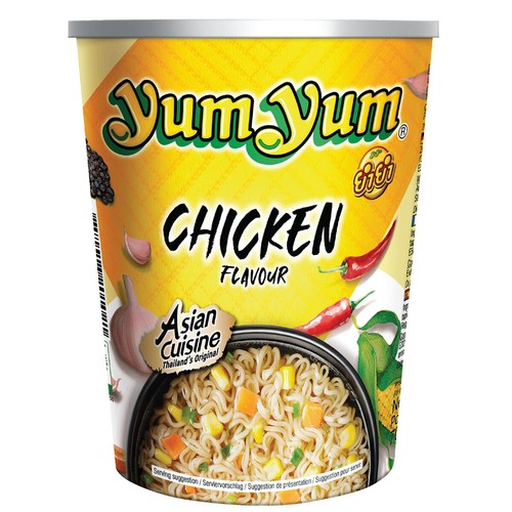
Why this product suits the profile: The 70g portion is compact and can be prepared with boiling water in just a few minutes. Suitable for occasional snacks, the office or keeping a small supply.
The stated net weight makes the portion size clear. Ingredients and allergens, including wheat, are listed in the product description.
Compact cup, simple preparation and clearly stated nutritional values per 100g.
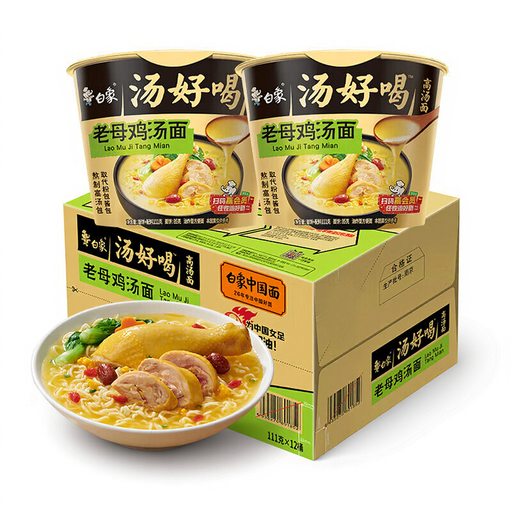
Why this product suits the profile: The box of twelve cups is ideal for planned stocking up. The product data specifies non-fried noodles, chicken soup seasoning and 107g per cup.
The pack size and weight per cup are clearly stated. The comparatively high sodium level is visible in the nutritional data and should be taken into account when comparing portions.
Non-fried noodles according to the product description, cup format and a supply of twelve units.
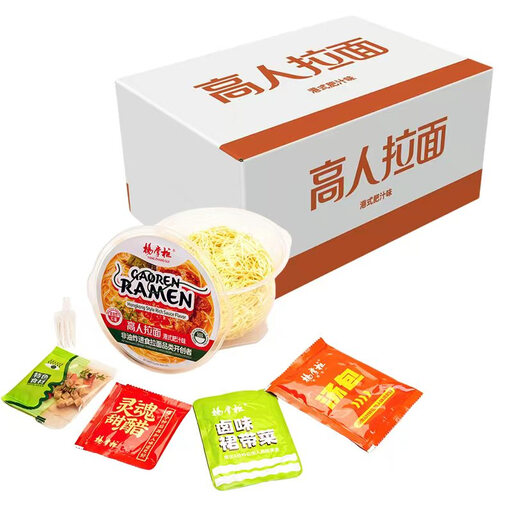
Why this product suits the profile: The twelve 180g cups are aimed at Asian food fans, families and shoppers looking for a larger portion with several separate seasoning and vegetable components.
The ingredients and allergens are listed in detail. The product is described as an egg-free version; it nevertheless contains wheat, soya and sesame.
180g portion, four components in the cup and a stated steeping time of 4–6 minutes.
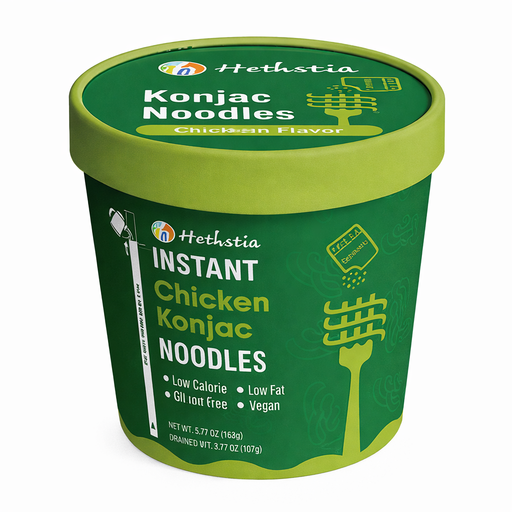
Why this product suits the profile: This variant is based on konjac noodles and is prepared with vegetables and seasoning sauce. According to the product information, it is vegan and halal-certified.
The type of noodles and preparation method are clearly described. Once opened, the product should be refrigerated and consumed within 24 hours.
Konjac noodles, vegetable garnish, microwave or hot-water preparation and 32 kcal according to the product information.
We have put together a complete, regularly updated list of products that fully meet these strict selection criteria and the safety regulations applicable in the EU.
For a vegetarian instant soup or clear bouillon, check for meat and chicken ingredients not only in the product name but also in the ingredients list. Creamy options such as instant mushroom soup, tomato cream soup, potato cream soup or leek cream soup often contain milk, wheat and celery as common allergens.
If you are looking for a meal that is easy to transport, choose a sturdy cup and ensure that it can be prepared safely. The product should be placed on a heat-resistant, level surface. Very large cups may require a separate spoon. For households that regularly eat soup, broth and bouillon in powder or jar form are more flexible, as they can be used in portions when cooking.
This depends on the product. Around 3 minutes is common, while some Chinese instant noodles require 4–6 minutes. The instructions on the packaging should always be followed. With sauce noodles, some of the water may also need to be drained.
Cup noodles and portion sachets are generally suitable for the office if a kettle or hot water is available. Check the required amount of water, steeping time and whether the packaging can be closed securely in advance. Individual portions such as potato cream soup or instant chicken soup can be stored neatly without taking up much space.
Unopened products should be stored in a dry, cool place away from direct sunlight. The specific best-before date is printed on the packaging. Opened konjac products may have special storage requirements; for the Hethstia variant mentioned above, refrigeration and consumption within 24 hours of opening are specified.