People looking for the smoothest possible texture
For porridge, smoothies or drinkable meals, they want to avoid coarse flakes. What matters is whether the specific oat product blends smoothly into liquid.


For the smoothest possible oat meal, oats specifically described as instant or melt-in-the-mouth are a better choice than simply fine oats; the final texture also depends on how you prepare them. If you’re keeping an eye on sugar, compare the ingredients and the ‘of which sugars’ figure per 100 g instead of assuming that ‘reduced sugar’ means a low sugar content. A softly prepared meal is not automatically suitable for a medically prescribed texture.
For porridge, smoothies or drinkable meals, they want to avoid coarse flakes. What matters is whether the specific oat product blends smoothly into liquid.
They want to know whether they’re buying pure oats or a blend with other ingredients. To do this, they check the ingredients list alongside the sugar figure per 100 g.
They check the information on the specific pack. Neither ‘fine’ nor ‘instant’ on its own tells you whether a product is suitable for a gluten-free diet.
Start with the texture you want, then compare the sugar information and ingredients. If organic or allergen requirements are important to you, check the details on the specific product too.
| Criterion | What to check when buying | Who it matters to most |
|---|---|---|
| Smooth texture | Look for ‘instant’ or ‘melt-in-the-mouth’ and check the preparation instructions for mixing with liquid. ‘Extra fine’ alone doesn’t confirm that the oats dissolve instantly. | If I want to stir oats in without noticeable flakes, texture comes first for me. Around 50% of shoppers put this need first. |
| Sugar and ingredients | Compare the ‘of which sugars’ figure per 100 g and read the ingredients list. A claim such as ‘reduced sugar’ doesn’t replace checking the actual figure. | When buying a ready-made porridge mix, I want to know which ingredients contribute to its sweetness. For around 30% of shoppers, this check takes priority. |
| Organic and allergens | Check the organic label, ingredients, allergen information and, where applicable, ‘may contain’ warnings on the current pack. | If I need to avoid certain ingredients or specifically want organic oats, the description ‘Instant Oats’ isn’t enough. Around 20% of shoppers prioritise the right labelling. |
A reduced-sugar claim compares the sugar content with similar products; it doesn’t directly tell you the absolute sugar content. The Verbraucherzentrale (German consumer advice centre) makes this point too.
Compare the ‘of which sugars’ figure per 100 g and check which ingredients are in the product.
A product can contain sugar from its ingredients even if no sugar has been added. So the claim on the front of the pack doesn’t tell you the total amount of sugar shown in the nutrition information.
Read the nutrition information per 100 g and, if needed, compare the ingredients lists of different products.
Kölln and Alnatura specifically describe the instant or melt-in-the-mouth products mentioned here as dissolving instantly. By contrast, the extra-fine oats described by EDEKA aren’t an instant product simply because of their name.
For a drinkable meal or very smooth porridge, check the dissolving and preparation instructions. Other fine oats may need extra soaking, cooking or blending time.
Descriptions such as ‘oats’, ‘fine’ and ‘organic’ don’t replace product-specific allergen and ‘may contain’ information.
If you have specific requirements, read the current pack information; don’t rely on the product type alone.
The information below relates to the specific oat products or ranges described, not every product from each brand.
Kölln describes its instant oats as an option for creamy porridge, smoothies and drinkable meals.
Alnatura offers organic melt-in-the-mouth oats made from milled oats, for porridge prepared with hot or cold liquid.
The organic variety described is a fine oat product for shoppers looking for a straightforward oat base.
EDEKA describes this own-brand’s extra-fine oats as chopped and rolled oat kernels.
REWE lists the ja! variety described here as fine wholegrain rolled oats in small-flake form.
Crownfield is a Lidl cereal brand.
Brüggen describes itself as a manufacturer of oat products and own-brand products for retail chains.
This selection includes one instant variety and several fine or tender oat products for soft meals. ‘Fine’ and ‘tender’ don’t mean the same as ‘dissolves instantly’, so compare the preparation instructions and nutritional information for each product.
 Image unavailable
For an oat meal where you’re specifically looking for instant flakes to stir in. Check the sugar content and ingredients on the pack if you want to assess how much sugar it contains.
 Image unavailable
For porridge if you’d prefer fine oats rather than a variety specifically described as instant. Check the preparation instructions and allow time for soaking or cooking if needed.
 Image unavailable
For shoppers looking for fine organic oats to make smooth porridge. Don’t confuse this variety with the melt-in-the-mouth oats specifically described as dissolving instantly; if you have allergies, check the current pack information.
 Image unavailable
For smooth porridge if you’re looking for a tender flake texture. If the ‘Gluten-Free’ label is important to your choice, check the current information on the pack; tender oats don’t automatically dissolve instantly.
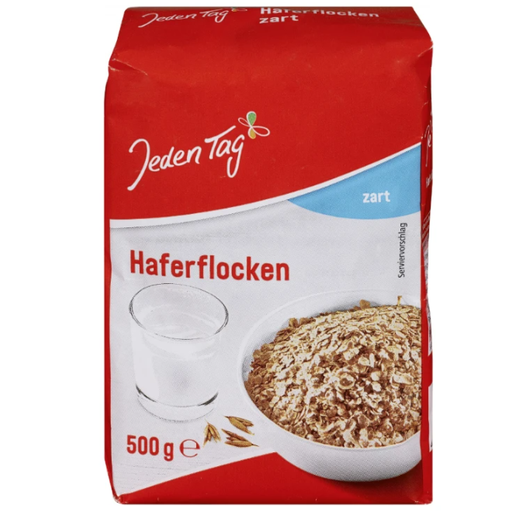 Image unavailable
For a simple oat meal, as long as the product type suits the texture you want. Check the current pack to see whether you’re getting flakes or oat flour; if you have allergies, check the ‘may contain’ information too.
Look for a clear description such as ‘dissolves instantly’ or ‘melt-in-the-mouth’, and read the preparation instructions. Kölln describes its instant oats and Alnatura its melt-in-the-mouth variety as dissolving instantly; other fine oats may retain more texture, depending on how you prepare them.
No. The description means the sugar content is lower than that of comparable products; it doesn’t automatically mean the absolute sugar content is low. The Verbraucherzentrale advises against treating these claims as equivalent to low sugar content; the ‘of which sugars’ figure per 100 g is also important when choosing.
No. A product with no added sugar can still contain sugar from its ingredients. So, as well as checking the claim on the pack, read the ingredients list and the sugar figure per 100 g.
Compare sugar and other nutritional values per 100 g, as well as the ingredients list. For prepacked foods, the European Union requires nutrition information to include, among other things, energy, fat, saturates, carbohydrate, sugars, protein and salt. If you have specific requirements, the allergen information for the product is important too.