
Lieferung heute & morgen

Qualitätsgarantie

Willkommens-Angebote freischalten: KOSTENLOSE Lieferung | Bis zu 80 % RABATT | Kostenlose 30-Tage-JoyPlus-Testphase
App herunterladen
An INSTICK sugar-free drink powder can be a practical alternative to ready-bottled drinks. Individual sachets take up very little storage space, can be mixed with water or, depending on the variety, combined with dairy products, and are available in a range of flavours. Even so, it is worth taking a close look at the product information. Terms such as “sugar-free”, “vegan” or “with vitamin C” alone do not tell you whether a drink powder is right for your everyday routine.
Depending on the product, one sachet may be intended for 0.25 litres, 0.5 litres or up to 1 litre of drink. Larger mixed packs sometimes state a yield of 1.5 to 2.5 litres per sachet. So do not just compare the number of sachets. Also check:
A particularly high stated yield may result in a noticeably milder flavour. If you prefer a more intense taste, you will often use less liquid – but this reduces the actual yield.
Sugar-free recipes often contain sweeteners such as sucralose or acesulfame-K. This does not conflict with the term “sugar-free”, but it should be taken into account when choosing a product. The ingredients list also shows whether the product contains acidity regulators, flavourings, colourings or maltodextrin.
For allergy sufferers, the packaging is the key source of information. According to the manufacturer, some varieties are offered without certain legally declarable allergens. However, when it comes to nut flavours or shared production facilities, buyers should still check for possible cross-contamination warnings.
A drink powder designed to dissolve in water is not necessarily suitable for milk, yoghurt or Skyr. Conversely, special milk powders intended for milk and yoghurt may produce an unwanted consistency or unsuitable flavour when mixed with water. Iced tea powder and energy drink powder also differ significantly in their caffeine content.
First check which base liquid or food the product is designed for:
For milk-based varieties, the temperature limit is also important. According to the product information, several INSTICK products for dairy products are suitable for temperatures of up to 120 °C. The powder should not be consumed dry, but fully dissolved in the intended liquid or food.
Caffeine-free varieties are more suitable for the office, evenings or people who want to avoid caffeine. Iced tea products containing tea extract may, however, contain a small amount of caffeine. INSTICK energy drink powder is stated to contain 52 mg of caffeine per 0.25-litre serving. According to the product description, this is roughly equivalent to half a cup of coffee, but it is not a basis for making blanket claims about its effects.
Energy drink powder is intended for adults. Pregnant and breastfeeding women, people who are sensitive to caffeine, and children and young people should follow the information on the packaging. Energy drinks should also not be mixed with alcohol.
The following information is relevant when making an informed choice:
For several varieties, INSTICK states that they are made or developed in Germany. This is verifiable information about origin, but on its own it says nothing about your personal taste or individual tolerance.
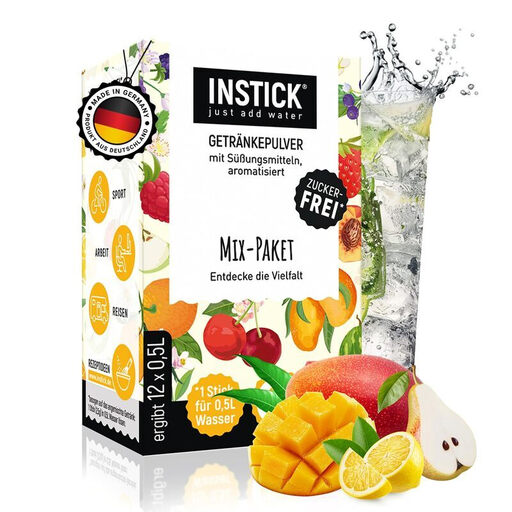
Why this product suits this profile: The sample pack contains 12 sachets in different fruit flavours and is designed for 0.5 to 1 litre of water per sachet.
The clear serving information makes it easier to calculate the yield. The mixed pack also reduces the risk of buying a large quantity of a single flavour straight away.
Vegan, sugar-free and, according to the product information, with vitamin C; suitable for still or sparkling water.
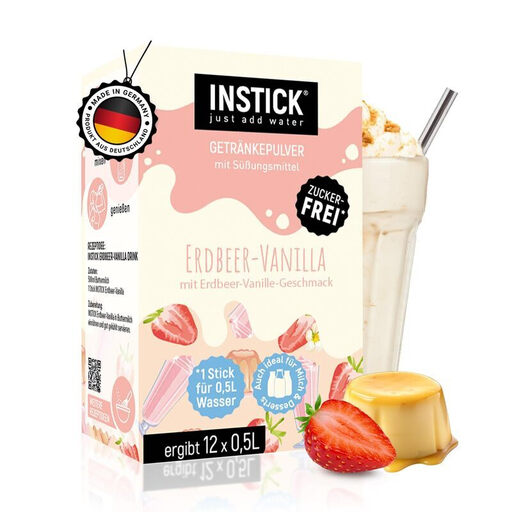
Why this product suits this profile: This variety is designed for milk, yoghurt, Skyr, quark and plant-based alternatives. It is also suitable for porridge and desserts.
It should not be used in the same way as a conventional water powder. The recommended amount of one sachet for around 0.5 litres of base product provides clear guidance.
According to the manufacturer, vegan, lactose-free and sugar-free; 12 sachets containing 2 g each.
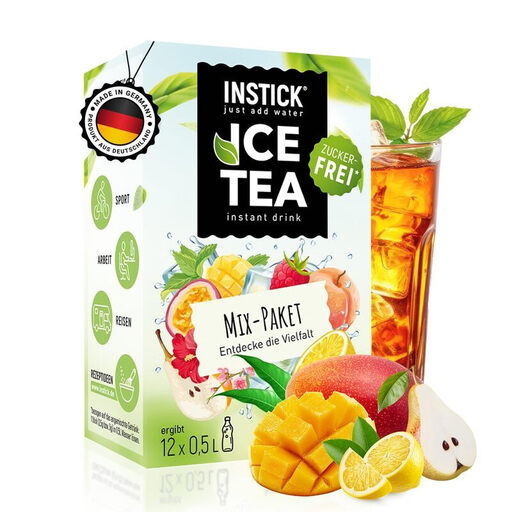
Why this product suits this profile: The pack combines eight iced tea flavours and is suitable for still or sparkling water – ideal for the office, travelling and long days on the go.
The stated low caffeine content from tea extracts should not be confused with a caffeine-free recipe. People who are sensitive to caffeine can take this into account when choosing a product.
12 sachets, providing 0.5 to 1 litre depending on the dosage; according to the manufacturer, vegan, sugar-free and with vitamin C.
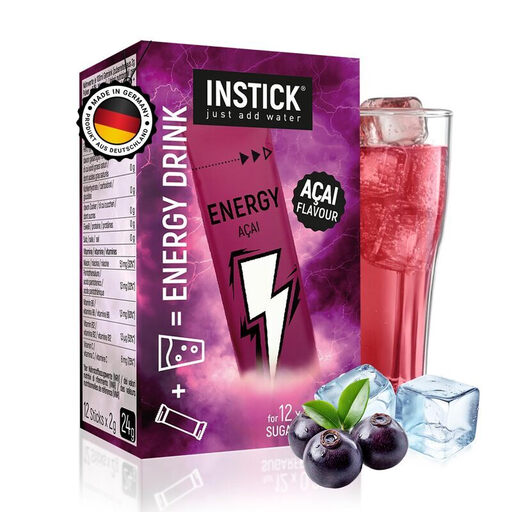
Why this product suits this profile: For adults looking for a portion-controlled energy drink powder to take on the go and who want to keep track of the caffeine content per sachet.
The caffeine content of 52 mg per 0.25 litres is clearly stated. This makes it easier to factor the serving into your daily caffeine intake.
12 servings of 0.25 litres each; according to the manufacturer, vegan, sugar-free and lactose-free.
For an instant drink powder, a glass, bottle or shaker is usually all you need. Add the powder to the liquid, then stir or shake. When using sparkling water, mix carefully to prevent the bottle from overflowing with foam.
Store unopened drink sachets in a dry, cool place away from direct sunlight. Once opened, a sachet should be used in full. The best-before date on the packaging is the decisive information, as shelf-life details may vary between different product versions.
This depends on the product range. According to the product information, classic water sachets are usually intended for 0.5 to 1 litre. Energy drink sachets are prepared with 0.25 litres of water. Milk-based varieties are often designed for around 0.5 litres of milk or a comparable base product.
According to the manufacturer, several of the INSTICK varieties listed are described as vegan and sugar-free. For dairy products, this refers to vegan flavouring powder that is dissolved in milk, yoghurt or plant-based alternatives. Always check the current ingredients list and allergen information for the specific variety before buying.
The information varies by product. For several varieties, a shelf life of 365 or 730 days from manufacture is stated. The key information is the printed best-before date, batch details and storage instructions on the relevant packaging.