
Lieferung heute & morgen

Qualitätsgarantie

Willkommens-Angebote freischalten: KOSTENLOSE Lieferung | Bis zu 80 % RABATT | Kostenlose 30-Tage-JoyPlus-Testphase
App herunterladen
A high-quality insulated bottle is an essential everyday companion: it keeps your morning coffee hot on the way to work, your water refreshingly cool during a workout, or the tea for a family picnic warm. But the market is flooded with products whose marketing claims often fail to deliver in practice. A leaky bottle in your bag or lukewarm coffee after just two hours is frustrating and a waste of money.
As your Joybuy Product Recommendation Officer, I'm here to help you spot the common pitfalls and make an informed decision. We'll focus on the objective features that define a great thermos flask, so you can find a product that truly fits your needs.
Many buyers are swayed by marketing claims that later turn out to be impractical or misleading. Pay special attention to these three points:
To avoid a bad buy, you should focus on verifiable technical specifications. These three criteria are crucial for performance and durability.
The heart of every insulated bottle is its construction. Effective insulation is achieved through a double-wall vacuum design. Between the inner and outer walls of stainless steel, there is a vacuum that almost completely prevents heat transfer (convection).
Look for the BPA-free label. Bisphenol A (BPA) is a chemical compound found in some plastics that can be a health concern. High-quality drinking bottles consistently avoid it, especially in lids and seals that come into contact with the contents. 18/8 grade stainless steel (also known as Type 304) is also food-grade, rust-proof, and taste-neutral.
The lid is the most common weak point. A simple screw-top lid with a high-quality silicone gasket is often the most reliable solution for making a bottle leak-proof. While models with quick-press or one-handed-operation lids are convenient, their more complex mechanics can be more prone to defects and harder to clean. Check if the manufacturer explicitly guarantees a leak-proof seal even with carbonated drinks—this is a good indicator of a robust design.
The size of the bottle should match your primary use case.
Here are some models that are well-suited for specific use cases based on their objective features.
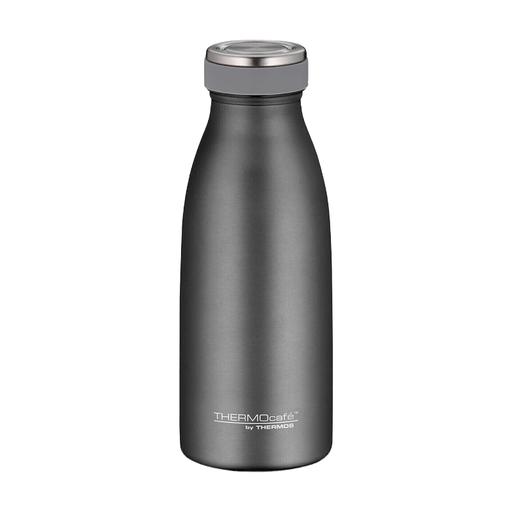
Why This Fits Their Persona: Ideal for the daily commute to work or university. The slim design fits effortlessly into backpacks and handbags, while the 0.35-litre volume is perfect for a large coffee or tea.
The manufacturer states that the rubberised screw cap remains completely sealed, even with carbonated drinks. This directly addresses the weak point of many other bottles.
Double-wall stainless steel, BPA-free, and taste-neutral. According to the manufacturer, its insulation performance keeps drinks hot for up to 12 hours or cold for 24 hours.

Why This Fits Their Persona: For hiking, cycling, or the gym, where every gram counts. The reduced weight is noticeable in a backpack without compromising on durability. The 0.75-litre volume is a good balance between hydration and weight.
The "Safe Flow Lid" with a safety lock prevents accidental opening and leaks. This is a technical feature that goes beyond a simple sealing promise and is designed for transport during movement.
Up to 48% lighter than comparable products, according to the manufacturer. The bottle is dishwasher-safe, which makes cleaning after sports easier.
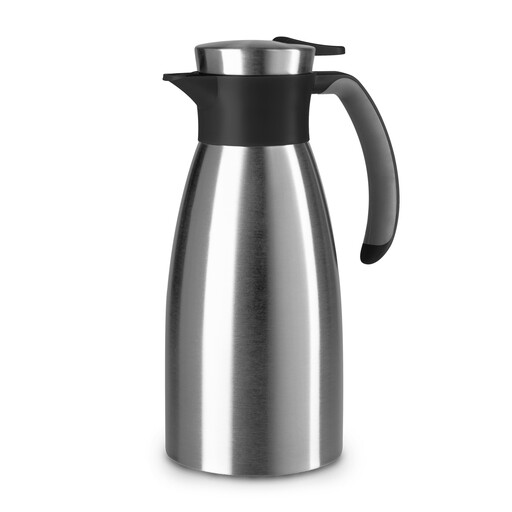
Why This Fits Their Persona: This classic **insulated jug** is designed for stationary use. With a 1-litre capacity (approx. 8 cups), it's perfect for keeping coffee or tea ready for the family or during a long day in the home office.
The focus here is on serving convenience, not absolute leak-proofing for transport. The Quick-Tip closure allows for drip-free, one-handed pouring, which is more practical in daily use than a hard-to-open screw cap.
High capacity and convenient one-handed operation thanks to the soft-grip handle and single-finger closure. The double-wall stainless steel construction ensures long-lasting insulation.
We have compiled a complete, up-to-date list of products that fully meet these strict selection criteria and rigorous safety standards.
1. How do you properly clean a stainless steel insulated bottle to prevent odours? For daily cleaning, warm water and a mild washing-up liquid are sufficient. To remove stubborn odours (e.g., from coffee), fill the bottle with a mixture of warm water and a spoonful of baking soda. Let the mixture sit for a few hours or overnight, then rinse it thoroughly. Avoid abrasive cleaners or steel wool, as they can scratch the inner surface.
2. Are all insulated bottles suitable for carbonated drinks? No. The pressure created by carbonation can lead to leaks or even cause the lid to pop open suddenly on unsuitable models. Look for explicit manufacturer information confirming suitability for carbonated drinks. Models with a simple, robust screw-top lid often have an advantage here.
3. What does "BPA-free" mean, and why is it important for a drinking bottle?BPA-free means that no Bisphenol A was used in the manufacturing of the plastic components (especially lids and seals). This industrial chemical is suspected of being harmful to health and having hormonal effects. Since the lid and seal come into direct contact with your drink, being BPA-free is an important quality and safety feature for a stainless steel drinking bottle.