
Lieferung heute & morgen

Qualitätsgarantie

Willkommens-Angebote freischalten: KOSTENLOSE Lieferung | Bis zu 80 % RABATT | Kostenlose 30-Tage-JoyPlus-Testphase
App herunterladen
A good insulated bottle is a faithful companion: it keeps your coffee hot on the way to work, your water cool during sports, and your tea warm on an outing. But the market is flooded with products whose marketing promises often don't hold up in practice. A leaky thermos in your bag or lukewarm coffee after just two hours are frustrating and avoidable experiences. As your Joybuy Product Recommendation Officer, I'll help you identify the crucial features and steer clear of common purchasing traps.
Many buyers focus on advertising claims that later turn out to be impractical or misleading. Pay special attention to these three points to avoid a bad purchase:
To make the right choice, you should focus on objective and verifiable criteria. These three aspects are crucial for the durability and functionality of your new thermos.
The basis of any good insulated bottle is double-wall stainless steel vacuum insulation. A vacuum between the inner and outer walls minimises heat transfer (both from the inside out and vice versa). Look for high-quality stainless steel (e.g., Type 18/8 or 304), as it is food-grade, rust-proof, and taste-neutral. An additional copper coating on the inner wall can further enhance insulation performance. The BPA-free label should be a given, ensuring that no harmful plasticisers from the plastic parts (e.g., in the lid) leach into your drink.
The lid is the most common weak point. There are various systems with specific advantages and disadvantages:
Check if the manufacturer explicitly states that the lid is also suitable for carbonated drinks—a sign of a particularly robust design.
The capacity should match your intended use. A compact 0.5L bottle is ideal for the daily commute. For long days at the office or for supplying the family at a picnic, a thermos with 1L or 1.5L is the better choice. Also, consider the shape: does the bottle fit in your car's cup holder or the side pocket of your backpack? A slim design is often more practical than a bulky one.
Instead of making a one-size-fits-all recommendation, we have selected products that meet specific needs and successfully avoid the common purchasing traps mentioned.
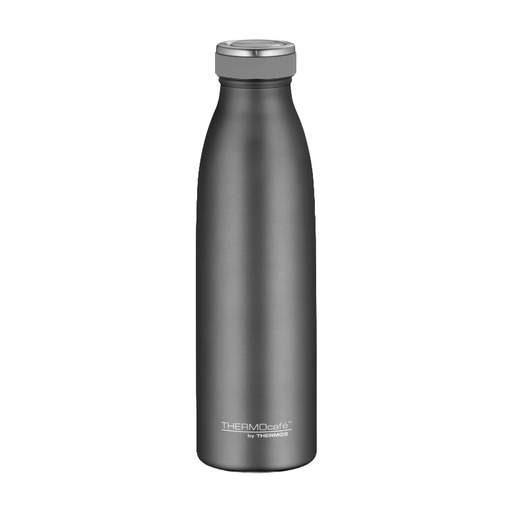
Why it's a great fit: With a 0.5L capacity and a slim design, this bottle is ideal for a briefcase or backpack. It's designed for quick access and keeps your morning coffee or tea warm for hours.
The rubberised screw cap is not only easy to grip but is also rated by the manufacturer as suitable for carbonated drinks. This addresses the "leak-proof" trap, as the closure is designed to handle excess pressure.
Compact format and a reliable, pressure-resistant closure make it a safe choice for transport in bags.
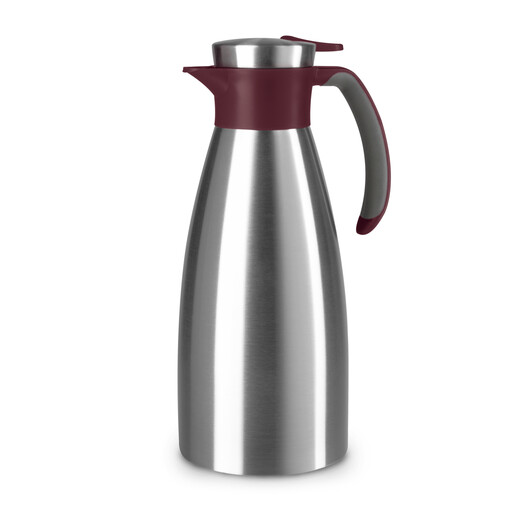
Why it's a great fit: With a 1.5-litre capacity, this insulated carafe can supply the whole family or provide coffee throughout the day in a home office. The focus is on easy handling and large volume.
The Quick-Tip closure is designed for drip-free, one-handed pouring. This solves the problem of impractical or messy lids on large carafes, making serving clean and straightforward.
High capacity (approx. 12 cups) combined with convenient one-handed operation and a non-slip grip for secure pouring.
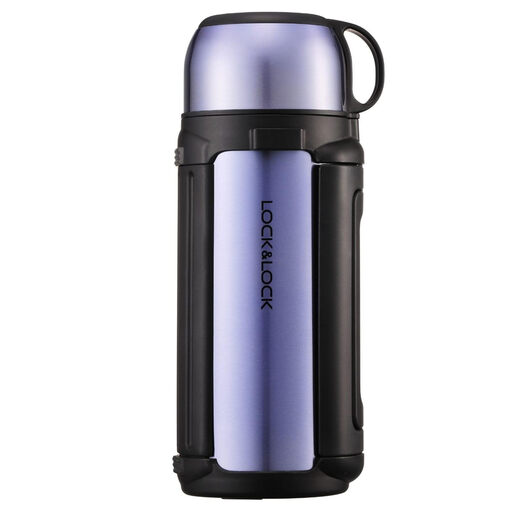
Why it's a great fit: This jug is designed for mobility and functionality. The detachable carrying strap, folding handle, and integrated cup make it an all-in-one system for hiking, camping, or long car journeys.
It avoids the trap of impractical designs by offering useful additional features that go beyond simple insulation. The integrated cup and flexible carrying options provide real added value for mobile use.
High portability thanks to a carrying strap and folding handle, plus a practical drinking cup integrated into the lid.
We've compiled a complete, up-to-date list of products that fully meet these strict selection criteria and rigorous safety standards.
Proper cleaning is crucial for hygiene and longevity. Rinse the bottle with warm water after each use. For a thorough cleaning, use warm water and a mild dish soap. A bottle brush helps to reach the bottom and inner walls. Avoid steel wool or abrasive cleaners, as they can scratch the stainless steel surface. Always leave the bottle and lid open to air dry to prevent odour build-up. Many models are not dishwasher-safe, as high temperatures can damage the vacuum seal or the outer coating; check the manufacturer's instructions for this.
Not all of them. Carbonation creates excess pressure inside the bottle, which can lead to leaks or even cause the lid to pop off suddenly with unsuitable closures. If you plan to regularly transport carbonated drinks, choose a model where the manufacturer explicitly permits it. These bottles typically feature a particularly robust screw-top lid with a durable seal that can withstand the pressure.
BPA (Bisphenol A) is an industrial chemical used to make certain plastics and resins. It can leach from containers into food and beverages. Studies have raised concerns about the potential health effects of BPA. The "BPA-free" label means that this specific chemical was not used in the product's plastic components, such as the lid or seals. It is an important health and safety standard for all products that come into contact with food.