
Lieferung heute & morgen

Qualitätsgarantie

Willkommens-Angebote freischalten: KOSTENLOSE Lieferung | Bis zu 80 % RABATT | Kostenlose 30-Tage-JoyPlus-Testphase
App herunterladen
A quality insulated bottle is a practical everyday companion. It keeps your morning coffee hot on your commute and your water refreshingly cold during a workout. But the market is crowded, and not every product delivers on its promise. Before you make a decision, it's helpful to know the common pitfalls that often only become apparent after the purchase.
Many buyers rely on advertising claims that prove inadequate in practice. Pay close attention to these three points to avoid a bad investment:
To prevent these problems, you should check a few fundamental technical parameters before buying. These features determine the durability, safety, and functionality of your future thermos flask.
The most common material for a high-quality water bottle is stainless steel, usually type 18/8 (18% chromium, 8% nickel). This material is food-grade, rust-proof, and taste-neutral, ensuring your beverage retains its original flavour. Another crucial criterion is the BPA-free label. Bisphenol A (BPA) is a plasticiser found in some plastics that can be a potential health concern. Make sure that all parts that come into contact with your drink are free of this chemical.
The lid is the most critical component. Simple screw-top lids with a high-quality silicone gasket are often the most reliable solution to make a bottle leak-proof. If you often need to drink with one hand on the go, a travel mug with a flip-top or push-button lid may be more practical. Explicitly check the product description to see if the bottle is also suitable for carbonated drinks. The resulting pressure requires an especially robust lid and seal design.
The ability to keep drinks hot and cold is achieved through double-wall vacuum insulation. The manufacturer's claims about retention times (e.g., 12 hours hot, 24 hours cold) are guideline values determined under laboratory conditions. For everyday use, they serve as a good benchmark for comparison. Consider what capacity you need: A 0.5L bottle is ideal for the daily commute, while a 1L bottle or a larger insulated jug is better suited for day trips or serving multiple people.
Depending on your lifestyle and intended use, different models will better suit your needs. Here are some recommendations tailored to specific user profiles.
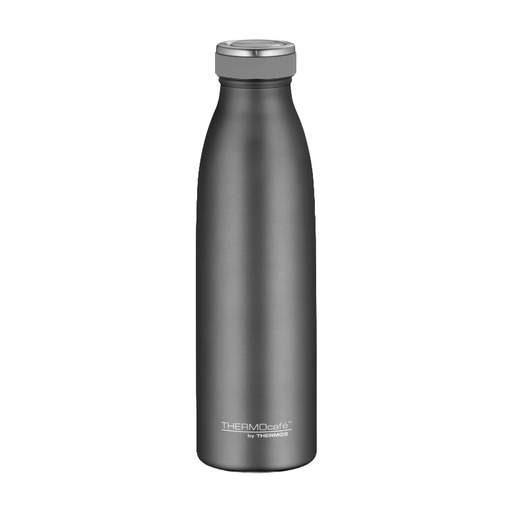
Why This Fits Their Persona: With its sleek design and matte finish, this bottle fits perfectly into a modern work environment. The 0.5L size is ideal for daily coffee or tea and has a small footprint that fits in any bag.
According to the manufacturer, the rubberised twist-lock cap is 100% leak-proof, even with carbonated drinks. This directly addresses the problem of unreliable seals.
Double-wall stainless steel with no inner coating for pure taste; slim, lightweight design.
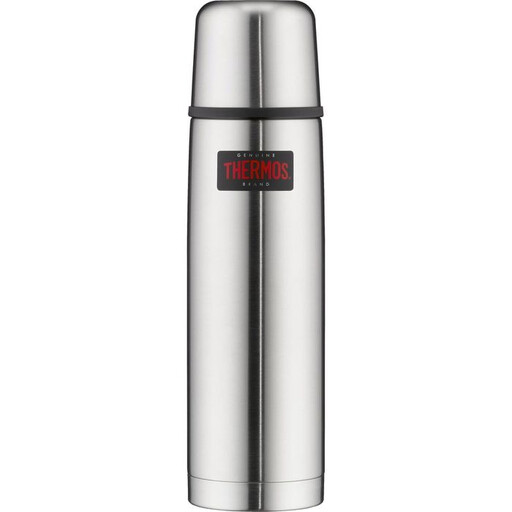
Why This Fits Their Persona: For hikes and excursions, durability and high insulation performance are crucial. With a 0.75 L capacity, it provides ample hydration, and the integrated drinking cup is very practical on the go.
The product is described as shock- and shatter-proof, which counteracts the problem of inferior materials. The push-button lid can be disassembled, which facilitates thorough cleaning.
Long insulation performance (up to 18h hot / 24h cold according to manufacturer); dishwasher-safe for easy care.
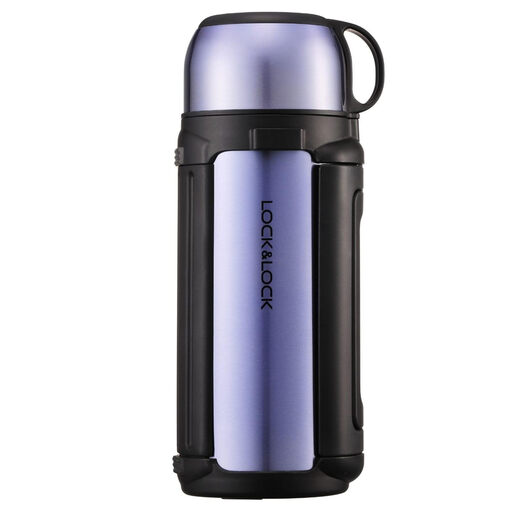
Why This Fits Their Persona: With a 1.5-litre capacity, this insulated jug is ideal for family outings or enjoying coffee at home. The folding handle, carrying strap, and integrated cup make it a versatile all-in-one solution.
The jug's wide mouth makes filling and manual cleaning much easier, preventing hygiene problems caused by hard-to-reach parts.
Large 1.5-litre capacity; practical additional features like a carrying strap and folding handle.
We have compiled a complete, up-to-date list of products that fully meet these strict selection criteria and UK/EU safety regulations.
For daily cleaning, warm water and a mild dish soap are sufficient. Rinse the bottle after each use. To remove stubborn residues or odours, you can fill the bottle with a mixture of warm water and a spoonful of baking soda, let it sit for a few hours, and then rinse thoroughly. A bottle brush helps to reach the bottom and inner walls.
No, not all of them. The pressure created by carbonation can lead to leaks or even cause the lid to pop open suddenly on unsuitable models. Always check the manufacturer's product description. Models explicitly designated as suitable for carbonated drinks have a specially designed, pressure-resistant seal.
"BPA-free" means that the product was made without the chemical plasticiser Bisphenol A. BPA can leach from plastics and transfer into food or drinks. As the substance is suspected of being harmful to health, it is an important quality and safety feature, especially for products with food contact like a stainless steel water bottle.