
Lieferung heute & morgen

Qualitätsgarantie

Willkommens-Angebote freischalten: KOSTENLOSE Lieferung | Bis zu 80 % RABATT | Kostenlose 30-Tage-JoyPlus-Testphase
App herunterladen
A good insulated bottle is more than just a container. It's a daily companion that keeps your morning coffee hot on the way to work, provides cool refreshment during a hike, or enables a warm meal at the office. But the market is flooded with models whose marketing promises often fall short in practice. Before you make a decision, it's crucial to know the typical pitfalls that can lead to an unsatisfying purchase.
As your Joybuy Product Recommendation Officer, I'm here to help you separate the wheat from the chaff. We'll focus on the facts and the key features that define a truly reliable insulated bottle.
The 3 Most Common Pitfalls When Buying an Insulated Bottle:
To avoid a bad purchase, you should focus on three verifiable criteria. These determine the durability, safety, and functionality of your future insulated bottle.
The heart of any high-quality stainless steel water bottle is its double-wall vacuum insulation. This design prevents heat exchange between the contents and the environment. Pay attention to the type of steel used:
Equally important are the materials of the lid and seals. These should be made of food-grade, BPA-free polypropylene (PP) or silicone to ensure the purity of your drink.
The lid is the most common weak point. The choice of the right mechanism depends on how you plan to use it:
The size should fit your daily routine. A compact travel mug with 0.35 to 0.5 litres is ideal for the daily commute. For long days, sports, or outings, models with 0.75 to 1.5 litres are more suitable.
If you also want to use the bottle as an insulated food jar, a wide opening is essential. It not only makes it easier to fill and eat soups or stews but also simplifies the subsequent cleaning process.
Based on these objective criteria, we have identified a few models that are particularly well-suited for specific user profiles.
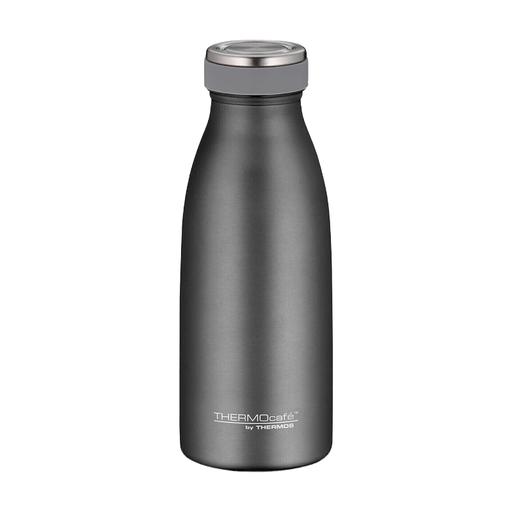
Why This Fits Their Persona: With a 0.35-litre capacity and a slim design, this bottle fits perfectly into any briefcase or backpack. It's designed for a quick coffee or tea on the way to the office without being bulky.
The manufacturer states that the rubberised screw-top lid remains completely sealed, even with carbonated drinks. This directly addresses the "leak-proof" trap.
Slim Design: Fits into standard bags and cup holders. Secure Grip Lid: The rubberised screw-top lid is easy and secure to operate.
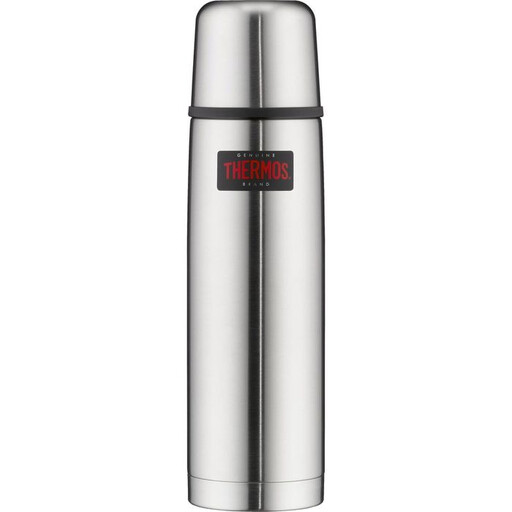
Why This Fits Their Persona: With a 0.75-litre volume, high insulation performance, and a shock- and break-proof construction, this bottle is designed for demanding day trips and outdoor activities.
This bottle avoids the trap of unrealistic insulation claims with a robust build and a disassemblable auto-seal lid that reliably maintains temperature. Its shock-proof nature ensures functionality even with rough handling.
High Insulation Performance: Keeps hot for up to 18 hours, according to the manufacturer. Integrated Drinking Cup: The lid doubles as a cup, which is practical on the go.
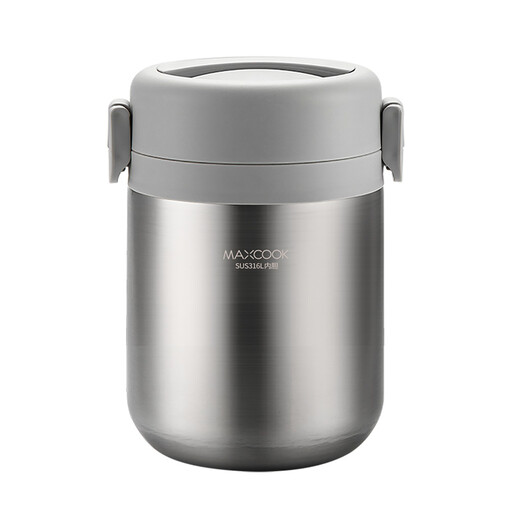
Why This Fits Their Persona: This model is a classic insulated food jar. The wide opening and large 1.5-litre volume make it ideal for soups, stews, or other warm meals for a lunch break.
By using 316 stainless steel, it bypasses the flavour contamination trap. This material is particularly resistant to corrosion from salts and acids in food, preserving pure taste.
Wide Opening: Makes filling, cleaning, and eating directly from the jar easy. High-Grade Stainless Steel (316): Offers superior corrosion resistance and taste neutrality.
We have compiled a complete, up-to-date list of products that fully meet these strict selection criteria and German safety regulations.
The most thorough cleaning is done by hand. Rinse the bottle with warm water and mild dish soap after each use. For stubborn odours or discolouration, fill the bottle with a mixture of warm water and a spoonful of baking soda, let it sit for a few hours, and then rinse thoroughly. It's important to let the bottle and lid air dry completely before closing them again.
That depends on the lid. A simple, robust screw-top lid can usually handle the pressure. Models with push-button or auto-seal lids are often not designed for the pressure build-up from carbonation and can leak or become difficult to open. Some manufacturers, like the TC Bottle mentioned above, explicitly state that their lids are suitable for carbonated drinks. Always check the manufacturer's specifications.
BPA (Bisphenol A) is an industrial chemical used in the production of certain plastics. There is concern that BPA can leach from containers into food and beverages. "BPA-free" means that the plastic parts of the product, such as the lid or seals, were made without this chemical. This is an important feature for health-conscious consumers who want to minimise their exposure to potentially harmful substances.