
Lieferung heute & morgen

Qualitätsgarantie

Willkommens-Angebote freischalten: KOSTENLOSE Lieferung | Bis zu 80 % RABATT | Kostenlose 30-Tage-JoyPlus-Testphase
App herunterladen
A good insulated bottle is a daily companion: it keeps your coffee hot on the way to work and your water refreshingly cool during sports. But the market is flooded with products whose promises often don't hold up in practice. A leaky bottle in your bag or lukewarm tea after just one hour are common annoyances. As your Joybuy Product Recommendation Officer, I'll help you recognise the typical marketing traps and make an informed decision.
The three most common problems when buying an insulated bottle are:
To avoid a bad purchase, you should focus on verifiable facts rather than marketing slogans. Three technical features are crucial.
A high-quality stainless steel water bottle is the foundation for durability and pure taste. Look for the designation 18/8 stainless steel (also known as Type 304). This material is food-grade, rust-proof, and robust. Some models even use Type 316 stainless steel for the inner wall, which offers even higher corrosion resistance. Just as important are the seals in the lid. These should be made of food-grade silicone and explicitly declared as BPA-free. Bisphenol A (BPA) is an industrial chemical found in some plastics and should be avoided.
The lid is the most common weak point. A simple push-on lid, like those found on some travel mugs, is fine for your desk but not for transport in a bag. For absolutely leak-proof performance, a screw-on lid with a solid silicone seal is the most reliable choice. If you plan to fill it with drinks for carbonation, special care is needed. Specifically look for models whose manufacturers explicitly confirm their suitability for carbonated beverages. These lids are designed to withstand the resulting overpressure.
The impressive time ratings for insulation performance (e.g., 12 hours hot, 24 hours cold) are determined under standardised conditions. Typically, the bottle is filled with 95°C hot water at a room temperature of about 20°C, and the time is measured until the temperature drops to a certain value (e.g., 60°C). These values are a good benchmark for comparison between different models, but in everyday use—with frequent opening or extreme outside temperatures—the performance will naturally be lower. Double-wall vacuum insulation is the technical standard for any good insulated flask.
Instead of making a one-size-fits-all recommendation, we have identified products that meet specific needs and avoid the pitfalls mentioned.
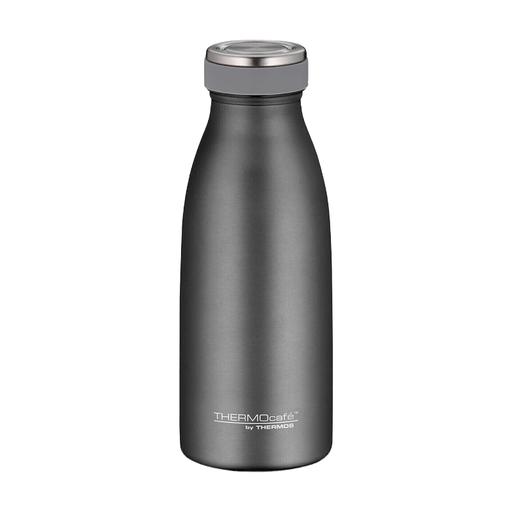
Why This Fits Their Persona: Ideal for the commute to work or university. The slim design and compact 0.35-litre size fit effortlessly into any briefcase or backpack without taking up much space or adding weight.
The manufacturer explicitly guarantees it is leak-proof, even with carbonated drinks. The rubberised screw cap ensures a secure grip and a reliable seal.
Combines a compact, bag-friendly shape with reliable sealing for carbonated drinks. Made from odourless and taste-neutral stainless steel.

Why This Fits Their Persona: Perfect for hiking, the gym, or long training sessions. With 0.75 litres, it offers ample volume, yet thanks to a special manufacturing process, the manufacturer claims it is up to 48% lighter than comparable products.
It bypasses the vague "leak-proof" trap with a specific mechanism: the "Safe Flow" lid features an additional safety lock that prevents accidental opening.
Extremely low weight with a large capacity. The lid allows for easy drinking during activity. Plus, the bottle is dishwasher-safe, which simplifies cleaning.

Why This Fits Their Persona: For professionals, students, and fitness enthusiasts who always have their smartphone within reach. Ideal for video conferences at the desk, watching tutorials at the gym, or hands-free video viewing during a lunch break.
This product focuses on a clear, innovative extra feature instead of exaggerated insulation claims. It transparently communicates that the bottle is not suitable for carbonated drinks, which is an honest limitation.
Unique 2-in-1 design: The lid doubles as a sturdy, MagSafe-compatible phone mount. The inner wall made of SUS316 stainless steel offers high corrosion resistance and hygiene.
We have compiled a complete, up-to-date list of products that fully meet these strict selection criteria and German safety regulations.
Most manufacturers recommend hand washing with warm water and a mild dish soap to protect the coating and insulation performance. Some models are explicitly marked as dishwasher-safe, which simplifies cleaning. For stubborn residue, such as from tea, a mixture of baking soda and warm water can help. Let the mixture sit for a few hours and then rinse the bottle thoroughly.
No. The pressure created by carbonation can cause leaks or even make the lid pop off suddenly on unsuitable models. If you plan to regularly transport carbonated drinks, you must specifically look for an insulated bottle for carbonation. These models have a specially designed screw-on lid that can withstand the pressure.
BPA-free means that a product was made without the chemical Bisphenol A. BPA is used in the production of certain plastics and is suspected of being harmful to health if ingested. Since the lid and seals of a water bottle have direct contact with the beverage, it is advisable to choose BPA-free materials as a health precaution, especially when using them with hot liquids.