
Lieferung heute & morgen

Qualitätsgarantie

Willkommens-Angebote freischalten: KOSTENLOSE Lieferung | Bis zu 80 % RABATT | Kostenlose 30-Tage-JoyPlus-Testphase
App herunterladen
A good insulated bottle keeps your coffee hot for hours or your water refreshingly cold on a summer day. Yet, the market is saturated with models whose promises often fall short in practice. Many buyers quickly discover that their new product leaks, its insulation performance rapidly degrades, or their drink takes on an unpleasant aftertaste.
As a Joybuy Product Recommendation Officer, I analyse product data and customer feedback daily. In doing so, the same problems consistently emerge. This guide will show you what to look for to make an informed decision and avoid the three most common buying pitfalls.
Before you decide on a model, it's crucial to understand the typical weaknesses that often only become apparent after the purchase.
To avoid a bad purchase, focus on the following three technical features. These define the quality and durability of an insulated bottle.
The core feature of any high-quality insulated bottle is double-walled vacuum insulation. A vacuum is created between the inner and outer stainless steel walls. Since there are hardly any molecules in a vacuum, heat transfer (for both hot and cold drinks) is drastically reduced.
The quality of the stainless steel used is crucial for your health and the taste of your drinks. High-quality models use 18/8 stainless steel (also known as Type 304). This material is:
Also, ensure that all plastic parts of the lid are labelled as BPA-free.
A leak-proof insulated bottle depends entirely on the quality of its lid. There are several different systems:
Check the manufacturer's specifications carefully, especially whether the lid is approved for carbonated drinks.
Based on the criteria above, we have selected a few models from our range that are suited for specific use cases.
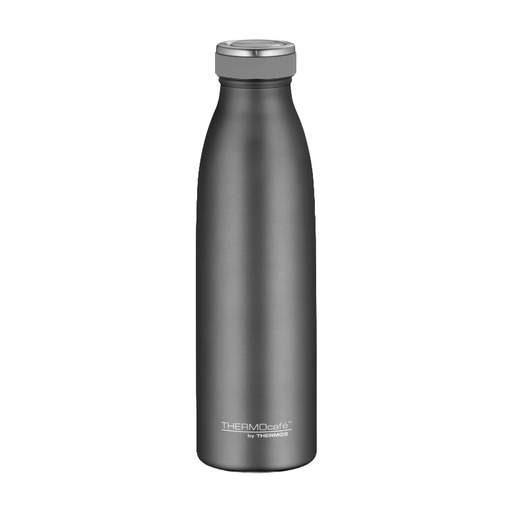
Why This Fits Their Persona: With its slim design, this 0.5L insulated bottle fits perfectly into briefcases, backpacks, and most car cup holders. It is designed for absolute reliability in a mobile, everyday life.
According to the manufacturer, the rubberised screw cap is 100% leak-proof, even with carbonated drinks. This directly addresses the common weakness of leaky lids.
Double-walled stainless steel for insulation performance of up to 12 hours (hot) or 24 hours (cold). The material is odour- and taste-neutral, as well as BPA-free.

Why This Fits Their Persona: For hiking and other outdoor activities, every gram counts. According to the manufacturer, this model is up to 48% lighter than comparable products without compromising on durability.
The "Safe Flow" lid features an additional "Safety Lock". This minimises the risk of leakage during heavy jolts in a backpack.
Low weight with solid insulation performance (up to 10h hot / 20h cold). The bottle is dishwasher-safe, which makes cleaning easier after an outing.
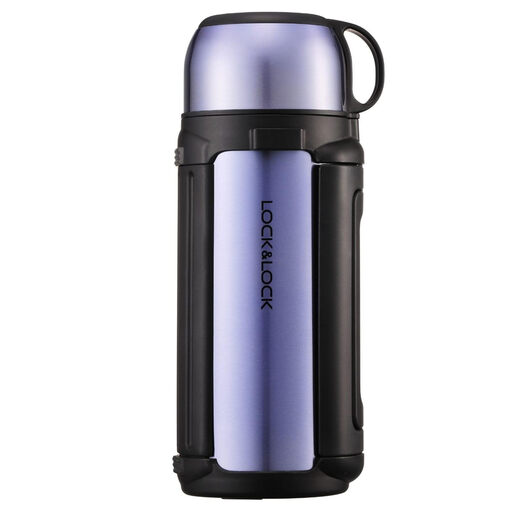
Why This Fits Their Persona: When you need to serve several people, a classic thermos jug with a large capacity is more practical. This 1.5-litre model is ideal for office meetings, family breakfasts, or a picnic.
Instead of an impractical lid for a large jug, this model offers an integrated cup, a folding handle, and a carrying strap. This solves the problem of awkward handling with larger jugs.
Large capacity (1.5 L) and a special internal copper coating for improved temperature retention. The leak-proof screw-top lid ensures safe transport.
We have compiled a complete, up-to-date list of products that fully meet these strict selection criteria and German safety regulations.
1. How do you properly clean a stainless steel insulated bottle? Most manufacturers recommend hand washing with warm water and mild detergent to protect the outer coating and seals. Some models are dishwasher-safe (usually on the top rack); check the manufacturer's instructions for this. Do not use abrasive cleaners or steel wool, as they can scratch the stainless steel surface. A wide opening makes cleaning much easier.
2. Can you put carbonated drinks in any thermos flask? No. The pressure created by carbonation can cause leaks with unsuitable lids or even cause the contents to spray out suddenly upon opening. Look explicitly for the manufacturer's approval "suitable for carbonated drinks". Models like the Thermos TC Bottle mentioned above are specifically designed for this.
3. What does "BPA-free" mean and why is it important for a drinking bottle? BPA (Bisphenol A) is a chemical compound used in some plastics. It is suspected of being harmful to health and can leach from the material, especially when in contact with hot liquids. A bottle labelled as BPA-free guarantees that all plastic parts (usually in the lid) have been manufactured without this chemical, which is an important feature for health-conscious consumers.