
Same-day & Next-day Delivery

Quality Guaranteed

Unlock Your Welcome Offers: FREE Delivery | Up to 80% OFF | Free 30-day JoyPlus trial
Download the APP
Taking a hot lunch with you sounds simple enough. In practice, though, leaky lids, the wrong capacity or seals that are difficult to clean can quickly lead to a disappointing purchase. When searching for terms such as insulated soup flask, insulated lunch box or food flask, it’s worth checking the technical details rather than relying on general marketing claims.
Claims such as ‘keeps food warm for a long time’ are hard to assess without knowing the duration, fill level and starting temperature. The Maxcook models featured here are described as retaining temperature for 4 to 6 hours, according to the product description. That may be suitable for a commute, school day or short trip, but it isn’t a precise temperature guarantee for every use.
Before filling the flask, you can preheat it with hot water or pre-chill it with cold water. This reduces the temperature difference at the start. For longer journeys, consider using an insulated bag as well, and filling the flask as fully as possible.
An insulated leakproof food flask needs a properly fitted lid and an intact silicone seal. Even a model that closes tightly shouldn’t be deliberately turned upside down or carried loose in a rucksack. For soup and other liquid foods, check the lid is secure after closing and carry the flask upright.
Also check whether replacement seals are available and how the lid should be cleaned. Residue in the seal can affect how well it keeps liquid in.
A 1.5-litre food jar is suitable for several portions or for sharing with the family, but may be too large for a single meal. A full 1.4- to 1.5-litre flask can be noticeably heavier in everyday use than a smaller lunch box. For school, your commute or the office, choose a capacity that suits your usual portion size and the bag you’ll be carrying it in.
An insulated stainless steel food flask is hard-wearing, resists odours and is suitable for everyday use. 304 stainless steel is widely used for lunch boxes and insulated containers. 316 stainless steel is also used for the models featured here. However, the grade of steel alone won’t tell you how long a flask will keep food warm or how well its seal works.
Always check the full list of materials: the flask, lid and sealing ring may be made from different materials. For example, one of the 316 steel models featured here lists polypropylene for the lid and silicone for the seal.
A wide opening makes the flask easier to fill, eat from and rinse out. This is particularly useful for an insulated soup flask, as narrow openings can take longer to clean. Maxcook recommends washing its models by hand with warm, soapy water. Avoid soaking the seal areas for long periods, and follow the manufacturer’s guidance on using a dishwasher.
A single insulated flask is ideal for soup, stews, rice dishes or pasta. If you’d rather keep your main meal, fruit and sides separate, a bento lunch box, a compartment lunch box or a stainless steel lunch box with several containers may be more practical.
Microwave suitability also varies. As a rule, don’t put stainless steel containers in the microwave without checking the instructions. For plastic models, remove the lid before reheating. Always follow the specific instructions for your product.
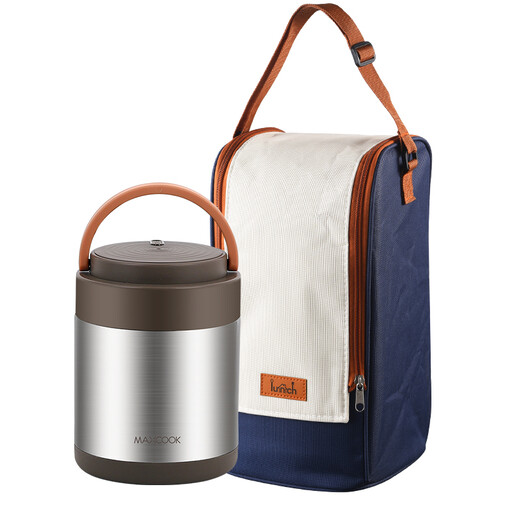
Why it suits this profile: This 1.4-litre model has a clearly stated capacity, a wide opening and a listed weight of around 0.82 kg. It’s suitable for work, school and short trips.
The product description specifies a tight-fitting lid and advises against tipping the flask. This makes its carrying limitations clear.
304 stainless steel, vacuum insulation, a wide opening and a stated capacity of 1.4 litres.

Why it suits this profile: This 316 stainless steel flask comes with an insulated carry bag. It’s a useful option for commuters and professionals who want to carry their flask and protective bag together.
The stated heat and cold retention of 4 to 6 hours shouldn’t be mistaken for unlimited insulation. The seller recommends preheating or pre-chilling the flask.
1.5-litre capacity, 316 stainless steel, a wide opening and an included lunch bag.
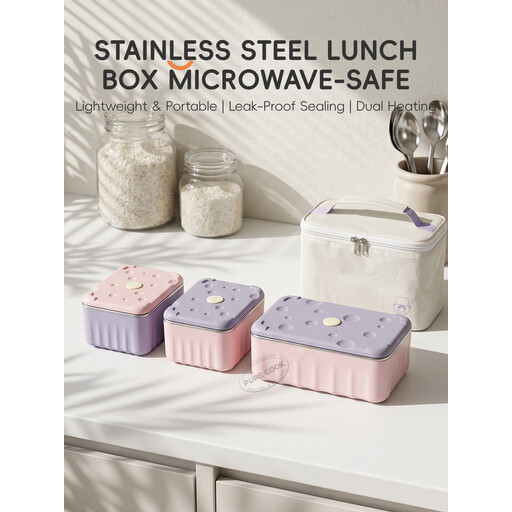
Why it suits this profile: The set includes one large 1,200 ml container and two 600 ml containers. This lets you carry a main meal, fruit, sides or sauces separately.
The separate containers stop all your food from getting mixed together. There are specific microwave instructions: don’t heat the containers while they’re sealed, or heat the carry bag.
Three stainless steel containers in different sizes, silicone seals and a carry bag with an aluminium foil lining.
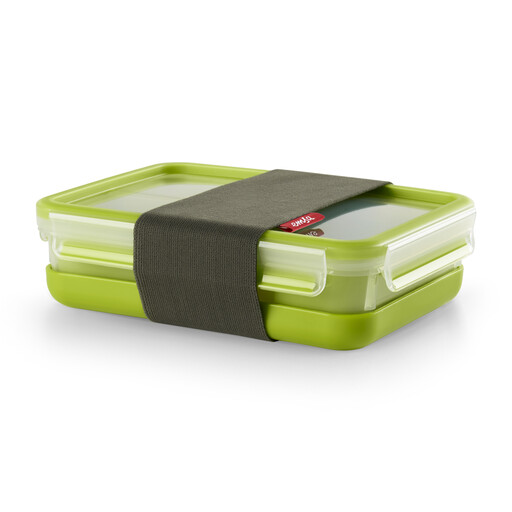
Why it suits this profile: This plastic lunch box has three inserts and a separate plate. It’s suitable if you want to carry a cold or room-temperature meal with several components.
The inserts keep different foods separate and help prevent sauces or sides from mixing. This isn’t a vacuum-insulated option for keeping food warm for extended periods.
1.2-litre capacity, three inserts and a separate plate. The product description states that it’s dishwasher-, freezer- and microwave-safe within the specified temperature range.
We’ve put together a complete, regularly updated list of products that meet these strict selection criteria and fully comply with the safety regulations in force in the EU.
It depends on the starting temperature, how full the flask is, the temperature outside and whether you’ve preheated it. The Maxcook models featured here are described as retaining temperature for 4 to 6 hours, according to the product description. Treat this as a guide for commutes, school days and short trips.
A wide opening makes cleaning easier. Use warm water and mild washing-up liquid, and follow the care instructions for the seal. If the lid isn’t explicitly listed as dishwasher-safe, hand-washing is the safer option.
A vacuum-insulated flask is usually a better choice for soup, stew or a single hot meal. For several separate components, choose a bento lunch box, a compartment lunch box or a set of stainless steel containers. The right option depends on your portion size, how long you’ll be carrying it and how you want to divide your food.