
当日/次日达

品质保障

开启新人专享福利: 全场免邮 | 低至 2 折 | 免费试用 30 天 JoyPlus 会员
下载 Joybuy
A warm meal on the go is not only a comfort but also often a conscious choice for a healthier diet. However, the search for the right insulated food jar can quickly become overwhelming. Many products don't live up to their advertising claims. Before you make a purchase, it's helpful to know the most common pitfalls that lead to leaky bags and lukewarm meals.
A good insulated food container is an investment that pays off in your daily routine. The following criteria will help you find a model that reliably serves its purpose.
To avoid a bad purchase, you should carefully examine three technical features. These determine the durability, safety, and practicality of your container.
The material is the foundation of any good thermal container. Most high-quality models are made of stainless steel, but there are important differences.
Making a truly leak-proof lunch box requires more than just a tight-fitting lid. For liquids, a screw-top lid with a deep-set silicone gasket is the most reliable solution. Snap-on closures are convenient for solid foods but can give way under pressure or movement. A wide mouth is also a decisive advantage: it not only makes it easier to fill and eat directly from the container but also simplifies the subsequent cleaning.
Insulation performance is achieved through a vacuum layer between two stainless steel walls. To maximise heat retention, it is recommended to pre-heat the insulated lunch box with hot water for a few minutes before filling. Some models are offered as a set with a matching insulated lunch bag. This not only provides an additional layer of insulation but also protects the container from scratches and makes it easier to transport.
Instead of making a one-size-fits-all recommendation, we have curated models for different user profiles.
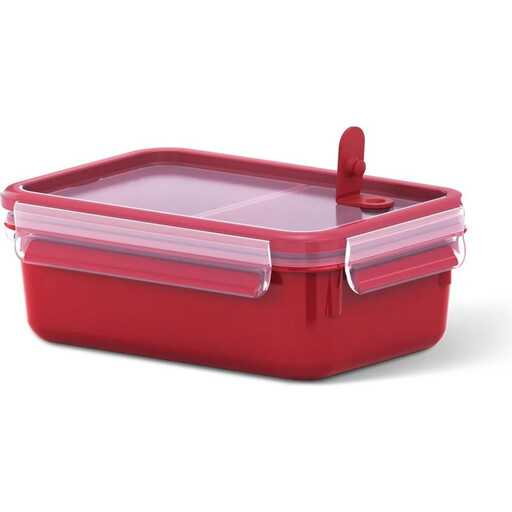
Why This Fits Their Persona: Ideal for those who reheat their meal at the office but need a leak-proof and insulated solution for transport. The rectangular shape is space-saving in a backpack or bag.
According to the manufacturer, the container is 100% leak-proof and BPA-free. Its suitability for the microwave (without lid) and dishwasher avoids the pitfall of impractical handling.
Dishwasher-safe: Simplifies daily cleaning. Microwave-safe: Offers flexibility if the insulation isn't sufficient for the entire day.

Why This Fits Their Persona: A complete package for long days at university or the office. The large 1.5-litre volume is enough for a main meal, and the included bag facilitates transport and improves insulation.
The use of 316 stainless steel makes the container particularly resistant to acidic foods. The screw-top lid and wide mouth address the problems of leakage and difficult cleaning.
Large Capacity (1.5 L): Suitable for large portions or for sharing. Includes Insulated Carry Bag: Provides extra protection and convenience.

Why This Fits Their Persona: Perfect for users who value the highest material quality and frequently transport liquids or heavily spiced foods like soups, stews, or curries. A robust companion for daily use and outdoor activities.
The focus on 316 stainless steel and a reliable screw-top closure with a silicone seal minimises the risk of corrosion and leakage, even with demanding contents.
High Corrosion Resistance: Ideal for acidic and salty foods. Robust Vacuum Insulation: Ensures reliable temperature retention for several hours.
We have compiled a complete, up-to-date list of products that fully meet these strict selection criteria and safety regulations.
The best method is to clean it immediately after use with warm water and mild dish soap. Allow the container and lid to air dry separately to prevent residual moisture and odour build-up. For stubborn smells, a mixture of baking soda and warm water left to soak overnight can help.
Both materials are food-grade. 304 stainless steel (also known as 18/8 stainless steel) is the standard for most applications. 316 stainless steel contains added molybdenum, which makes it significantly more resistant to corrosion from salts and acids. For frequent transport of tomato soups, salty stews, or citrus fruits, 316 stainless steel is the more durable choice.
No, not every container is dishwasher-safe. High temperatures and aggressive detergents in the dishwasher can damage the vacuum insulation and degrade the seals. Always check the manufacturer's instructions. When in doubt, hand washing is the safer method to maximise your container's lifespan. Models like the Tefal Master Seal series are often explicitly designated as dishwasher-safe.