
Lieferung heute & morgen

Qualitätsgarantie

Willkommens-Angebote freischalten: KOSTENLOSE Lieferung | Bis zu 80 % RABATT | Kostenlose 30-Tage-JoyPlus-Testphase
App herunterladen
A warm, home-cooked lunch at the office, university, or on the go is a welcome change from cold snacks or expensive cafeteria food. A good insulated food jar promises just that: to keep your meal at the right temperature for hours. But the market is full of products with lofty promises that often disappoint in practice. As your Joybuy Product Recommendation Officer, I'll help you spot the common pitfalls and make an informed decision.
Many buyers invest in an insulated lunch box only to find they've wasted their money on an impractical or defective product. Watch out for these three common problems:
To avoid a bad purchase, you should focus on objective and verifiable criteria. These three aspects are crucial for the function and longevity of a thermal food container.
The majority of stainless steel food containers are made of 304 stainless steel (also known as 18/8 stainless steel). This material is food-grade, robust, and rust-resistant—a solid choice for daily use. 316 stainless steel represents a higher grade. It contains added molybdenum, which gives it superior corrosion resistance, especially against salts and acids. If you frequently transport heavily seasoned or acidic foods like tomato soups, 316 stainless steel offers greater durability and flavour neutrality.
Insulation performance is achieved through a double-wall construction with a vacuum in between. This vacuum prevents heat transfer between the inner and outer walls. Look for products that explicitly state they have vacuum insulation.
Even more important is the lid, as this is where most heat is lost. Making a reliable food thermos leak-proof requires more than just a screw thread. A crucial feature is a thick, precisely-fitting silicone gasket. Some models offer additional pressure release valves, which make opening easier with hot contents and protect the sealing ring.
Consider what portion sizes you want to transport. Common sizes range from 0.5 litres for a soup to 1.5 litres or more for a full meal. A wide mouth is an underrated advantage: it makes filling easier without spills, allows for eating directly from the container, and significantly simplifies subsequent hand-washing.
Based on these objective criteria, we have identified some products that represent a suitable solution for different user profiles.
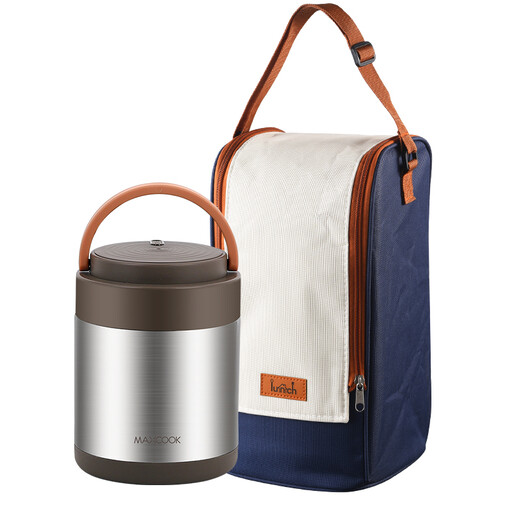
Why This Fits Their Persona: Ideal for professionals and students looking for a reliable and straightforward solution for their daily lunch. The 1.4-litre capacity is sufficient for a generous portion.
The wide mouth directly addresses the problem of difficult cleaning and handling. The lid is designed for secure transport to prevent leaks.
Solid Material: Made from proven 304 stainless steel. Practical Size: A good compromise between capacity and portability.

Why This Fits Their Persona: For users who value maximum durability and material purity. Ideal for frequently transporting soups, stews, or acidic dishes.
It relies on the higher-grade material to prevent flavour alteration and corrosion in the long term—a common problem with cheaper containers.
Premium Material: Made from 316 stainless steel for superior corrosion resistance. Large Volume: 1.5 litres provides space for a complete meal.
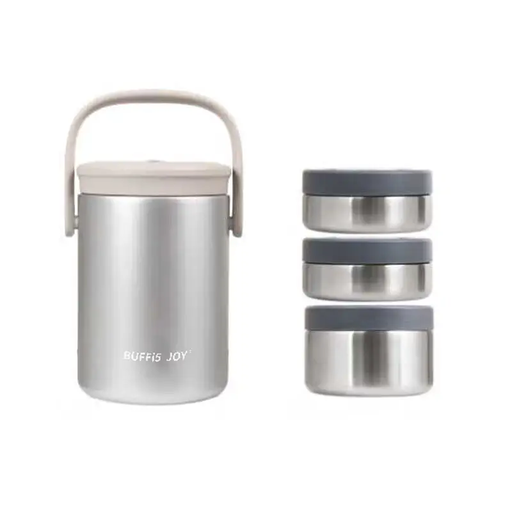
Why This Fits Their Persona: Perfect for users who want to keep different components of their meal separate (e.g., curry and rice) or transport food for multiple people. Ideal for picnics or long workdays.
Solves the problem of mixed foods with a multi-layer system. The included insulated bag improves temperature retention and transport convenience.
Modular System: Three separate layers for flexible meal planning. Large Total Volume: 1.8-litre capacity and an included carrying bag.
We have compiled a complete, up-to-date list of products that fully meet these strict selection criteria.
The most effective method is pre-heating. Fill the empty container with boiling water for 5-10 minutes and close the lid. Only pour out the water immediately before filling it with your hot meal. This prevents the cold stainless steel wall from immediately drawing heat from the food. The same process works in reverse with ice water for cold foods.
As a rule, hand-washing is recommended. The high temperatures and aggressive detergents in a dishwasher can damage the welds and seals, which can lead to a loss of the vacuum and its insulating performance. The lid, in particular, with its silicone gasket, should always be washed by hand to maximise its lifespan.
For the insulation function, the double-wall vacuum construction is what's crucial, not the material alone. However, as a food-contact material, food-grade stainless steel (Type 304 or 316) is the standard recommendation. It is hygienic, flavour-neutral, durable, and free from chemicals like BPA, which can be found in some plastic containers.