
Lieferung heute & morgen

Qualitätsgarantie

Willkommens-Angebote freischalten: KOSTENLOSE Lieferung | Bis zu 80 % RABATT | Kostenlose 30-Tage-JoyPlus-Testphase
App herunterladen
An intelligent robot could be a programmable STEM construction set, an interactive companion, an AI chess system or a fully fledged humanoid robot. The differences in price, operation, safety and maintenance requirements are therefore considerable. If you focus only on flashing lights, the term “AI” or a high number of functions, you can quickly end up buying a device that is not suitable for its intended use.
That is why the Joybuy selection focuses on clear, verifiable details such as age recommendation, control method, battery capacity, degrees of freedom, sensors and programming capabilities.
A robot with app control, audio playback, gesture control and a programming mode may sound versatile. However, what matters is whether these functions can be set up and understood easily in everyday use. A robot toy for children should be suitable for their age. An app may also require a compatible smartphone, Bluetooth or Wi-Fi.
With professional devices, on the other hand, technical interfaces, software updates and the ability to develop secondary applications are more important than music or lighting effects.
A learning robot for children aged 6 and over usually operates with low voltage, small motors and simplified control commands. A humanoid robot for adults, by contrast, has moving joints, more powerful drives and possibly cameras or LiDAR sensors.
Products such as the Unitree G1 Pro are explicitly not toys and are not intended for anyone under 14. With devices featuring powerful joints, hands, hair, pets and loose clothing must be kept away from moving parts.
Small robots are often powered by an integrated battery. Actual usage time depends on motor load, lighting and driving mode. A construction set offering around 15 minutes of playtime per full charge is better suited to short sessions than continuous play.
Larger systems also require consideration of weight, charging space and range of movement. According to the product details, the AGIBOT X2 Ultra weighs around 37 kg and requires a sufficiently clear, dry area for operation. Such a platform is not automatically suitable for homes with stairs, delicate furniture or limited space.
The manufacturer's age recommendation is a key filter. A STEM construction set with 604 parts may be suitable for children aged 6 and over, but adult assistance may be needed during assembly. Small parts pose a choking hazard to younger children.
Look out for:
The CE mark is a declaration of conformity by the manufacturer, not an independent quality seal. For toys, standards such as EN 71 may also be relevant. The information should match the product type and be clearly explained in the product description.
A remote-controlled robot often uses a 2.4 GHz remote control. This is straightforward for children and usually works without a smartphone. A gesture-controlled robot, on the other hand, responds to hand movements but requires sufficient space and a clear line of sight to its sensors.
For educational value, it is important to establish what “programmable” actually means:
A children's robot with simple sequences should not be equated with an AI robot that navigates autonomously or responds multimodally to speech, images and touch.
For a small interactive robot, the motors, LED displays, speakers and battery are the most important components. Check whether replacement batteries are needed for the remote control and how the electronic components may be cleaned.
With a larger humanoid system, degrees of freedom, cameras, LiDAR, payload, charging time and operating time are key considerations. More degrees of freedom allow more movement axes, but they also increase complexity and potentially maintenance requirements. Additional costs may arise from accessories, chargers, spare parts, software services or a required charging station.

Why this product suits this profile: This set is designed for children aged 6 and over and combines building, driving and simple programming tasks. Its 604 parts allow you to create five different models, including a tech robot and a tracked vehicle.
Control is not limited to a single method: alongside the 2.4 GHz remote control, there are app, gravity, path and programming modes. The stated playtime is around 15 minutes per full charge.
604 parts, five models, LED lighting and a rechargeable 300-mAh battery. Supervision is recommended during assembly and when handling small parts.
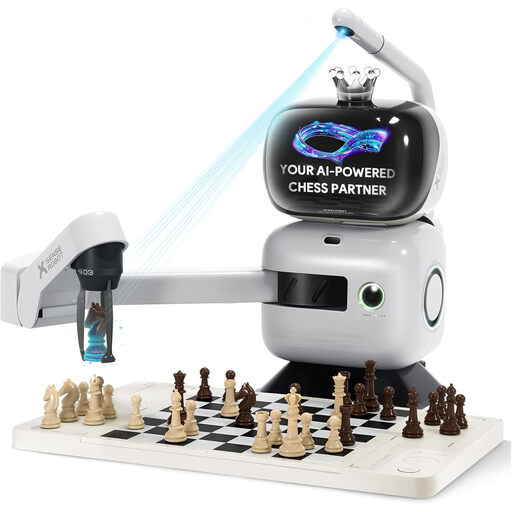
Why this product suits this profile: This system is designed for adults, teenagers and chess players who want to combine a physical board with digital playing strength.
The specifications list 25 AI playing levels, more than 1,200 exercises, endgame training and classic games. This makes the range of functions more specific and easier to assess than a general AI marketing claim.
Robotic arm, app synchronisation, Lichess integration and voice prompts. The board requires a stable, level surface; hands and clothing must be kept away from the arm.
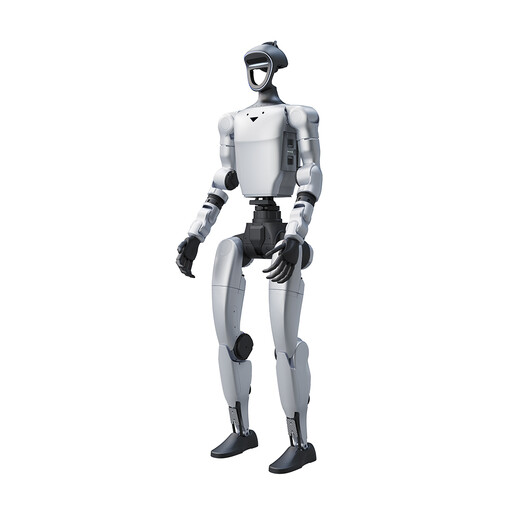
Why this product suits this profile: The G1 Pro is aimed at adults, developers, businesses and users interested in interactive demonstrations or content creation. It is not a children's product.
The product information explicitly distinguishes its use from that of a toy. This makes it easier to check the target audience, required safety distance and operating environment before buying.
The specifications state 29 degrees of freedom, including 16 joint degrees of freedom. Operation requires a controlled area and compliance with the warnings concerning moving joints.
We have put together a complete, regularly updated list of products that fully meet these strict selection criteria and the safety regulations applicable in the EU.
Depending on the model, it may drive, dance, play sounds, respond to gestures or perform simple action sequences. A programmable robot in the form of a construction set adds sorting, assembling and introductory logic tasks to these features. Parents should check whether the small parts, battery and app controls are suitable for the child's stage of development.
Battery life depends on motor power, speakers, lighting and movement programme. According to the product details, the HOGOKIDS set offers around 15 minutes of playtime after a full charge. Larger humanoid systems may require considerably more careful charging planning; the AGIBOT X2 is stated to offer around two hours of operation at a specific walking speed.
In addition to the purchase price, there may be costs for remote-control batteries, replacement batteries, accessories, delivery, repairs or software services. With an AI chess robot, you should also check whether learning content is available without an ongoing subscription. Buyers of professional robots should also budget for charging infrastructure, a secure storage area and, where necessary, technical support.