
Lieferung heute & morgen

Qualitätsgarantie

Willkommens-Angebote freischalten: KOSTENLOSE Lieferung | Bis zu 80 % RABATT | Kostenlose 30-Tage-JoyPlus-Testphase
App herunterladen
A good interactive baby learning toy should offer more than just flashing buttons and loud melodies. Parents, grandparents and carers often look for age-appropriate features, sturdy materials and easy everyday use. At the same time, product descriptions can start to sound alike: “Montessori”, “sensory”, “early development” or “CE-certified” are terms worth understanding more closely before you buy.
A toy with lights, music, a telephone, buttons and gears sounds versatile. What really matters, though, is whether your child can actually operate the features themselves. If buttons are hard to reach or only respond to firm pressure, the toy quickly loses its appeal. A clear layout and different types of movement – such as pushing, turning, grasping and tapping – are usually more helpful in daily play than a long list of effects.
A learning toy for 6-36 months may be designed for several developmental stages, but not every feature suits every age. For younger babies, simple buttons, large surfaces and visual stimuli tend to work best. From around one year old, children can also enjoy rolling, sorting or imitation games. Small parts, removable elements and battery compartments must always be assessed against the safety instructions.
Toys with lights and music can draw attention and make a child’s action visible or audible. However, an automatic sequence is no substitute for shared play. What matters is an adjustable volume control, a quiet mode and the ability to use the toy appropriately under supervision. Claims about medical or therapeutic benefits should not be inferred from ordinary product features.
For baby toys, rounded edges, a sturdy construction and a smooth surface are practical minimum requirements. Manufacturer details such as ABS or BPA-free materials can help with your initial selection. Even so, parents should inspect the product after unpacking for burrs, cracks, loose parts and a securely closing battery compartment.
The CE marking indicates that the supplier declares compliance with the relevant EU requirements for the product. It is not an independent quality seal. The EN 71 standard covers safety requirements for toys, including mechanical and physical properties. For a specific item, buyers should check the details in the product description and on the packaging.
An activity cube for babies is compact and often suitable for playing while sitting or on the floor. A baby activity table, on the other hand, can offer several play zones at a raised height. Check whether the legs are removable, how stable the product is and whether its size suits the space you have available.
Musical toys often need batteries, which are not always included. Check the battery type, the battery compartment and how easy it is to operate. A volume control or mute function is especially handy in flats, during quiet times and when travelling. Surfaces should be wipeable with a slightly damp cloth; electronic toys should not be placed in water.
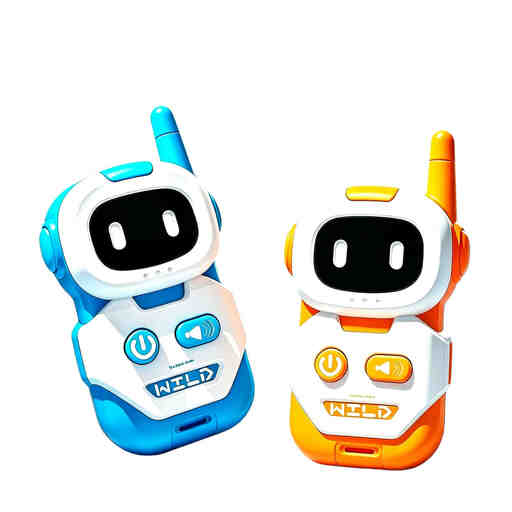
Why this product fits the profile: This compact baby activity toy combines drum surfaces, lights, animal sounds and shape and colour sorting. It is ideal for families looking for several simple play prompts in one product.
The features are spread across large, easy-to-operate elements. According to the product details, the parts are made from BPA-free ABS and have rounded edges. Batteries are not included.
Five shape elements, two drum surfaces, lights and animal sounds in one standing unit; age range according to the product page: 6 to 36 months.

Why this product fits the profile: This cube offers several activity sides on a 23 × 23 × 24 cm footprint and can be taken outside the nursery thanks to its carry handle.
The play types include a piano, guitar, telephone, gears and a windmill, among others. This spreads the activity across different hand movements rather than relying on a single light effect.
Compact cube shape, eight play modes according to the product description and an age range of 1 to 3 years; the product page states CE and EN71 conformity from the supplier.
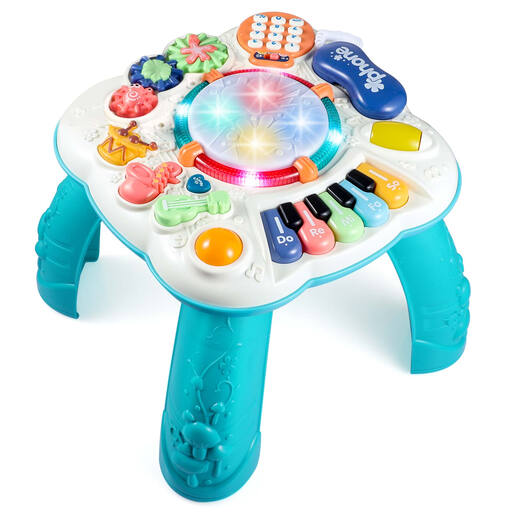
Why this product fits the profile: This baby activity table model can first be used as a floor play panel and later with legs. It is designed for households where one product needs to cover several play positions.
The product description mentions a volume control and a quiet mode. This helps when music should not be constantly audible in a flat or during quiet times.
Six play zones with a keyboard, drum, telephone and gears; removable legs and BPA-free ABS according to the product details.
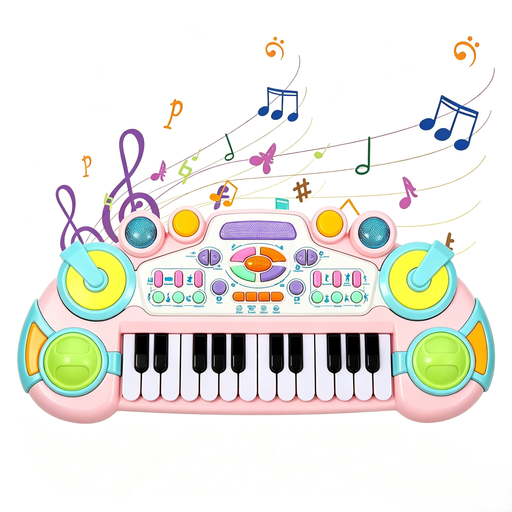
Why this product fits the profile: This children's piano is designed for families who want to introduce first sounds, keys and different sound modes in a flat instrument.
The product details mention 24 keys, a volume control and a mute mode. This makes it easier to adapt the play to the room and time of day.
24 keys, light and sound effects plus animal and drum sounds according to the product description; batteries and microphone are not included.
We have put together a full, regularly updated list of products that fully meet these strict selection criteria and the safety regulations in force in the EU.
That depends on the specific design. Some products are intended from around 6 months according to the manufacturer, while others are suitable from 1 year. For babies, choose large, easy-to-reach controls and a stable, tip-resistant shape. The age recommendation does not replace adult supervision.
The lifespan depends on the material, build quality, frequency of use and how the toy is handled. A toy with several play types can remain interesting over a longer developmental period if the way it is used changes with the child's abilities. Regularly check edges, the battery compartment, feet and moving parts. Damaged toys should not be used any further.
The ongoing costs mainly come from batteries. Check before buying whether batteries are included and what type is needed. An on/off switch, automatic shut-off or quiet mode can reduce consumption. With frequent use, parents should also regularly check the volume and not leave the toy running constantly in the background.