
Lieferung heute & morgen

Qualitätsgarantie

Willkommens-Angebote freischalten: KOSTENLOSE Lieferung | Bis zu 80 % RABATT | Kostenlose 30-Tage-JoyPlus-Testphase
App herunterladen
An interactive baby toy for crawling should capture attention, encourage movement and be suitable for your child's age. In practice, however, flashy lights or lots of melodies don't automatically make for a good purchase. What really matters is the construction, how it works and your baby's specific stage of development.
Music, lights and movement look appealing in product images. But for babies, it's important that an action triggers a recognisable reaction. A toy with a motion sensor, for example, should respond to clapping, tapping or pushing. Without this connection, the child often remains a passive observer.
A product labelled "6 to 36 months" isn't automatically equally suitable for every age. A six-month-old baby needs different play opportunities than a two-year-old. So check whether the crawling toy for babies is also reachable during tummy time, and whether moving parts are sturdy enough for older children.
The CE mark shows that the manufacturer has considered the relevant EU requirements. However, it is not an independent quality seal and doesn't replace your own inspection. Look for a clear age recommendation, a secured battery compartment, rounded edges and regular checks for damage.
For toys that babies grasp, turn or put in their mouths, smooth surfaces and securely fitted components are essential. With plastic models, details like ABS and BPA-free can offer guidance; what really counts is the manufacturer's information and the actual build quality. Check before each use:
References to EN 71 and CE should be clearly stated in the product description or on the packaging. For the products below, any such claims are based on the respective manufacturer's information.
A moving baby toy should not roll uncontrollably towards stairs, doors or cables. For tummy time, choose a clear, level play area with plenty of distance from furniture edges. A model with 360-degree movement can cover several directions, but needs more open space than a toy that is simply pushed.
A toy with a motion sensor is especially handy when parents don't want to keep pressing buttons. Check whether the sensor is triggered by clapping, tapping or wheel movement, and whether the volume can be adjusted. In homes with several people, a mute function is particularly useful.
With musical baby toys, the volume shouldn't be permanently set high. A volume control or mute function makes everyday use much easier. Equally important is the power supply: some models need batteries that are included, while others are supplied without batteries. Check the battery compartment, stated battery life and automatic shut-off regularly.
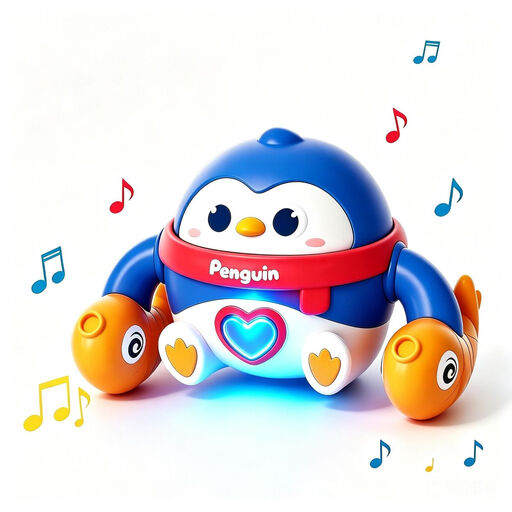
Why this product fits the profile: The penguin combines rolling movement, a glowing heart, music and a sensor. According to the product information, it is suitable for 6 to 36 months, so it can be used as a crawling toy for babies as well as a tummy time toy.
The interaction isn't limited to a single button: according to the description, the toy restarts after clapping or a gentle tap. Batteries are not included and need to be bought separately.
ABS plastic, BPA-free manufacturer claim, rounded edges and 360-degree rolling; LED light and melodies engage multiple senses.
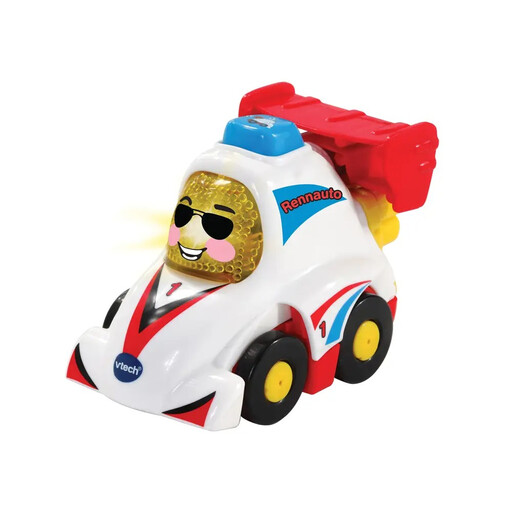
Why this product fits the profile: This compact little car is suitable for children from one year old who can already push deliberately and press buttons. It fits well in small homes and can be used with compatible Tut Tut Baby Racer play sets.
The age limit is clearly stated as "from 1 year". The manufacturer mentions a secured battery compartment, automatic shut-off and cleaning with a damp cloth.
Two AAA batteries are included according to the product information; three songs and six melodies, plus reactions to movement and sensors, offer repeatable play opportunities.
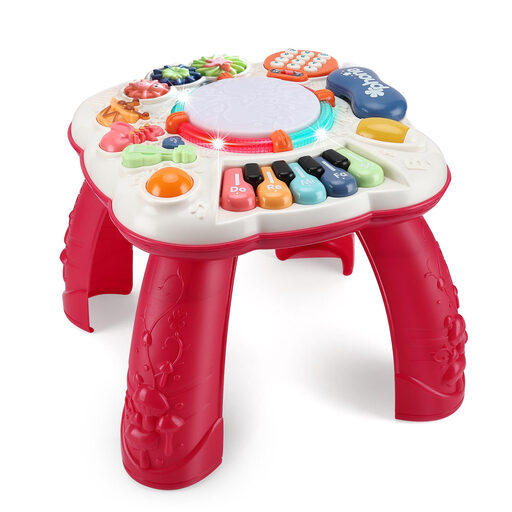
Why this product fits the profile: The six play areas with piano keys, drum, gears and telephone are designed for children who want to explore different functions independently. Removable legs also allow floor play.
The volume can be adjusted according to the description; a mute function is provided for flats or quiet times. The product does not move on its own, so it doesn't replace a crawling toy with a rolling function.
Floor play and standing play in one model; several manually operated elements encourage varied grasping, pressing and turning movements.
We've put together a complete, regularly updated list of products that fully meet these strict selection criteria and the safety regulations in force in the EU.
First, place the toy on a non-slip, clear surface and watch how your child reacts to it. With a model that has a motion sensor, your baby should not play unsupervised near stairs, cables or small objects. Short, repeated play sessions are usually more practical than a constantly running music function.
For grandparents and relatives, the age recommendation is especially important. A gift for babies should not only look appealing, but also match the child's current abilities. For children under three, also check warning labels, the battery compartment and any small parts before giving the gift.
That depends on the specific age recommendation and the type of movement. Some models are intended from six months according to the manufacturer and can be used during tummy time. Others, such as small vehicles, are only suitable from one year. The information on the product and packaging is what counts.
It's not possible to give a reliable fixed lifespan. What matters is frequency of use, the surface, battery condition and how the product is handled. Check the casing, wheels, sensors and battery compartment before each use. If there are cracks, loose parts or malfunctions, the toy should no longer be used.
With battery-operated toys, there are ongoing costs for batteries depending on use. Models with automatic shut-off can reduce consumption. Check before buying whether batteries are included: according to the product information, they are not included with the penguin or the activity table, while the VTech Baby Racer is stated to come with two AAA batteries.