
Lieferung heute & morgen

Qualitätsgarantie

Willkommens-Angebote freischalten: KOSTENLOSE Lieferung | Bis zu 80 % RABATT | Kostenlose 30-Tage-JoyPlus-Testphase
App herunterladen
By: Joybuy Product Recommendation Officer
Interactive baby toys combine buttons, sounds, music, lights or moving elements. This can encourage babies and toddlers to reach, press, observe and imitate. However, the choice is vast, and some product descriptions highlight many features while important details can easily be overlooked.
“More than 20 sounds”, several melodies or colourful light effects may sound impressive at first. What really matters, though, is how the functions are triggered. Does the toy respond to easily reachable buttons? Is there a volume control? Are the activities understandable for the child’s age?
A device with a few, well-placed controls can be more suitable for everyday use than a model with many features that the child cannot yet operate independently.
With baby toys, you should check the age rating on the product, the packaging and the instructions. Warnings such as “not suitable for children under three years” or cautions about small parts that could be swallowed are particularly important.
For example: the Fehn soft toy cloth states an age of 0+ months on one hand, yet the product information also contains a warning about small parts for children under three years. Such details should be clarified before purchase and before each use. In case of doubt, the manufacturer’s safety and usage instructions take precedence.
Many models require two or three AAA batteries. Some batteries are included, others are not. With frequent use, this creates ongoing costs. Additionally, the volume should be appropriate for your living space.
Electronic baby learning toys are usually only wipeable on the surface. A product that cannot be submerged in water is not suitable for the bath. For water play, special, battery-free toys such as stackable pouring cups are a more suitable choice.
For babies from six months, large buttons, sturdy handles and simple cause-and-effect sequences are usually suitable: the child presses a button and then hears a sound or sees a light. With learning toys for 6 months and up, there should be no easily detachable small parts.
For children from twelve months, moving wheels, switches, shape sorters and simple melodies can be engaging. Vehicles such as the VTech Tut-Tut Baby Flitzer are, according to the product information, intended from one year. For toddlers from three years, more complex role-play sets with accessories become appropriate.
Look out for:
Indications such as BPA-free or EN71 should be understood as manufacturer or product claims. They do not replace checking the specific product and its instruction manual. For plastic toys, cleaning with a slightly damp cloth is usually recommended. Plush products, on the other hand, require the washing care specified for them.
A baby toy with lights and music can combine visual and auditory stimulation. For sensitive children or near bedtime, a volume control is practical. Moving toys need a clear, flat surface. Water toys must only be used under direct supervision.
For developing hand dexterity, mechanical activities are also valuable. A sensory toy for babies does not necessarily have to be electronic: grasping toys, play arches, shape sorters or pouring cups also offer tactile, movement and cause-and-effect experiences.
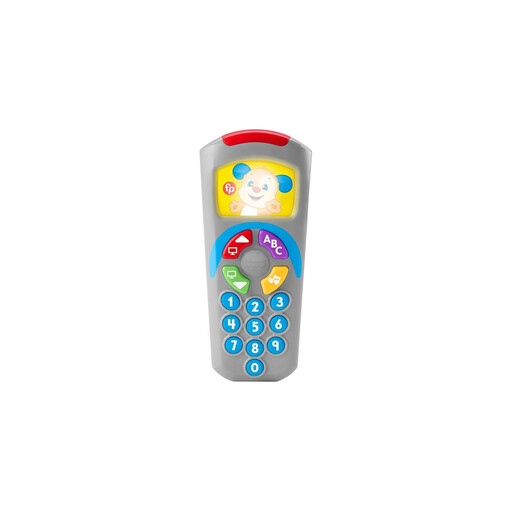
Why this product fits the profile: According to the product description, the remote control is designed for children from 6 months to 3 years and combines buttons, music, sounds and a volume control.
The functions are triggered via large buttons; a volume control is also specified. This makes it easier to adjust for your living space.
Over 35 specified songs, sounds and phrases; two AAA batteries are reportedly included according to the product data.
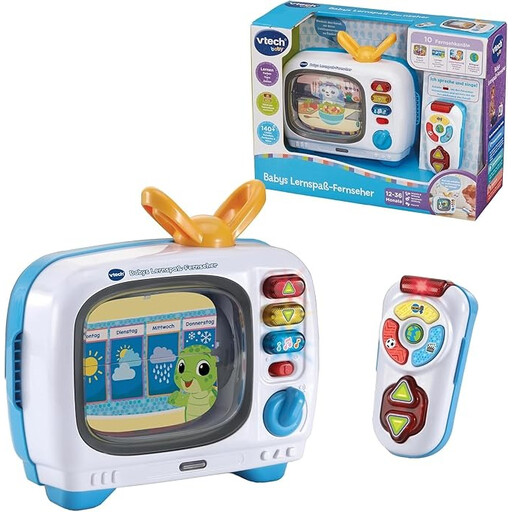
Why this product fits the profile: According to the product data, this model is intended from 12 months and provides documented information on weight, batteries, materials and cleaning.
The age limit and the warning about small parts are clearly stated. This makes it easier to match suitability with the child’s developmental stage.
Lights, music, animal sounds and activities for numbers, shapes and colours; two AAA batteries are specified.
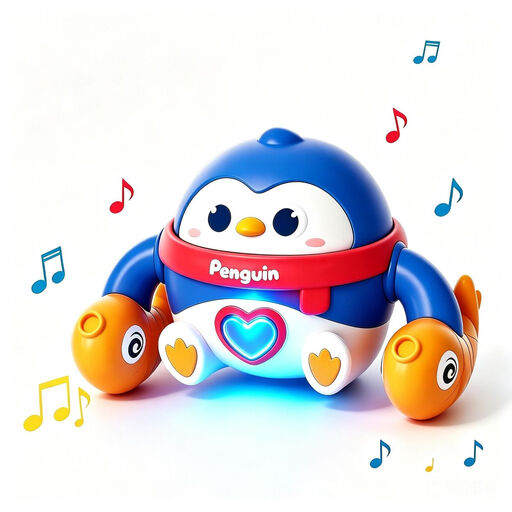
Why this product fits the profile: For families looking for a moving sensory toy for their baby: according to the product description, the penguin rolls and responds to clapping or touch.
The product data specifies the intended age range of 6 to 36 months, as well as rounded edges and a sealed casing.
Combination of rolling movement, LED light and music; batteries are reportedly not included.
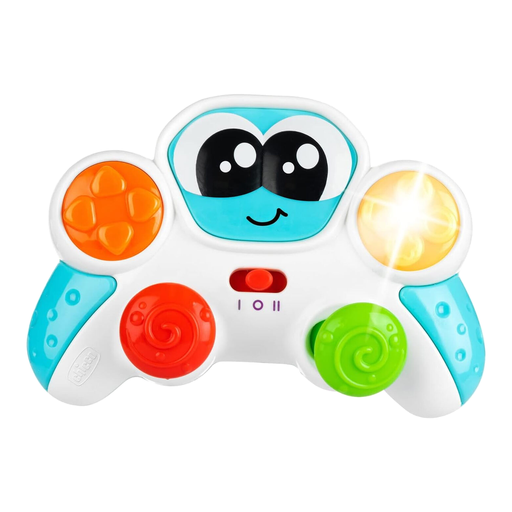
Why this product fits the profile: Two handles, buttons and moving levers invite shared role-play for children from 6 months to 3 years.
According to the product description, the volume can be selected or switched off using a three-position switch.
More than 20 specified sounds and melodies; mechanical levers complement the electronic buttons.
We have compiled a complete, regularly updated list of products that fully meet these strict selection criteria and the safety regulations in force in the EU.
Models with large buttons, sturdy handles and few moving components can be suitable. Check the age rating, the warnings and the size of all parts. A toy should always be used according to the child’s individual developmental stage and under supervision.
The lifespan depends on the materials, care, frequency of play and how it is handled. Regularly check the casing, the buttons and the battery compartment. Batteries should be removed if the toy is not used for an extended period. If batteries have leaked, the product must only be used again after proper cleaning and inspection.
No. Lights and music are additional play stimuli, but not a requirement for meaningful play. A mechanical baby motor skills toy, a play arch or a shape sorter can also encourage grasping, turning and matching. What matters most is a suitable age rating, safe construction and use that fits in with your family’s daily routine.