
Lieferung heute & morgen

Qualitätsgarantie

Willkommens-Angebote freischalten: KOSTENLOSE Lieferung | Bis zu 80 % RABATT | Kostenlose 30-Tage-JoyPlus-Testphase
App herunterladen
Interactive dog toys are designed to encourage exercise, make playtime more engaging, and suit your individual dog. In practice, though, it’s not just the design that determines whether a toy is genuinely useful. Size, material, type of play and supervision are all important factors to consider – especially for active, strong or heavy-chewing dogs.
Terms like bite-resistant, “robust” or “hard-wearing” don’t guarantee unlimited durability. A powerful dog can still damage a tough chew toy. Seams, handles, valves and detachable parts are typical weak points.
Before you buy, it’s important to be clear about whether the product is intended for playing fetch together, controlled tugging or independent chewing. For heavy chewers, regular inspections are essential.
A dog ball or frisbee for dogs needs to match your dog’s mouth size, body size and play style. A toy that’s too small could be swallowed. One that’s too large may be difficult to pick up or carry safely.
Even with a toy designed for large dogs, shape matters: a handle, a rope or a textured surface can make throwing and tugging easier. Always check the manufacturer’s measurements and recommended dog sizes before buying.
A product described as an outdoor dog toy isn’t automatically suitable for every weather, every terrain or deep water. Water-friendly, inflatable and glow-in-the-dark are all different features. After playing outdoors, the toy should be cleaned, dried and checked for damage.
For dog toys for fetching, balls, frisbees and lightweight throw toys work well. A dog ball with a rope can also double as a tug toy for dogs. For controlled pulling, rope toys for dogs and toys with sturdy grip areas are practical.
A chew toy for dogs, on the other hand, shouldn’t automatically be used for intense tugging. Different stresses affect the material and connections. The product description should therefore be as specific as possible about whether it’s intended for fetch, tugging, chewing or training.
It’s not just the material that matters, but also how it’s combined. A rope with a tennis ball, a ball with a woven outer layer, or a toy with a nylon core and natural rubber outer layer each have different properties.
Pay particular attention to:
A product description such as “bite-resistant” should therefore be seen as a guide, not a promise of permanent indestructibility.
For indoor use, compact, easy-to-control models make sense. In the garden, park or a suitable open space, longer throwing distances and bright colours can be helpful. An 18 cm ball is very different from a 5 cm ball on a rope.
When using toys outdoors, also make sure there’s enough distance from roads, bicycles, other animals and obstacles. Fetch games and training sessions should be adapted to your dog’s fitness and behaviour.
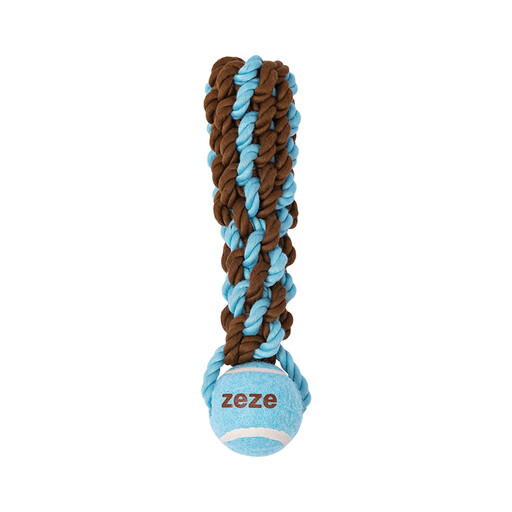
Why this product fits the profile: This combined toy pairs a tennis ball with a braided rope, making it suitable for fetch and gentle tug games. The main section measures approximately 16 × 4 × 33 cm, and the rope with ball is about 26 cm long.
The product details give specific measurements and highlight the need for supervision and checking for damage. This means “bite-resistant” isn’t equated with indestructible.
Braided rope, tennis ball and multiple play options in one product.
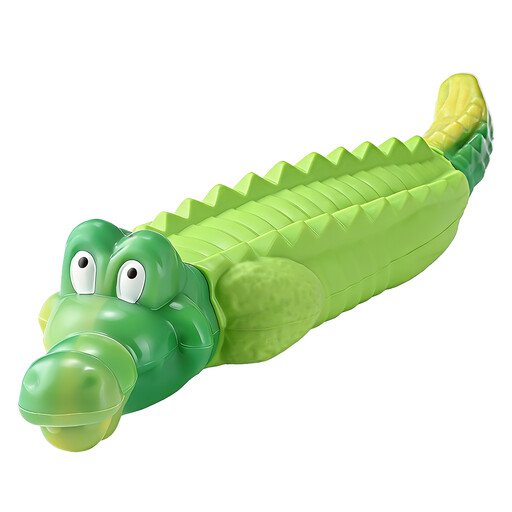
Why this product fits the profile: According to the product details, this model is designed for medium and large dogs. It combines a nylon core with a natural rubber outer layer and measures 24 × 6 cm.
The size recommendation for medium and large dogs limits its use. The manufacturer’s instructions still advise against use by aggressive chewers.
Double-layer construction of nylon and natural rubber; textured surface for throwing, tugging and chewing.
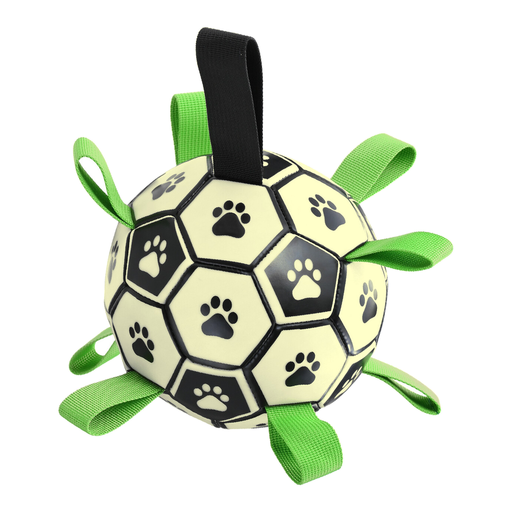
Why this product fits the profile: This ball, approximately 15 cm in size, is described for games on land and in shallow water. A nylon strap allows for throwing, pulling and tugging; the glow effect is intended for low-light conditions.
Use is limited to land and shallow water. Before use, check the ball for cracks, loose parts and wear.
15 cm diameter, nylon strap for interactive play, and intended use on land and in shallow water.
We’ve put together a full, regularly updated list of products that meet these strict selection criteria and the safety regulations in force in the EU.
Even suitable dog toys for training and activity should be checked before and after every use. Stop play if you see cracks, loose fibres, holes or detachable parts. For inflatable products, don’t overfill the ball. After playing in water, thorough drying is important.
For tug games: your dog should be able to release the toy on command. Don’t pull sharply, and don’t leave the toy lying around unsupervised as a permanent chew toy. If any parts are swallowed, seek veterinary advice immediately.
For large dogs, choose bigger models with appropriate dimensions and sturdy materials. A toy for large dogs shouldn’t be too small and should clearly state its suitability for medium or large dogs. For strong chewers, regular checks are still necessary.
It’s impossible to give a reliable lifespan. It depends on bite strength, intensity of use, type of play and material. A product may last longer when used for fetch than for unsupervised chewing. Replace it as soon as you see damage or loose parts.
Yes, a dog ball can be used as a reward in fetch or recall training, as long as the size and material are suitable. Short sessions, clear signals and a safe environment are more important than the longest possible playtime.