
Lieferung heute & morgen

Qualitätsgarantie

Willkommens-Angebote freischalten: KOSTENLOSE Lieferung | Bis zu 80 % RABATT | Kostenlose 30-Tage-JoyPlus-Testphase
App herunterladen
Interactive learning toys for babies and toddlers can combine buttons, sounds, lights, movement and role-play. For parents, grandparents and carers, however, choosing the right one isn’t always straightforward: many products look similar at first glance, yet differ significantly in age suitability, operation, cleaning and safety requirements.
Toys with lights and music quickly catch the eye. What really matters, though, is whether your child can trigger the features themselves and whether they are age-appropriate. A baby needs different stimuli and grasping opportunities than a four-year-old who can already imitate simple play actions and stories.
A toy designed for toddlers aged 1 year and over isn’t automatically suitable for younger babies. Small accessories, battery compartments or detachable parts can pose a hazard. That’s why you should always check the manufacturer’s age recommendation before buying, not after you’ve opened the packaging.
Electronic baby toys need batteries and often can’t be cleaned under water. With fabric products, it’s important to know whether only the surface can be wiped clean or whether the covers are machine-washable. An automatic shut-off or volume control can also be very handy in everyday use.
The age recommendation is a key selection criterion. For babies from 0 months, for example, products with easy-to-grasp, firmly attached elements are suitable. A cuddly toy with sound or a rattle should be checked regularly for loose seams, damaged parts and a securely closed battery compartment.
For toys with small parts, always follow the manufacturer’s warnings. A product recommended for ages 3 or 4 years is not intended for younger children, even if some of its features already seem appealing.
Look for clear information about materials, care instructions and safety markings. The CE marking indicates that the manufacturer declares compliance with the applicable EU requirements for the product. It does not replace supervision by an adult.
For toys that involve movement, you should also consider stability, grip options, brakes and the nature of the floor surface. A walking aid toy should only be used according to the manufacturer’s instructions and should not be placed near stairs, thresholds or sloping surfaces.
With a baby activity centre or a toy with lights and music, it’s worth checking:
For smaller homes, compact products like a learning phone or a shape-sorting toy are often easier to accommodate. A large play station, on the other hand, needs a fixed, safe spot.
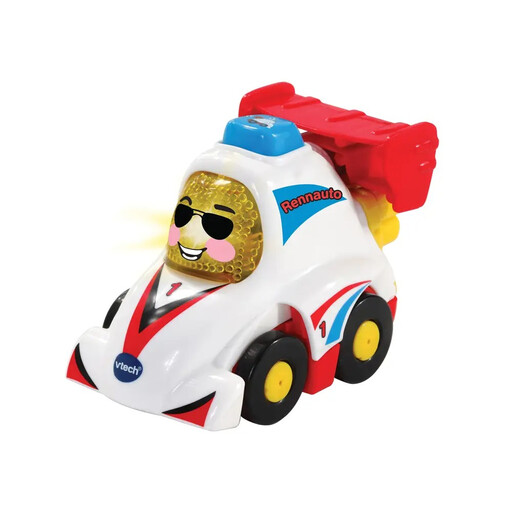
Why this product fits the profile: This compact little car is ideal for families looking for an easy-to-use electronic toy from 1 year upwards. Movement, a push button and a Magic Sensor trigger the intended functions.
The age recommendation from 1 year is clearly stated. The operation is limited to simple button and movement actions rather than an overloaded set of features.
2 AAA batteries are included. The product is compatible with other Tut Tut Baby Racer play sets and can be wiped clean with a dry cloth.
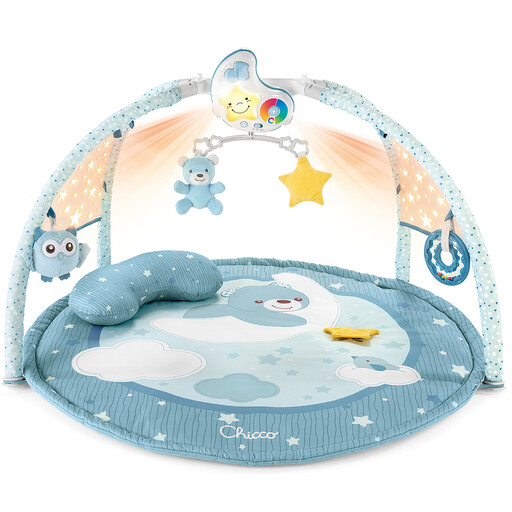
Why this product fits the profile: The 3-in-1 concept combines an 83 cm play mat, a removable projector and several play elements. According to the product information, it is suitable from birth.
The usable life is extended through different play positions. At the same time, it features a timer with 15 or 30 minutes and clear instructions for safe placement.
The play mat and cushion are machine-washable at 30 °C. The projector can be used separately as a night light; electronic parts must not come into contact with water.
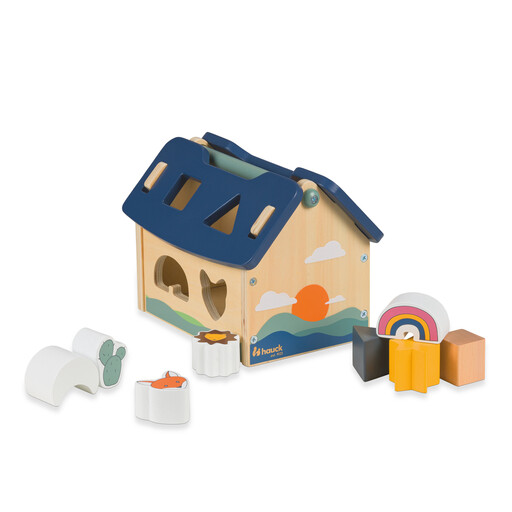
Why this product fits the profile: This shape-sorting house is designed for children aged 12 months and over and requires no batteries. It suits households that prefer a quieter motor skills toy for regular use.
There are no ongoing battery costs and no electronic components that need special protection from moisture. However, the small parts still require supervision.
The house contains eight shape pieces, offers storage space and has a carry handle. According to the product information, it is made from FSC-certified wood.
We’ve put together a complete, regularly updated list of products that fully meet these strict selection criteria and the safety regulations in force in the EU.
There’s no fixed duration that suits every child. Short, supervised play sessions with breaks make sense. With electronic toys, volume control and automatic shut-off are helpful. Adults should observe whether the child is still actively engaging or just passively following sounds and lights.
For battery-operated toys, the cost depends on the battery type, how often the toy is used and whether it has an automatic shut-off. Products like a wooden shape-sorting house need no batteries at all. With electronic models, you should check at the time of purchase whether batteries are included and what size is needed.
Plastic surfaces can usually be wiped clean with a slightly damp cloth. Electronic units must not be immersed in water. Textile mats or cushions should only be washed according to the care instructions. Damaged parts, loose small pieces and faulty battery compartments should be removed from the play area.