
Lieferung heute & morgen

Qualitätsgarantie

Willkommens-Angebote freischalten: KOSTENLOSE Lieferung | Bis zu 80 % RABATT | Kostenlose 30-Tage-JoyPlus-Testphase
App herunterladen
Interactive toys for children combine movement, sounds, light and simple tasks. This can motivate babies to reach out or crawl, and open up new ways of playing for older children. However, the vast selection doesn’t always make the decision easier. Especially with educational toys for babies and electronic vehicles, flashy marketing promises can quickly lead to the wrong purchase.
A toy with lots of buttons, melodies and light signals may seem versatile. What really matters, though, is whether your child can operate the features independently. For a baby from 6 months old, large, easy-to-reach elements are more useful than tiny switches or complicated remote controls. For toys aimed at children aged 3 and above, the operation can be more demanding, but it should still remain understandable.
The age rating is not just a marketing gimmick. It indicates, among other things, possible small parts, ease of use and the level of supervision required. An RC car for children aged 8 and above is not automatically suitable for a three-year-old, even if the vehicle looks sturdy. Conversely, a very simple toy can quickly become uninteresting for older children.
Batteries, charging times and spare parts are often overlooked at the time of purchase. Some baby toys require separately available batteries, while other products have a built-in rechargeable battery. So before you buy, check whether batteries are included, how many are needed and whether a charging cable is part of the package.
First, match the product to your child’s developmental stage and surroundings:
For baby products, BPA-free materials, smooth surfaces and rounded edges are relevant selection criteria. This information should be verifiable in the product description. The CE mark signals the manufacturer’s declaration of compliance with relevant EU requirements; however, it does not replace checking age warnings, the battery compartment and mechanical stability.
With remote-controlled products, moving wheels, gears or magnets come into play. Hair, shoelaces and fingers should not get caught in rotating parts. For inflatable toys, the valve, air pressure and material should also be checked regularly.
An activity table for babies or a sensory toy with light and music should ideally have a volume control. Information such as “batteries not included” must be factored into the ongoing costs. Electronic products should be cleaned dry and checked for cracks, loose parts or a damaged battery compartment before each use.
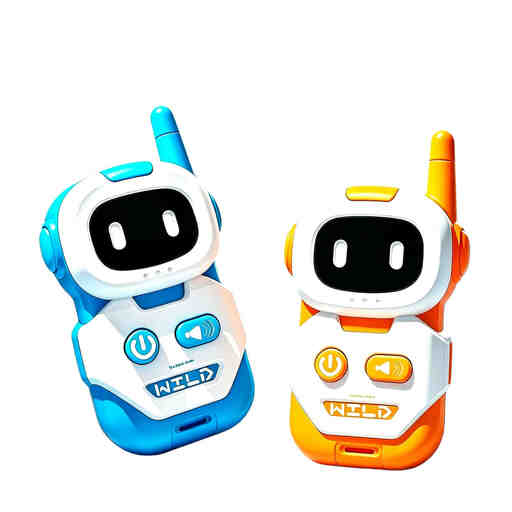
Why this product fits the profile: This compact educational toy combines drum surfaces, lights, animal sounds and shape and colour sorting all in one product.
The age recommendation of 6–18 months clearly defines its use; large controls are designed for first grasping and pressing movements.
Multiple manual play modes, anti-slip base and BPA-free ABS according to product information; batteries are required separately.
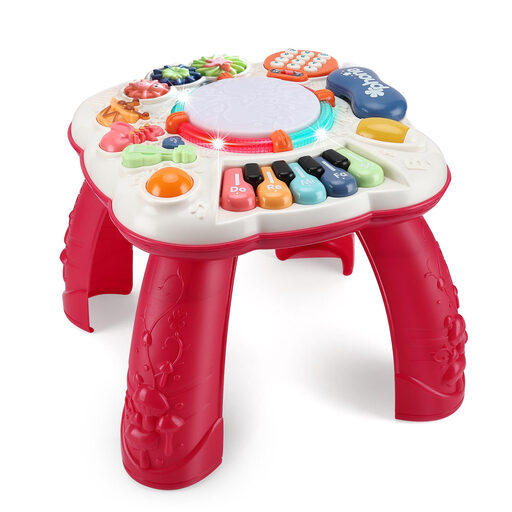
Why this product fits the profile: The removable legs allow it to be used as a floor play panel and later as a standing activity table.
The volume can be adjusted according to the product description; this means its use can be adapted to the living space and time of day.
Six play areas with piano keys, drum, telephone and rotating elements; stated dimensions: approximately 30 × 30 × 31 cm.
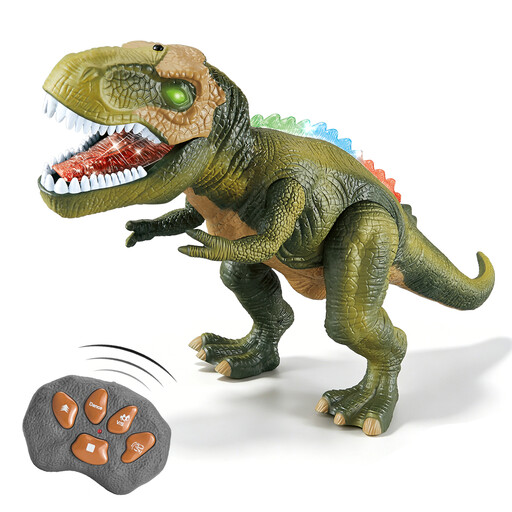
Why this product fits the profile: This remote-controlled dinosaur is aimed at children aged 3 and above and offers movement, light and sound effects, plus simple button controls.
The age limit and warning about small parts are clearly stated. Use should be supervised due to moving parts.
Forward and reverse drive, direction changes and dance mode via 2.4 GHz remote control; six AA batteries are required.
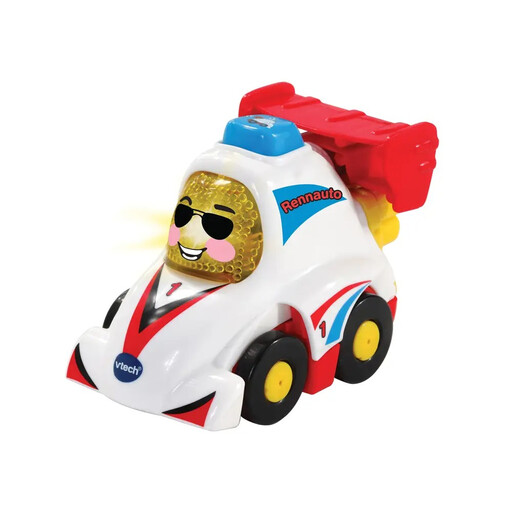
Why this product fits the profile: This compact racer is suitable for children aged 1 year and above and can be combined with other Tut Tut Baby Racer play sets.
Operation is via buttons and wheel movement; the age rating and required supervision are stated in the product details.
Light, sounds, three songs and six melodies; two AAA batteries are included according to the product information.
We have put together a complete, regularly updated list of products that fully meet these strict selection criteria and the safety regulations in force in the EU.
For babies from 6 months, large, sturdy products for grasping, turning, pressing or watching are ideal. A sensory toy with light and moderate sounds can be interesting for short play sessions. What matters is a suitable age rating, rounded edges and supervision by an adult.
The lifespan depends on the material, frequency of use and care. Regularly check the casing, wheels, battery compartment, cables and moving parts. For toys with rechargeable batteries, the battery should be charged according to the manufacturer’s instructions. Products with visible cracks, loose parts or a damaged battery compartment should no longer be used.
In addition to the purchase price, there are costs for batteries or electricity. So check the number and type of batteries in advance. A product with a built-in rechargeable battery can be more practical for regular use, while replaceable batteries are easier to get hold of when you’re out and about. An automatic shut-off or sleep mode can also help limit energy consumption in everyday life.