
Lieferung heute & morgen

Qualitätsgarantie

Willkommens-Angebote freischalten: KOSTENLOSE Lieferung | Bis zu 80 % RABATT | Kostenlose 30-Tage-JoyPlus-Testphase
App herunterladen
Interactive toys for children combine play with responses such as lights, sounds, music or movement. But choosing the right one isn’t always straightforward for parents, grandparents and other family members. A product may seem to offer lots of features at first, yet prove impractical in everyday use because it’s too loud, has a limited play life or has a battery compartment that’s difficult to access.
This buying guide explains the key things to look for and shows which toys may suit different age groups and situations.
Lights and sound effects can grab a child’s attention, but they can’t replace a well-thought-out play concept. For a baby, simple cause-and-effect responses may be more useful than lots of buttons. For children aged 3 and over, pretend-play toys can offer longer-lasting enjoyment, especially when they include accessories and realistic features.
The label ‘from 3 years’ is more than just a guide. If a toy contains small parts, there may be a risk of swallowing. Check the warnings, recommended age range and any supervision guidance before buying. A product described as a toy for children aged 3 and over isn’t automatically suitable for younger siblings.
Batteries are often not included with toys with lights and sounds. Hard-to-reach battery compartments, no volume control or complicated cleaning can also make a toy less practical. For plush toys, check whether you need to remove the electronic module before washing.
For babies from birth, choose simple, securely fastened products without small parts that can be accessed easily. The Fehn Mini Music Box is listed as suitable from birth, but according to the product information, the music module must be kept out of reach of babies and toddlers.
For children aged 6 to 36 months, sensory toys, activity tables and simple musical instruments are worth considering. They respond to pressing, turning or tapping, helping children see the connection between an action and its result.
From age 3, pretend-play toys for children, play kitchens, toy cash registers and toy tools come into their own. Look for well-organised accessories, and make sure the toy will fit the space available.
Look for:
Electronic toys should only be used with the specified batteries. An adult should fit the batteries and remove them if the toy won’t be used for an extended period. Claims such as ‘BPA-free’, ‘CE’ or ‘EN71’ should be clearly stated in the product description or on the packaging. These markings don’t replace the need to check the specific safety warnings.
A larger toy may offer more ways to play, but it also needs more storage space. For example, the Theo Klein Miele play kitchen measures 70 × 30 × 91 cm and weighs 7.8 kg. A compact activity table may be a more practical choice for a small flat.
For musical toys, consider whether they have volume control and a quiet mode. Also check whether the microphone, play money, kitchen utensils, remote control or batteries are included.
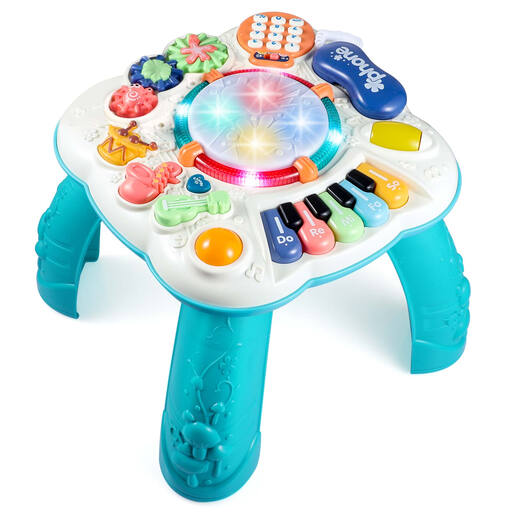
Why it suits this type of buyer: This activity table combines six play areas, including piano keys, a drum, a telephone and spinning elements. Its detachable legs also let you use it as a floor playboard.
The play modes are clearly described and tailored to children aged 6 to 36 months. According to the product information, it has both volume control and a quiet mode.
Several ways to play in one product; batteries aren’t included, so you’ll need to buy them separately.
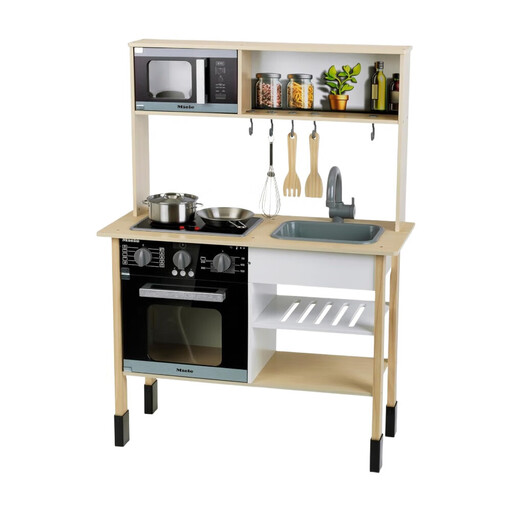
Why it suits this type of buyer: This wooden play kitchen is designed for children aged 3 and over. It includes a hob, microwave, removable sink and wooden and metal kitchen accessories.
The description clearly states that the accessories aren’t suitable for heating. Care and assembly instructions are also provided.
Wooden construction, light and sound effects on the hob, and several pretend-play features; assembly required.
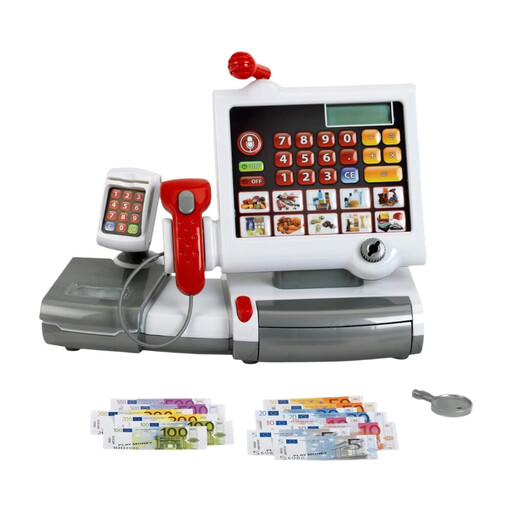
Why it suits this type of buyer: This electronic toy cash register has a scanner, scales, play money, a card slot and calculator function, as well as lights and sound effects for shopkeeper role-play again and again.
The included features and accessories are listed in detail. Note the age guidance of 3 and over and the warning about small parts.
Several ways to play and calculator functions; requires three AA batteries, which aren’t included.
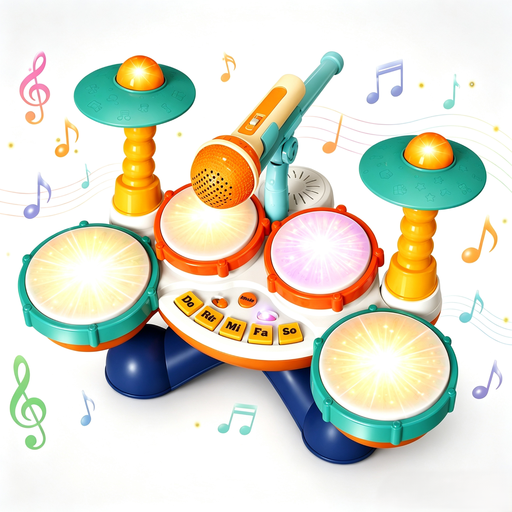
Why it suits this type of buyer: According to the product description, this set is designed for children aged 1 to 4. It combines four illuminated drum pads, cymbals, a microphone, tunes and animal sounds.
The supplier states that the volume is adjustable. Even so, parents should check before buying whether the sound level is suitable for their home.
Microphone, several play modes and illuminated pads; batteries aren’t included.
A Bosch toy tool set, toy vacuum cleaner or remote-controlled dinosaur could also make a good gift for boys and girls aged 3 and over. The dinosaur combines a remote control with lights, movement and sounds. For younger children, take extra care with moving parts, batteries and any magnets.
For babies, musical toys made from soft materials can be a useful addition. With a music box, make sure the electronic module stays securely enclosed. If you’re looking for toys with sound effects, explore more options in the sound toys for children category.
We’ve put together a complete, regularly updated list of products that meet these strict selection criteria and fully comply with the safety regulations in force in the EU.
It depends on the design and features. Simple activity toys are available for babies from birth or from 6 months. Products with small parts, accessories or pretend-play features are often intended for children aged 3 and over. Always follow the guidance on the product page and packaging.
Lifespan depends on the materials, battery compartment, how often the toy is played with and how it’s cared for. Before buying, check for sturdy joints, replaceable batteries and spare parts. Keep electronic features dry and remove the batteries before storing the toy for an extended period.
Depending on the model, you may need to budget for batteries on top of the purchase price. Check the number and type of batteries required, and whether the toy has volume control. Rechargeable batteries may be a good choice for toys used frequently, provided they’re suitable for the product.