
Lieferung heute & morgen

Qualitätsgarantie

Willkommens-Angebote freischalten: KOSTENLOSE Lieferung | Bis zu 80 % RABATT | Kostenlose 30-Tage-JoyPlus-Testphase
App herunterladen
Thorough oral hygiene goes beyond daily tooth brushing. Dentists point out that a normal toothbrush often only reaches about 60% of the tooth surfaces. The remaining 40% are the interdental spaces, where plaque and food debris can accumulate. This is where interdental brushes come in. However, choosing the right product can be overwhelming. Many users pick the wrong size or inferior products, risking not only ineffective cleaning but also gum injuries.
Before you make a purchasing decision, you should be aware of the most common pitfalls that lead to frustration and unnecessary expenses:
An informed choice based on objective criteria will help you avoid these problems and find a product that effectively supports your oral care routine.
To find the right interdental cleaners, technical specifications are more crucial than brand promises. Pay attention to the following three features to make a well-founded decision.
The most important feature is the interdental brush size. The most reliable guide is the ISO standard (DIN EN ISO 16409). This standardises the sizes of interdental brushes, assigning them a numerical value (e.g., ISO 0 to ISO 8) and often a corresponding colour.
Brands like TePe Interdental Brushes or Mara Expert consistently use this colour-coding system, which makes repurchasing the correct size easier. If you are unsure, start with the smallest size or a mixed-size pack to determine the right ones for your individual interdental spaces.
The wire material is critical for safety, especially for braces, implants, or bridges. Always look for a plastic-coated wire. This thin coating prevents direct contact between the metal and your teeth or dental work, protecting against scratches and preventing unpleasant sensations. The bristles are typically made of high-quality nylon, which provides effective cleaning without irritating the gums.
To clean the interdental spaces, especially around the molars, an ergonomic design is essential. A good handle fits securely in your hand and allows for precise control. A flexible yet stable brush neck allows you to easily angle the brush to reach even difficult spots without excessive pressure. Some models offer a protective cap that doubles as a handle extension, further improving usability.
Based on these objective criteria, we have compiled a selection of products for various needs and use cases.
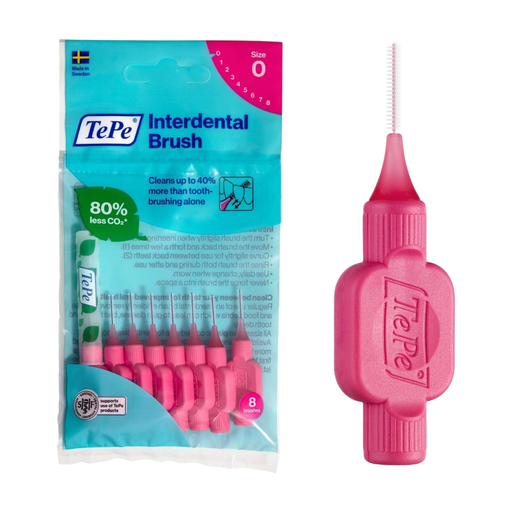
Why This Fits Their Persona: Ideal for individuals using interdental brushes for the first time or those with naturally very tight spaces between their teeth. The smallest ISO size minimises the risk of injury and makes it easy to start a daily routine.
The clear labelling as ISO size 0 with a 0.4 mm wire diameter prevents the common mistake of buying a brush that is too large. The plastic-coated wire protects tooth enamel from the very first use.
Developed in collaboration with dental professionals; the ergonomic handle ensures controlled and safe use.
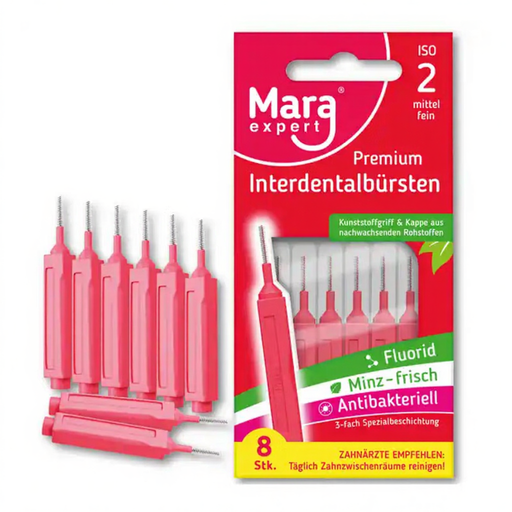
Why This Fits Their Persona: Specifically designed for the complex cleaning needs of bridges, brackets (braces), and implants. The flexible neck allows for manoeuvring around wires and fixtures where normal brushes fail.
The plastic-coated surgical fine wire prevents scratching of expensive dental work or orthodontic appliances. The flexible yet sturdy neck prevents the breakage that often occurs with low-quality brushes in complex structures.
Flexible brush neck and ergonomic handle for precise cleaning; according to the manufacturer, the bristles are coated with sodium fluoride and chlorhexidine gluconate.
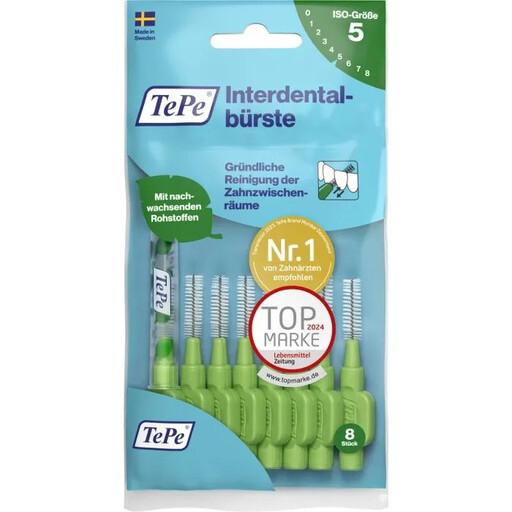
Why This Fits Their Persona: Suitable for people with naturally wider interdental spaces or gum recession, where smaller brushes do not provide adequate cleaning. This size effectively fills the space and removes plaque thoroughly.
The clear ISO 5 designation with a 0.8 mm wire diameter ensures that users specifically choose a larger brush for effective cleaning, rather than mistakenly using a size that is too small and ineffective.
According to the manufacturer TePe, the handle is made from renewable materials. The plastic-coated wire ensures safe use even with larger brushes.
We have compiled a complete, up-to-date list of products that fully meet these strict selection criteria and safety regulations.
An interdental brush should be replaced as soon as the bristles are worn or the wire is bent. With daily use, this is typically after about one week. For hygiene reasons, regular replacement is important to prevent the build-up of bacteria on the brush.
The safest way is to get a recommendation from your dentist or dental hygienist. Alternatively, you can start with a mixed-size trial pack. Gently insert the smallest size into the interdental space. The ideal brush should fill the space and glide with slight resistance, but without force. You may need different sizes for different areas of your mouth.
When used correctly and with the right size, cleaning should not be painful. Minor pain or gum bleeding in the first few days of use may indicate existing gum inflammation and should subside with continued, gentle cleaning. If pain or heavy bleeding persists, you may be using a brush that is too large or applying too much pressure. In this case, consult a dentist.
Written by: Joybuy Product Recommendation OfficerDate: July 28, 2026