
Lieferung heute & morgen

Qualitätsgarantie

Willkommens-Angebote freischalten: KOSTENLOSE Lieferung | Bis zu 80 % RABATT | Kostenlose 30-Tage-JoyPlus-Testphase
App herunterladen
By Joybuy Product Recommendation Officer, July 28, 2026
Thorough oral hygiene goes beyond daily brushing. Cleaning the spaces between your teeth is a crucial step to remove plaque and food debris from areas a regular toothbrush can't reach. However, choosing the right interdental brushes can be overwhelming. Many users pick the wrong product, risking not only an ineffective clean but also gum injury.
This guide will help you navigate the common pitfalls of purchasing and make an informed decision for your individual needs.
Before you make a purchase, it's important to understand the most common errors that lead to unsatisfactory results or unnecessary expenses.
To avoid these mistakes, you should focus on a few objective criteria. These will help you cut through the marketing noise and find the right product for your dental care routine.
The most important characteristic of an interdental brush is its size. To create a uniform standard, the ISO 16409 norm was established. It classifies brushes into different sizes (usually from 0 to 8), each assigned a specific colour.
Manufacturers like TePe consistently use this colour-coding system, making it easy to repurchase the correct size. If you're unsure, start with a very small size or a variety pack to find the right fits for your different interdental spaces.
Another crucial feature is the material. Look for a plastic-coated wire. This thin coating protects teeth and gums from direct contact with metal. This is especially important for dental care for implants, bridges, crowns, or for exposed and sensitive tooth necks. The bristles are typically made of soft nylon, which effectively removes plaque without irritating the gums.
Choosing the right tool depends on your personal circumstances and preferences.
Based on the criteria mentioned, we have curated a selection of products for different needs and user profiles.
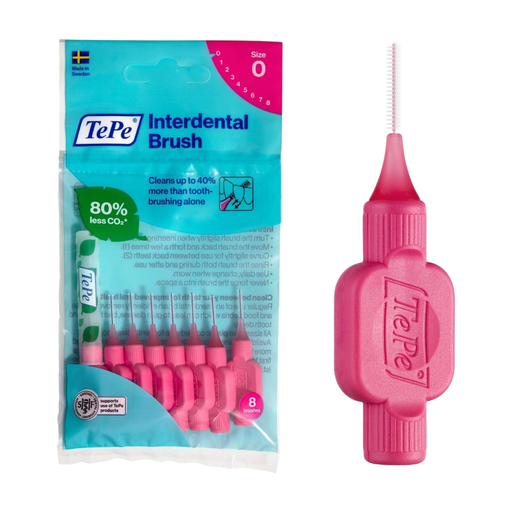
Why it's a match: Ideal for those just starting with interdental cleaning or who have very tight spaces. The ISO 0 size (0.4mm) is one of the smallest available, minimising the risk of injury.
Directly addresses the problem of incorrect sizing by offering a defined, very small option. The plastic-coated wire also prevents material damage.
Standardised ISO size for easy identification and repurchasing. Soft bristles and a protected wire ensure a gentle clean.
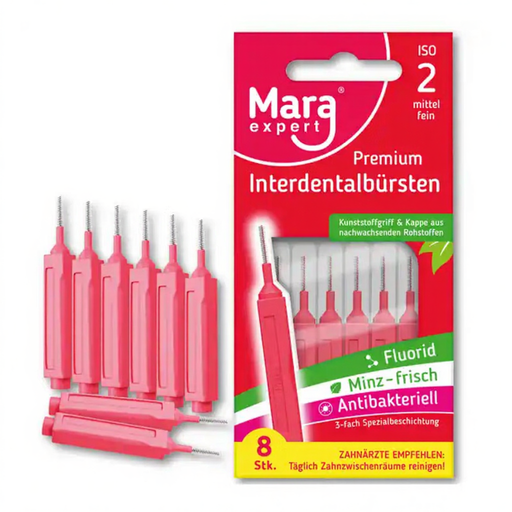
Why it's a match: Designed for the demanding task of cleaning around dental work. The flexible brush neck and ergonomic handle allow for precise handling in hard-to-reach areas around bridges and implants.
The surgical-grade, plastic-coated wire prevents scratches on sensitive dental work. The ISO size 2 is well-suited for the often wider gaps found with implants.
Flexible brush neck for better manoeuvrability. According to the manufacturer, the coating contains sodium fluoride and chlorhexidine gluconate.

Why it's a match: These floss picks are a hassle-free alternative for a quick clean-up between meals, while travelling, or at the office. They are ready to use out of the box and require no size selection.
Bypasses the complexity of brush sizing by providing a simple, universally applicable solution for a quick clean. Ideal for users looking for a straightforward option.
Combines a floss thread and a pick in one product. Made from plant-based materials, according to the manufacturer.
We've compiled a complete, up-to-date list of products that meet these strict selection criteria and safety requirements. Discover more tools for interdental cleaning.
With daily use, an interdental brush should be replaced after about a week, or as soon as the bristles become worn or the wire bends. Regular replacement ensures hygienic and effective cleaning performance.
Minor gum bleeding may occur during the first few uses. This is often a sign of existing gum inflammation caused by plaque buildup. With regular and correct use, the bleeding should subside within one to two weeks. If bleeding persists, a dentist should be consulted.
For those with fixed braces, interdental brushes are a very useful tool. They are excellent for cleaning the areas around the brackets and under the archwire. It is advisable to use different sizes: a smaller one for tight spaces and a larger, conical brush for cleaning the brackets themselves. Here too, it is essential to look for a plastic-coated wire.