
Lieferung heute & morgen

Qualitätsgarantie

Willkommens-Angebote freischalten: KOSTENLOSE Lieferung | Bis zu 80 % RABATT | Kostenlose 30-Tage-JoyPlus-Testphase
App herunterladen
A toothbrush alone only cleans about 60% of your tooth surfaces. The remaining 40% is in the spaces between your teeth, where plaque and food debris accumulate. Daily interdental care is therefore not an optional step, but a necessity for comprehensive oral hygiene. However, the market for interdental brushes can be overwhelming. Choosing the wrong product not only leads to ineffective cleaning but, in the worst-case scenario, can even damage your gums or expensive dental work.
Many users choose the wrong product because they fall for common misconceptions. Before you make a decision, you should be aware of these three frequent pitfalls:
To avoid these mistakes, you should focus on objective and verifiable product features. Instead of being swayed by marketing promises, check the following three criteria to find the right interdental brushes for your needs.
The most important specification is the interdental brush size, which is standardised according to an international norm (ISO 16409). This standard defines the size of the smallest gap the brush can pass through (Passage Hole Diameter, PHD). The sizes are often indicated by an ISO number (0-8) and a corresponding colour.
Pro-Tip: You often need more than one size, as the spaces between the front teeth are usually tighter than those at the back. When in doubt, start with the smallest size and slowly work your way up until the brush fills the space with slight resistance, but without force.
A crucial quality feature is the wire that holds the bristles. Always look for a plastic-coated wire. This thin coating protects the tooth enamel and gums from injury. This feature is especially indispensable for wearers of interdental brushes for braces, implants, crowns, or bridges, as it protects the sensitive surfaces of the dental work. The bristles themselves are typically made of durable nylon.
To effectively clean between your teeth, especially around the molars, the shape of the brush is critical.
Based on these objective criteria, we have identified several products suitable for specific needs and user profiles.
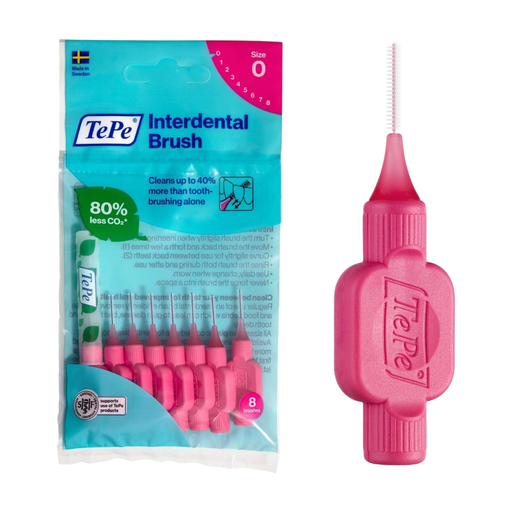
Why This Fits Their Persona: Ideal for individuals starting with interdental cleaning or those with naturally very tight teeth. The small 0.4 mm wire diameter (ISO 0) minimises the risk of discomfort during the first few uses.
This product bypasses the "wrong size" trap by offering one of the smallest sizes available. This reduces the risk of forcing a brush that is too large into the interdental space.
The plastic-coated wire ensures safe use, even on sensitive teeth. The short, ergonomic handle provides good control.
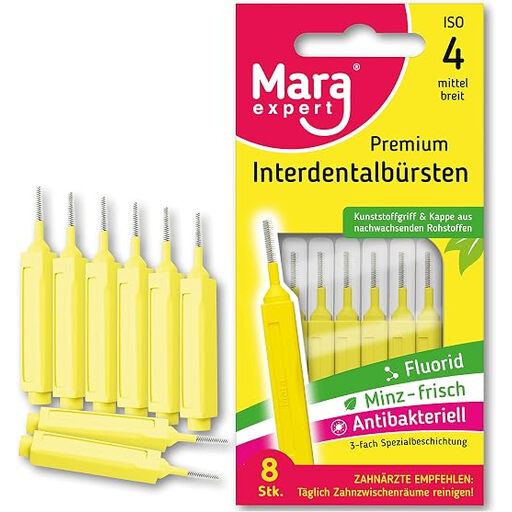
Why This Fits Their Persona: Specifically designed for the complex cleaning requirements of braces, bridges, and implants. The flexible neck allows for precise navigation around wires and brackets to clean the surfaces underneath.
This model solves the problem of rigid design. The flexible brush neck and ergonomic handle counteract the trap of poor reachability, enabling a thorough clean.
The surgical-grade, plastic-coated wire protects expensive dental work. According to the manufacturer, the coating contains sodium fluoride and chlorhexidine digluconate.
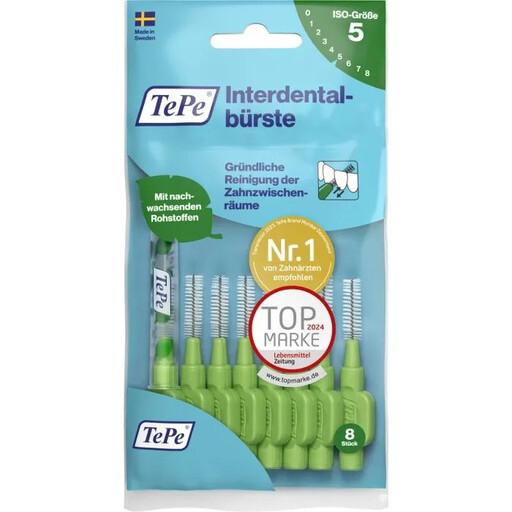
Why This Fits Their Persona: Perfect for users with naturally wide interdental spaces or gum recession, where smaller brushes don't provide adequate cleaning. The ISO 5 size effectively fills these gaps.
This product solves the "too small brush" trap. Instead of moving ineffectively within the space, the dense bristles ensure thorough plaque removal on both adjacent tooth surfaces.
The larger brush diameter cleans efficiently and quickly. According to the manufacturer, the handle is made from renewable resources, and the wire is plastic-coated for protection.
We have compiled a complete, up-to-date list of products that fully meet these strict selection criteria and German safety regulations.
With daily use, an interdental brush should be replaced after about a week, or as soon as the bristles become worn. A bent wire or frayed bristles are clear signs that the cleaning effectiveness is diminishing and a replacement is needed.
You can find the right size through careful trial and error. Start with the smallest available size (e.g., ISO 0 or 1). The brush should fill the space with slight resistance but should not get stuck. If it glides through too easily, it's too small. If you have to use force, it's too big. When in doubt, your dentist can determine the appropriate sizes for your interdental spaces.
You may experience slight pain or gum bleeding when using them for the first time or if the brush is too large. This is often a sign of existing gum inflammation. With the correct size and gentle use, cleaning should be painless. The bleeding should subside after a few days of regular use. If it persists, please consult your dentist.