According to studies, mechanical cleaning with a toothbrush only reaches about 60% of tooth surfaces. The remaining 40% consists of the interdental spaces, where food particles and bacterial buildup, also known as plaque, can accumulate. Inadequate interdental cleaning is therefore a common cause of cavities and gum inflammation. This guide analyses the available tools for interdental care and presents a selection of products based on their technical specifications.
Selection Criteria for Interdental Care
The choice of the right tool depends on your individual dental anatomy, the presence of dental restorations or orthodontic appliances, and personal preferences. The three primary categories are interdental brushes, dental floss, and dental picks.
1. Interdental Brushes
Interdental brushes are designed for cleaning medium to larger interdental spaces. Their effectiveness is based on the mechanical removal of plaque by the bristles.
- Size (ISO Standard): Size is the most critical factor. The ISO 16409 standard specifies wire diameters to ensure safe and effective use. A brush that is too small will not clean adequately, while one that is too large can injure the gums and teeth. The sizes are often colour-coded.
- Wire: The wire core should be plastic-coated. This is especially important when cleaning around implants or for sensitive teeth to prevent scratching the surfaces.
- Handle: An ergonomic handle facilitates handling and control, particularly when cleaning the back molars. Some models offer a protective cap that also serves as a handle extension.
2. Dental Floss
Dental floss is primarily suitable for very tight interdental spaces where an interdental brush will not fit.
- Material and Coating: Waxed and unwaxed versions are available. Waxed floss glides more easily through tight contact points. Dental tape, a wider, flatter form of floss, can be beneficial for slightly larger gaps.
- Speciality Floss: Speciality products exist for wearers of braces, bridges, or implants. These often combine a stiffened end for threading, a spongy middle section for cleaning larger areas, and a regular floss section.
3. Dental Picks (Soft-Picks)
Dental picks are a modern alternative. They typically consist of a flexible plastic or rubber core with soft bristles or fins.
- Material: Soft rubber or silicone is gentle on the gums and is suitable for gum massage and removing food particles.
- Use: They are often easier to handle than dental floss and are well-suited for on-the-go use. However, their cleaning performance on stubborn plaque may be less effective than that of a correctly sized interdental brush.
Our Product Selection for 2026
Based on the criteria above, we have compiled a selection of products for various use cases.
Oral-B Superfloss Dental Floss
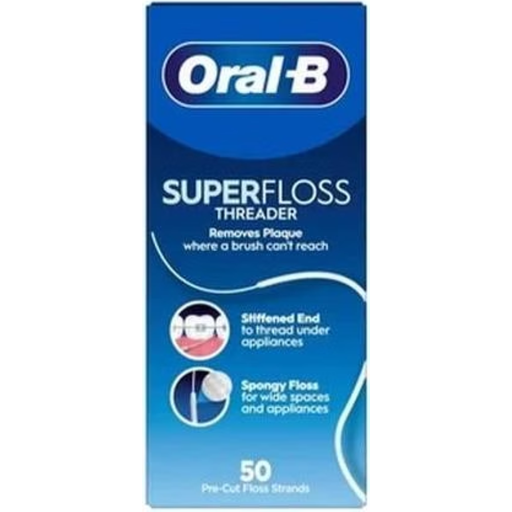
- Why we recommend this product: Oral-B Superfloss is a speciality product designed for complex oral situations. Its three-part structure specifically addresses the challenges of cleaning around orthodontic appliances. The stiffened end allows it to be threaded under bridges and wires, while the spongy section provides large-surface cleaning.
- Pros:
- Stiffened end for easy threading under braces and bridges.
- Spongy middle section for effective cleaning of larger spaces and around appliances.
- Convenient, pre-cut strands (50 per pack).
- Who it's for: Individuals with braces, bridges, implants, and wide interdental spaces for whom conventional dental floss is inadequate.
View Product: Oral-B Superfloss Dental Floss
TePe Easypick Size XS/S
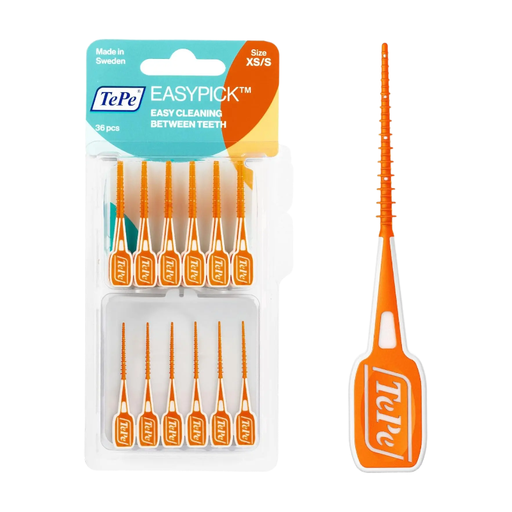
- Why we recommend this product: The TePe Easypick combines the ease of use of a toothpick with the cleaning power of a brush. Its flexible core and silicone fins allow for gentle yet efficient cleaning. The non-slip grip and included travel case highlight its focus on user-friendliness and portability.
- Pros:
- Flexible design for easy access to back molars.
- Soft silicone fins are gentle on the gums.
- Non-slip grip for secure handling.
- Includes a travel case for hygienic storage on the go.
- Who it's for: Users looking for a simple and quick solution for daily interdental care, as well as for use while travelling. Ideal for narrow to medium spaces.
View Product: TePe Easypick Size XS/S
TePe Interdental Brushes ISO 3 - 0.6mm Blue
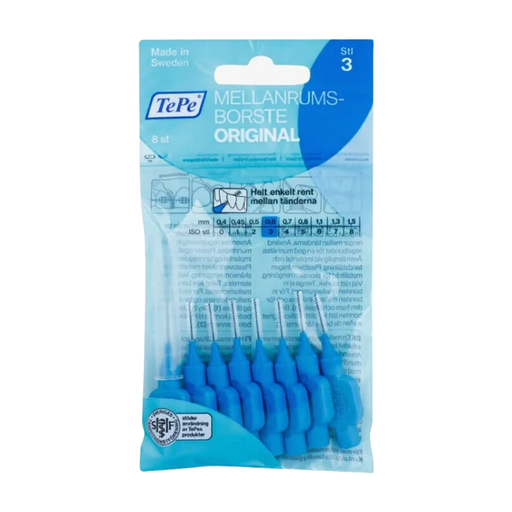
- Why we recommend this product: This TePe Interdental brush corresponds to ISO size 3 (0.6mm wire diameter) and offers precise cleaning for specific interdental spaces. The plastic-coated wire protects teeth and implants from damage. The ergonomic handle and the cap, which doubles as an extension, optimise handling.
- Pros:
- Standardised size (ISO 3) for a predictable fit.
- Plastic-coated wire for safe use with implants and sensitive teeth.
- Ergonomic handle for better control.
- Protective cap doubles as a handle extension for hard-to-reach areas.
- Who it's for: Individuals who need a thorough and targeted method for plaque removal in narrow to medium interdental spaces and who value standardised sizes.
View Product: TePe Interdental Brushes ISO 3 - 0.6mm
Other Options to Complement Your Oral Hygiene
In addition to the brushes and speciality flosses featured, other tools can contribute to your oral hygiene routine. For specific needs or as a supplement, products from the toothpicks category can also be considered. These are often made of wood or plastic and are used for the quick removal of food debris.
Frequently Asked Questions (FAQ)
1. Dental floss or interdental brushes: Which is the right choice? The choice depends on the width of the interdental space. For very tight contact points where a brush cannot fit, dental floss is the tool of choice. For all larger spaces, correctly sized interdental brushes offer higher cleaning efficiency as they fill the space better and remove plaque more effectively through mechanical action. Often, a combination of both products for different areas of the mouth is the most comprehensive solution.
2. How often is daily interdental cleaning necessary? Dental professional associations generally recommend cleaning between the teeth once a day. The ideal time is in the evening, before brushing your teeth. This removes food particles and plaque from the interdental spaces, allowing the fluoride in your toothpaste to subsequently reach all tooth surfaces.
3. How do I determine the correct size for interdental brushes? The brush should fill the space but be easy to insert without applying strong pressure. You should feel a slight resistance. It is common to need different sizes for different interdental spaces in the same mouth. A professional dental cleaning or a consultation at your dental practice can help determine the appropriate ISO sizes. When in doubt, start with the smallest size and work your way up to a larger one if necessary.
Written by: Joybuy Product Recommendation Officer

