
Lieferung heute & morgen

Qualitätsgarantie

Willkommens-Angebote freischalten: KOSTENLOSE Lieferung | Bis zu 80 % RABATT | Kostenlose 30-Tage-JoyPlus-Testphase
App herunterladen
Anyone looking to buy international ready meals online in Germany will find a broad selection of shelf-stable meals, frozen products and convenient snacks. However, Asian ready meals, Indian curries and German classics can differ significantly in terms of storage, preparation, portion size and ingredients.
To avoid turning a quick meal into a disappointing purchase, it is worth paying close attention to the product details rather than eye-catching marketing claims. The following selection from the Joybuy Product Recommendation Officer highlights the criteria that matter most when ordering ready meals online.
The stated “300 g” initially describes only the net weight. Depending on the recipe, a pack of pasta, curry or gyoza may be intended for one person, as a side dish or as part of a larger meal. For products such as 300 g ready meals, the ingredients list, energy content and serving recommendations should therefore be considered together.
Product-page descriptions may be based on translations or outdated data. For example, “vegan” appears in the product name of Haldiram’s Paneer Makhani, while the supplied ingredients list includes milk, cream, yoghurt and cashew nuts. For a vegan diet, only the current labelling on the packaging is authoritative. If anything is unclear, the product should not be planned as a vegan option.
Canned and pouch-based meals can often be stored at room temperature. Frozen ready meals such as gyoza, however, require uninterrupted storage at −18 °C or below. Before ordering, check whether the delivery will be shipped as frozen goods and whether there is enough space in your freezer. Depending on the product instructions, thawed goods must not be refrozen.
International dishes frequently contain gluten, soya, sesame, milk, egg, mustard, fish or crustaceans. Examples include:
The allergen information should be checked against the packaging before every order, as recipes may change.
Ready meals in cans or sealed trays can often be heated in a bain-marie or microwave. Always follow the packaging instructions carefully. Damaged, swollen or leaking containers must not be placed in the microwave or heated in a bain-marie.
Preparation methods vary for frozen gyoza. According to the product details, Bibigo products are cooked directly from frozen. Ajinomoto lists methods such as pan-frying, boiling, steaming and deep-frying. The crucial point is to ensure that the filling is heated through completely.
Depending on the packaging, unopened shelf-stable products may remain suitable for storage for several months. Once opened, however, shorter time limits apply:
The best-before date on the packaging actually delivered takes precedence over general information provided online.
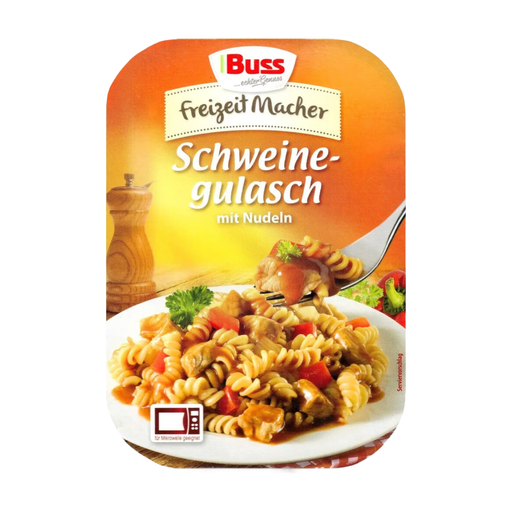
Why This Fits Their Persona: A straightforward, shelf-stable portion for students, working professionals or the pantry. The meal can be heated in a bain-marie or microwave.
The portion size and room-temperature storage requirements are clearly stated. Allergens such as gluten and egg are listed in the product details.
300 g tray, preparation at 600–1,000 watts and German origin according to the product details.
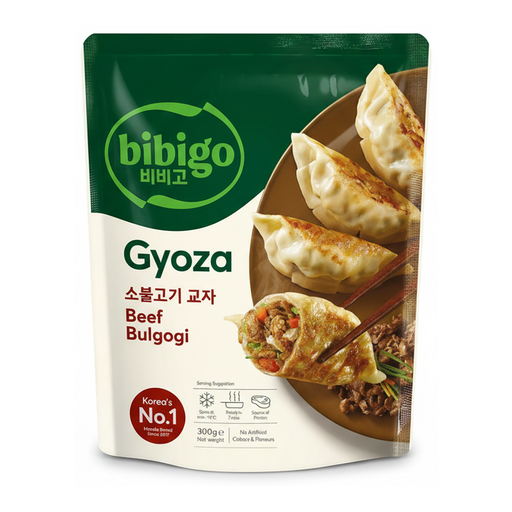
Why This Fits Their Persona: Ideal for fans of Korean cuisine who want to serve gyoza as a main course, snack or appetiser.
The product details specify frozen storage at −18 °C or below and preparation directly from frozen.
19% beef according to the ingredients list, 30% vegetables and preparation in a pan or deep fryer.
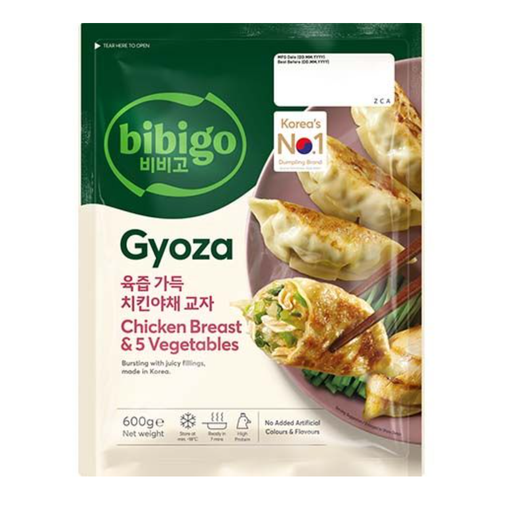
Why This Fits Their Persona: The 600 g bag is well suited to families, house shares or regular gyoza meals.
The pack size is clear before purchase. Once opened, the product should be resealed securely before being returned to the freezer.
600 g contents, 33% vegetables according to the product details, plus preparation in a pan or deep fryer.

Why This Fits Their Persona: A shelf-stable Indian dish for the pantry that pairs well with rice, bread or flatbread.
The ingredients list identifies soya as an allergen, making it easier to tailor the choice to individual dietary requirements.
280 g pouch, room-temperature storage and heating in the microwave or boiling water.
Explore the full category for more international dishes, with details on ingredients, portion size, storage and preparation.
For a varied pantry, the following options are also worth considering alongside the products featured above:
Unopened cans and certain pouch meals can be stored at room temperature. These include many Indian ready meals, Tteokbokki and German canned dishes, for example. The specific storage instructions, best-before date and the condition of the pouch or container are decisive.
Gyoza can be served as a main course, side dish or snack. The appropriate quantity depends on the pack size and any accompanying sides. For several people, 525 g or 600 g packs are more practical than individual 300 g portions.
Comparing net quantity, shipping method and storage requirements helps with cost planning. For frozen goods, consolidating your order can help you make efficient use of the available freezer space. With shelf-stable products, buying several packs may be worthwhile for stocking up, provided the best-before date aligns with your expected consumption.