
Lieferung heute & morgen

Qualitätsgarantie
App herunterladen
Kategorien
An ionic hair dryer enriches the airflow with negatively charged ions. These ions work to neutralise the positive static charge in hair that often results from friction, leading to a noticeable reduction in frizz and flyaways. By breaking down water molecules on the hair into smaller particles, this technology can significantly shorten drying time. This process also smooths the hair's cuticle, which enhances light reflection and imparts a brilliant shine.
Choosing the right hair dryer involves analysing its technical specifications. The following parameters are crucial for making an informed decision.
A hair dryer's performance is determined by its motor type and wattage.
The wattage (e.g., 1500 W to 2300 W) is an indicator of electrical power consumption and often correlates with the strength of the airflow and the heat generated.
Precise control over heat and airflow is crucial for gentle, hair-safe drying. Models with multiple (usually 2-3) fan and heat settings allow for customisation based on hair type and styling goals. A hair dryer with heat protection, often implemented via smart temperature sensors, continuously measures and adjusts the air temperature to minimise heat damage. A separate cool shot button is functional for setting the style by quickly sealing the hair's cuticle.
The core feature of a hair dryer with ionic technology is its integrated ion generator. This component emits negative ions to neutralise static charge, thus acting as an anti-frizz hair dryer. The concentration of ions can vary between models. Some devices offer a multiple ionisation function for a more intensive effect.
The weight and balance of the device affect user comfort, especially during longer styling sessions. A weight under 500g is considered particularly lightweight. Magnetic attachments allow for quick and easy swapping of styling nozzles or diffusers. Foldable handles and a dual-voltage function (110-240V) are hallmarks of a good travel hair dryer.
Based on an analysis of technical specifications and practical benefits, we present a selection of standout models.
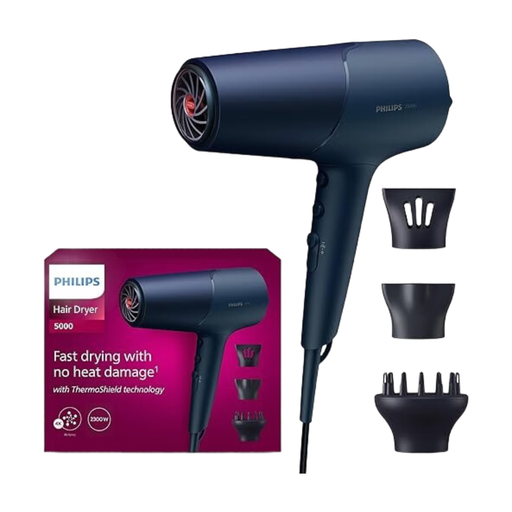
Why we recommend this product: The Philips BHD510/00 combines a high power output of 2300 watts with ThermoShield technology. This active heat protection mechanism controls the air temperature to shield hair from overheating. Its quadruple ionisation function aims to effectively reduce frizz and maximise shine.
Pros:
Who it's for: Ideal for users seeking a powerful hair dryer for daily home use, with a strong emphasis on integrated protection against heat damage.
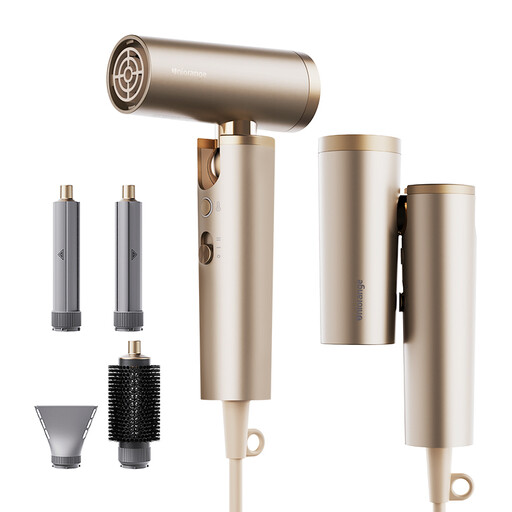
Why we recommend this product: The Uniorange H16 Mini stands out for its extreme compactness and travel-friendly design. Its foldable body, low weight, and dual-voltage function (100-240V) make it a functional companion for life on the go. The plasma ion care and four included styling attachments, including an auto-curler, offer versatile styling possibilities.
Pros:
Who it's for: Perfect for frequent travellers who need a versatile, lightweight, and compact travel hair dryer without compromising on professional-grade styling options.
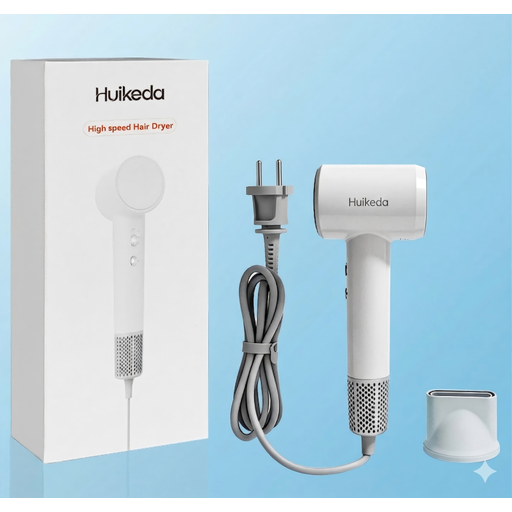
Why we recommend this product: This model from Huikeda features a high-speed brushless motor with 110,000 RPM. This technology enables exceptionally fast drying through powerful airflow rather than high heat. Weighing just 450g, it is extremely lightweight. The smart temperature control and high ion concentration support gentle drying.
Pros:
Who it's for: For users who prioritise maximum drying speed and minimal weight, and who value advanced motor technology for hair and scalp protection.
If the featured models don't perfectly match your requirements, the market offers a wide range of devices with different specifications. For an overview of other models that offer excellent value for money, you can browse our affordable hair dryer category.
1. What does ionic technology do in a hair dryer? Ionic technology emits negatively charged ions that neutralise the positive static charge in hair. This smooths the outer cuticle of the hair, resulting in less frizz, more shine, and potentially improved manageability.
2. How important is the wattage in a hair dryer? Wattage indicates the device's electrical power consumption and is an indicator of the potential motor strength and heating power. A higher wattage (e.g., over 2000 W) often correlates with a stronger airflow, which can shorten drying time. However, modern brushless motors can generate a very powerful airflow even at a lower wattage, while also being more energy-efficient.
3. Can an ionic hair dryer damage hair? The ionic technology itself is not harmful to hair. Hair damage from blow-drying is primarily caused by excessive heat. An ionic hair dryer with precise temperature controls and a cool shot function can help reduce the risk of heat damage. Models with smart heat protection sensors offer an additional protective mechanism.