
Lieferung heute & morgen

Qualitätsgarantie

Willkommens-Angebote freischalten: KOSTENLOSE Lieferung | Bis zu 80 % RABATT | Kostenlose 30-Tage-JoyPlus-Testphase
App herunterladen
IP44 outdoor lighting and wireless doorbells may seem straightforward at first: choose the right protection rating, install the product and connect it. In practice, unclear manufacturer information, misjudged locations and unsuitable connections often lead to the wrong purchase. It’s worth checking the technical details carefully, especially for rented homes, balconies, bathrooms and garden paths.
The IP44 rating indicates protection against solid objects measuring 1 mm or more, as well as water splashes from different directions. It does not mean a product can be left under water or exposed to a powerful jet of water.
An IP44 light may be suitable for a covered balcony, a sheltered entrance or a bathroom. For exposed areas at risk of heavy rain, flooding or direct water spray, follow the manufacturer’s instructions. An IP44 outdoor socket should also be disconnected from the mains during thunderstorms or when not in use for a prolonged period, if the safety instructions require this.
The wireless range of a doorbell is often measured in favourable conditions. Walls, reinforced concrete, doors, metal surfaces and other radio signals can reduce the actual range. A quoted range of 150 metres, for example, won’t necessarily apply in a multi-storey house.
When choosing lights, consider wattage, lumens, colour temperature and energy efficiency class together. A low wattage alone tells you little about brightness. Solar garden lights don’t need a direct mains connection, but how long they stay lit depends on sunlight, shade, battery capacity and temperature.
First, check that the product is approved for the location where you plan to use it:
For electrical installations connected to 230 volts, switch off the power supply first. Recessed spotlights, dimmable ceiling lights and permanently wired lights should be installed in accordance with current wiring regulations. If you’re unsure, use a qualified electrician.
Lumens indicate the amount of light emitted. A few lumens may be enough for decorative path lighting, while a work area or bathroom needs considerably more brightness.
Colour temperature is measured in kelvin:
A warm-white solar light is best suited to providing orientation and atmosphere. RGB garden lighting adds coloured effects, but it won’t necessarily replace practical path or security lighting.
For recessed spotlights, the diameter, installation depth and ceiling cut-out must all be compatible. A model with an installation depth of 25.5 millimetres may suit a low ceiling, but it still needs the right cut-out. For dimmable models, check whether they’re compatible with your existing dimmer.
For a wireless doorbell, consider the power supply, battery type, volume settings, ringtones and mounting method. For solar-powered lights, check the charging time, expected lighting time and operating temperature. These details are more useful in practice than general marketing claims.
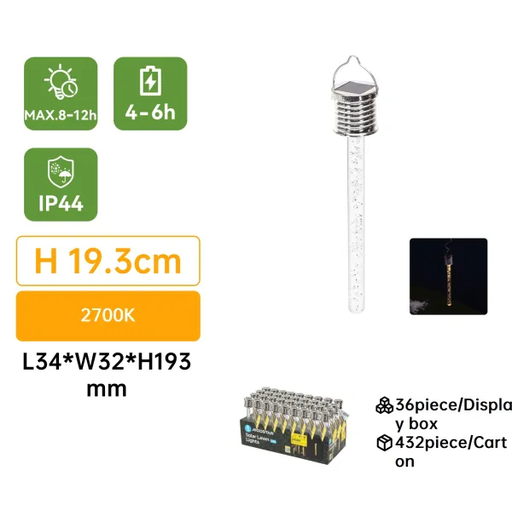
Why it suits this profile: This solar-powered light doesn’t need a mains connection and can add a decorative touch to suitable spots in the garden or on the balcony.
The specifications include the protection rating, charging time and expected lighting time. This makes it easier to assess performance realistically than a vague claim that a product is ‘weatherproof’.
Warm white at 2700 K, built-in Ni-MH battery, IP44 rating and a stated operating time of 8–12 hours under suitable charging conditions.
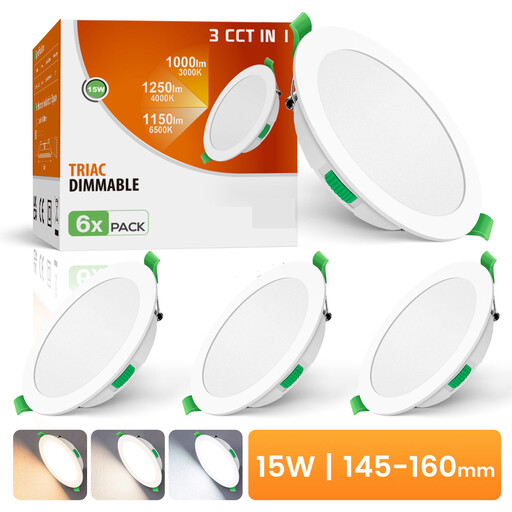
Why it suits this profile: This set is for buyers who want to adjust the colour temperature and brightness to suit different rooms and situations.
The dimming function is specified for use with a compatible leading-edge dimmer. The required cut-out of 145–160 mm and installation depth of 32 mm are also stated.
Choose from 3000, 4000 and 6500 K; 1200 lumens; dimming range of 10–100 per cent; and an IP44 rating for damp indoor areas.
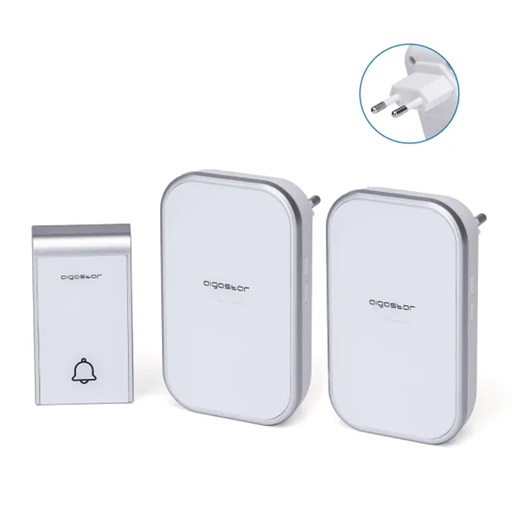
Why it suits this profile: Suitable for flats, houses, offices or gardens when you want a wireless doorbell with a choice of ringtones and volume levels.
The transmitter and receiver are clearly distinguished: the receiver plugs into a 220–240-volt indoor socket, while the IP44 transmitter must not be installed in heavy rain or under water.
Quoted range of 150 metres in open space, 36 ringtones, three volume levels and a blue LED signal.
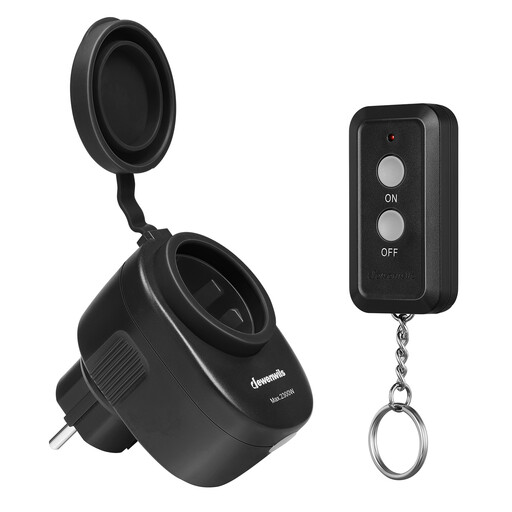
Why it suits this profile: A practical choice for gardeners and DIY enthusiasts who want to control outdoor appliances by remote, without Wi-Fi.
The maximum load is clearly stated as 2300 W or 10 A. This lets you check that the appliance you plan to connect is compatible with the socket.
We’ve put together a complete, regularly updated list of products that meet these strict selection criteria and fully comply with the safety regulations in force in the EU.
Depending on the product, the transmitter may be designed for sheltered outdoor areas. However, IP44 only protects against water splashes. Avoid heavy rain, direct water jets and immersion. The receiver should normally be kept in a dry indoor space.
Solar lights get their energy from the solar panel, so they don’t add to your electricity bill while in use. Actual lighting time depends on factors including sunlight, shade, battery condition and outdoor temperature. The battery may lose capacity over time and may need replacing.
No. The dimmer must be compatible with the LED technology and dimming method specified for the light. If you’re replacing halogen lights with LEDs, check whether your existing dimmer is suitable for LED loads. Otherwise, the lights may flicker or hum, or have a limited dimming range.