
Lieferung heute & morgen

Qualitätsgarantie

Willkommens-Angebote freischalten: KOSTENLOSE Lieferung | Bis zu 80 % RABATT | Kostenlose 30-Tage-JoyPlus-Testphase
App herunterladen
Choosing the right lighting is crucial for the atmosphere and functionality of any room, especially in damp areas like bathrooms or covered outdoor spaces. If you're searching for IP65 dimmable 230V LED recessed spotlights, you already have a clear idea of your requirements. Nevertheless, there are pitfalls that can lead to bad purchases, safety risks, or unexpected costs. This guide shows you what to look for to find a durable and suitable solution.
When selecting recessed spotlights for a bathroom, kitchen, or patio, crucial details are often overlooked. You should avoid these three mistakes:
To avoid the problems mentioned above, you should check the following parameters before buying. They are the key to a safe, flexible, and low-maintenance lighting solution.
The IP (Ingress Protection) rating indicates how well an electrical device is protected against the ingress of foreign objects and water.
6 stands for complete dust protection. The digit 5 guarantees protection against water jets from any direction. This makes these spots the safe choice for installation in showers, above bathtubs, in kitchens, and in unprotected, covered outdoor areas.Modern lighting adapts to your needs. Two features are particularly useful here:
The practical aspects of installation are just as important:
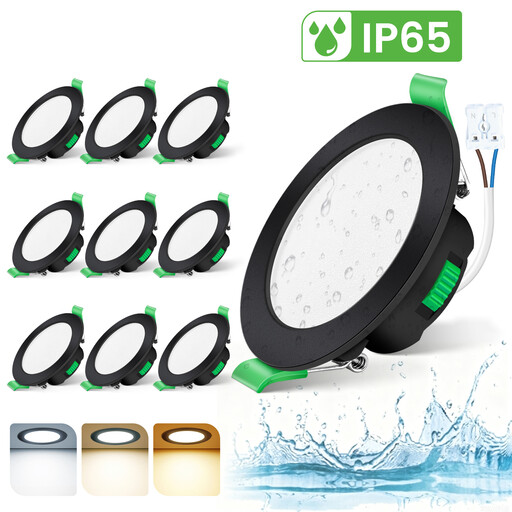
Why This Fits Their Persona: The matte black finish creates a clean, architectural accent, perfectly matching modern bathrooms or kitchens with dark fixtures, tiles, or countertops. It's the ideal choice for a minimalist and design-focused environment.
The certified IP65 rating eliminates the safety hazard in damp rooms. The 230V direct connection avoids the hidden costs and extra effort of an external transformer.
The 3CCT function allows the light colour to be matched to the interior. The slim design (29 mm) is optimal for suspended ceilings with limited space.
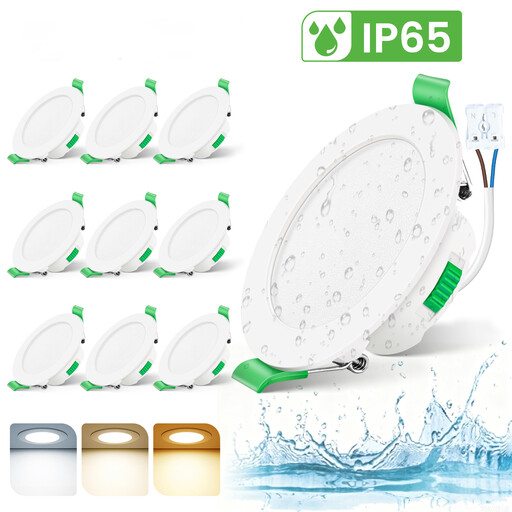
Why This Fits Their Persona: The classic white design blends discreetly into any standard ceiling. It is the universal and safe choice for any renovation project where reliable and straightforward lighting is the priority.
Compatibility with trailing-edge dimmers prevents the dimmer trap (flickering/buzzing). As a complete set of 6 recessed ceiling spotlights, it ensures a uniform appearance without compatibility issues.
The simple, transformer-free installation and the standard cut-out size for 68mm holes make this set ideal for DIY enthusiasts and quick upgrades.
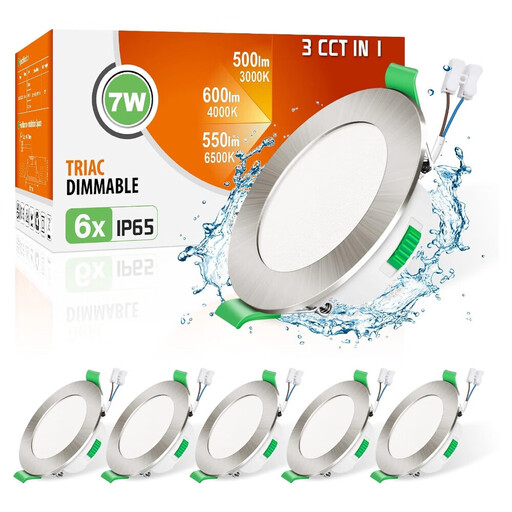
Why This Fits Their Persona: The brushed nickel finish provides a premium look that harmonises beautifully with elegant stainless steel or chrome fixtures in the bathroom and kitchen. It enhances the room and shows an eye for detail.
The aluminium and polycarbonate construction ensures good heat dissipation and longevity, thus avoiding the trap of cheap plastic spots that quickly yellow or fail prematurely.
Combines high functionality (IP65, dimmable, 3CCT) with a high-quality aesthetic that elevates the overall impression of the room without compromising on technology.
We've compiled a complete, up-to-date list of products that fully meet these strict selection criteria and safety standards.
No, 230V LED spots without a transformer are designed for direct connection to the 230-volt mains supply. This simplifies installation, saves space in the ceiling, and reduces potential points of failure. Always check the product description and installation manual to be sure.
3CCT stands for "Correlated Colour Temperature" and means you can set the light colour of the fixture yourself before final installation. This is usually done via a small switch on the spot's housing. The common options are Warm White (approx. 3000 K), Neutral White (approx. 4000 K), and Cool White (approx. 6500 K), allowing you to flexibly adapt the lighting mood to the room.
Yes, the IP65 rating certifies protection against water jets from all directions. This makes these spotlights suitable for installation in Zone 1 of a bathroom, which includes the area directly above a shower or bathtub up to a height of 2.25 metres. However, installation should always be carried out by a qualified electrician in accordance with applicable local electrical codes.