
Lieferung heute & morgen

Qualitätsgarantie

Willkommens-Angebote freischalten: KOSTENLOSE Lieferung | Bis zu 80 % RABATT | Kostenlose 30-Tage-JoyPlus-Testphase
App herunterladen
The right screen protector can help reduce scratches caused by keys, dust and everyday use. However, it is no substitute for a protective case, and it cannot guarantee that your screen will remain undamaged if you drop your phone. When buying an iPhone 15/16 tempered glass screen protector, look beyond big marketing claims and focus on practical features: model compatibility, coverage, coating, installation aids and case compatibility.
iPhone 15 and iPhone 16 models have different case and display dimensions, depending on the version. A screen protector for a Pro model will not necessarily fit the standard version. Even an iPhone 15 screen protector that appears to fit may overhang on another model or leave important areas uncovered.
Before buying, check the following:
For many products, the 9H rating mainly refers to the stated scratch resistance. It does not mean the glass is unbreakable or fully impact-resistant. A tempered glass screen protector can protect the display surface during everyday use, but the glass itself may still break in a heavy impact.
So also look for rounded edges, a precise fit and clear information about the level of protection it provides. The Spigen ALM Glass FC specifically notes that 9H mainly refers to scratch resistance and does not guarantee complete protection against screen breakage.
“Bubble-free installation” depends not only on the product, but also on how well you prepare. Dust, skin oils or fibres trapped under the glass can affect adhesion and display clarity. An installation aid, dust-removal stickers and a suitable cloth are therefore useful items to have in the box.
Where possible, install the screen protector:
Compared with basic plastic films, tempered glass provides a firm, smooth surface. The iPhone 9H screen protector rating is a useful guide to scratch resistance, but it should not be taken as a guarantee against breakage. If the glass is damaged, chipped or heavily scratched, it is a good idea to replace it, as sharp edges may form.
An ultra-wide-fit screen protector extends closer to the edges of the display. This covers more of the screen, but the design still needs to leave enough room for your case. A case-compatible screen protector should not be lifted at the edges by your phone case.
Also check that the screen protector is designed for the shape of your device. Models cut too narrowly leave the edges exposed, while versions that are too large may come loose after application.
According to the product description, an oleophobic coating can make fingerprints and skin oils easier to wipe away. It will not prevent marks altogether, however, and may wear off with regular use.
If you want to keep people nearby from looking at your screen on public transport, at work or in cafés, you could choose an iPhone privacy screen protector or privacy glass. This limits visibility from the side, which may also affect how easily you can share what’s on your screen, depending on the viewing angle.
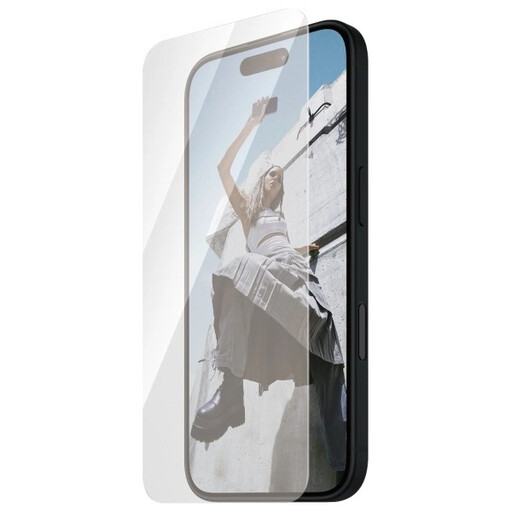
Why it suits this profile: For anyone looking for a screen protector for iPhone 15 and iPhone 16 with wide coverage and straightforward application.
The Ultra Wide Fit design and stated case compatibility help address the risk of exposed screen edges and edges being lifted by a case.
Tempered glass, an oleophobic anti-fingerprint coating, and a simple application process: position and press down.
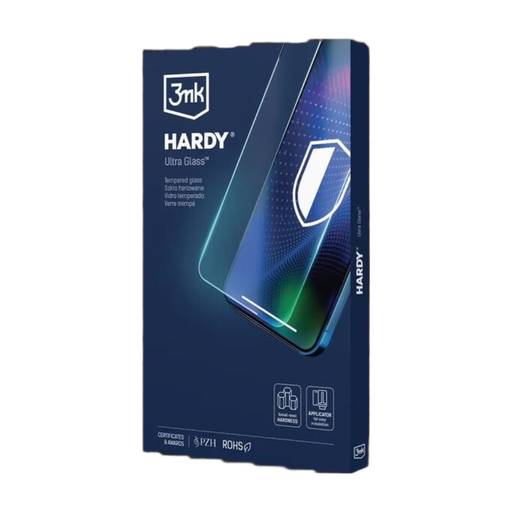
Why it suits this profile: For anyone who values a specialist glass coating, a clear display and Face ID compatibility.
Rather than relying on vague promises of protection, the product description lists compatible models, Face ID support and instructions for dust-free installation.
Basalt coating, DiamondView HD technology as stated in the product details, and an additional antimicrobial layer according to the manufacturer’s description.
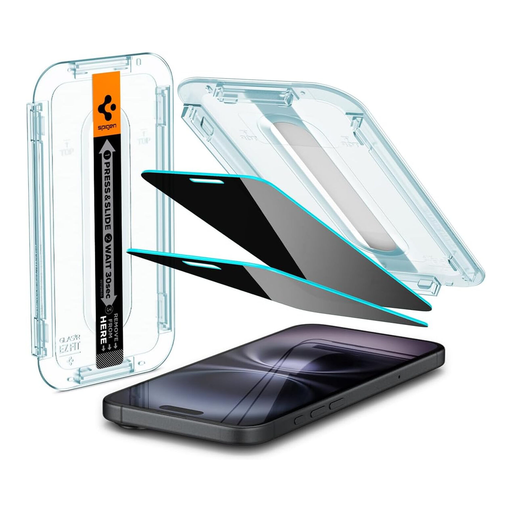
Why it suits this profile: For commuters, frequent users and anyone who wants to make their screen less visible to others while out and about.
The side-view restriction is designed for a specific purpose. The included alignment frame also reduces the risk of fitting the glass crookedly.
Two screen protectors, a stated 9H hardness rating, a privacy filter and an EZ Fit adapter for positioning.
A screen protector does not protect the rear camera. For Pro models, an iPhone camera lens protector may also be worth considering if you often place your phone on rough surfaces. According to the product description, the Spigen Optik Pro L-Series Glass.TR EZ Fit is designed for selected Pro and Pro Max models. It has a 9H rating, an oleophobic coating and an installation frame. Before buying, be sure to check that your exact iPhone variant is on the compatibility list.
We’ve put together a comprehensive, regularly updated list of products that meet these strict selection criteria and fully comply with the safety regulations in force in the EU.
Clean the display with the supplied cloth, use the sticker to remove any remaining dust, then align the glass with the speaker and edges. Press it down slowly from the centre outwards. You can often push small air bubbles towards the edge with a soft card. Try to remove any dust trapped under the glass before pressing it down completely.
There is no set lifespan. It depends on knocks, friction, how you carry your phone and the coating. Replace the glass if it is chipped, coming away at the edges or affecting touch controls. Visible scratches can also be a reason to replace it.
It depends on how you use your phone. If you often view private content on trains, buses, planes or in open-plan offices, a side-view privacy filter can be useful. For sharing photos or videos, clear screen protector glass is a better choice, as a privacy filter deliberately restricts visibility from an angle.