
Lieferung heute & morgen

Qualitätsgarantie

Willkommens-Angebote freischalten: KOSTENLOSE Lieferung | Bis zu 80 % RABATT | Kostenlose 30-Tage-JoyPlus-Testphase
App herunterladen
An iPhone 15 tempered glass screen protector helps protect your display from scratches, fingerprints and everyday wear. But not every screen protector fits your phone equally well. If it’s too small, has an imprecise cut-out or an incompatible edge, it may lift when used with a phone case or interfere with how you use the screen.
Terms such as ‘9H’, ‘shatterproof’ and ‘bubble-free installation’ are also worth understanding before you buy. Here are three common pitfalls to look out for:
Tempered glass provides a firm, smooth surface for everyday use. According to the product information provided by various sellers, 9H tempered glass is designed to resist scratches. This doesn’t mean the screen protector or display will remain undamaged after every impact. Always take the manufacturer’s guidance into account.
The surface and edges also matter in day-to-day use. An oleophobic coating can make fingerprints easier to clean off. Rounded 2.5D edges can create a smoother transition to the display and help reduce dust collecting around the edges.
For iPhone 15 and iPhone 16, the model name and cut-outs are key. An Ultra-Wide Fit screen protector covers more of the screen, right up to the edges. Before you buy, check that your case leaves enough room for it.
When choosing a screen protector with a precise fit, look out for:
If you also want to protect your camera lenses, you’ll need a separate iPhone camera lens protector. This is different from a standard screen protector for the front of your iPhone. For Pro models, for example, you could consider lens protectors with 9H hardness and an installation aid. Check compatibility against the model name.
For the best chance of a bubble-free installation, fit your screen protector in an area with as little dust as possible. Before applying it, clean the display with the supplied damp cloth, dry it, then check for any remaining dust with a dust-removal sticker.
An installation adapter or Align Master frame can help you position the protector accurately. You can often push small bubbles from the centre towards the edges with a squeegee card. However, if the glass is damaged, bent or heavily dust-covered, replace it for safety and to ensure it works properly.
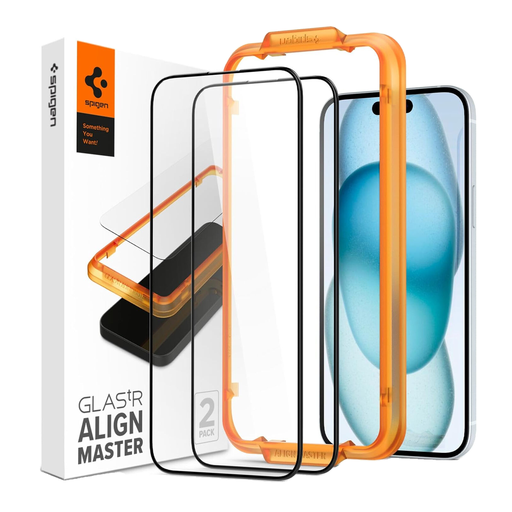
Why this product suits this profile: The two-pack includes a spare for a future replacement. The supplied Align Master frame helps you position it accurately on your iPhone 15.
The installation aid helps prevent misalignment, while the 2.5D edges and stated 9H hardness address edge comfort and scratch protection.
2 screen protectors, Align Master frame, nano coating and rounded 2.5D edges.
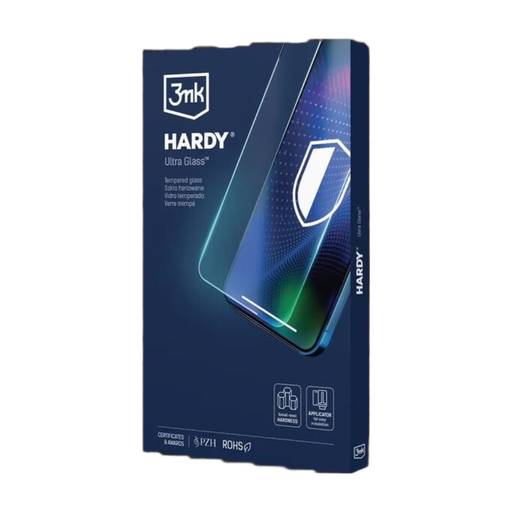
Why this product suits this profile: The product information lists a basalt coating, DiamondView HD technology and Face ID compatibility for iPhone 15 and iPhone 16.
The stated compatibility with both iPhone generations helps reduce the risk of buying the wrong product. The installation instructions cover cleaning, alignment and bubble removal.
Basalt coating, DiamondView HD technology, Face ID compatibility and an additional antimicrobial layer, according to the product description.
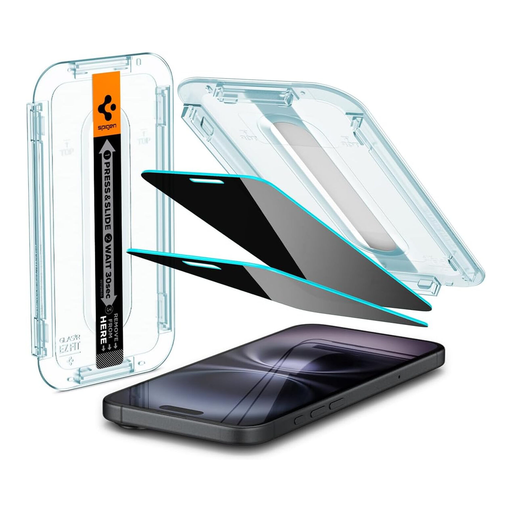
Why this product suits this profile: This privacy screen protector is suited to people who often use their phone on trains, in cafés, at the office or in other public places, and want to limit side-on viewing.
The product description specifies a side-viewing filter, a case-friendly design and an alignment adapter.
2 screen protectors, 9H hardness, privacy filter, installation adapter and stated compatibility with iPhone 15 and iPhone 16.
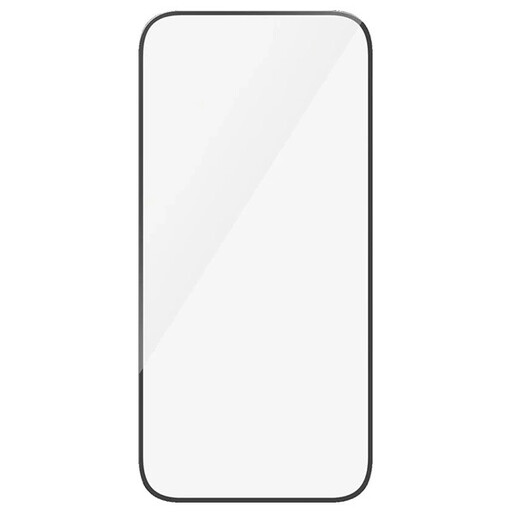
Why this product suits this profile: The Ultra-Wide Fit design is for users who want extensive display coverage alongside touch sensitivity and case compatibility.
The stated case compatibility helps address the risk of a large screen protector catching on the edge of your case. To fit it, align the protector and press from the centre outwards.
Ultra-Wide Fit, oleophobic anti-fingerprint coating, stated touch sensitivity and installation without a separate alignment template.
We’ve put together a complete, regularly updated list of products that meet these strict selection criteria and the safety regulations in force in the EU.
An iPhone 15 screen protector and a screen protector compatible with iPhone 16 may look similar, but they aren’t necessarily interchangeable. The model name on the product page is therefore the most important thing to check.
How long it lasts depends on how you use and carry your phone, and whether it gets knocked. Visible scratches, cracks, chips or reduced adhesion are all reasons to replace it. There’s no set timeframe that applies to every screen protector.
No. The 9H rating refers primarily to scratch resistance. It doesn’t guarantee complete protection against a cracked display, damage from drops or powerful impacts.
The price depends on factors such as the material, pack size, coating, installation aid and coverage. A two-pack can be useful if you’re planning a replacement later or want a second chance to fit it. Most importantly, make sure the model, fit and features you want – such as a privacy filter or Ultra-Wide Fit – suit the way you use your phone.