
Lieferung heute & morgen

Qualitätsgarantie

Willkommens-Angebote freischalten: KOSTENLOSE Lieferung | Bis zu 80 % RABATT | Kostenlose 30-Tage-JoyPlus-Testphase
App herunterladen
An iPhone 16 Pro screen protector should protect your display from scratches, fingerprints and everyday knocks. At the same time, it should have as little impact as possible on touch control, image quality and the use of a phone case. With camera protectors, optical clarity is an additional consideration.
Many products advertise features such as “9H”, “ultra-clear” or “bubble-free”. However, these claims are only useful when shoppers understand what they mean in everyday use and which features actually suit their own usage habits.
9H tempered glass indicates the stated scratch resistance of the material or coating. It does not mean that your smartphone will remain undamaged after every drop. A screen protector can shield the surface from typical contact with keys or other objects, but it does not replace a protective case or careful handling.
A glass protector that is cut too large may press against the edges of a case. This can cause the corners to lift or allow dust to get underneath the edge. If you use a snug-fitting case or one with particularly raised edges, you should specifically look for a case-compatible screen protector. The same applies to camera lens protectors: the edges must not press against the case’s camera area.
An iPhone 16 Pro privacy screen protector limits side-on visibility of the display. This can be useful on trains, in the office or in a café. Depending on the design, privacy glass may darken the display when viewed from an angle. If you often edit photos or share content with several people, a clear iPhone 16 Pro screen protector may be a better choice.
Tempered glass is more stable in everyday use than a thin plastic film. A rating such as 9H can be found on several products in the range, including the VoxorAI screen protector, the Spigen Glas.tR Slim and various camera protectors. Hardness is a useful benchmark for comparing scratch resistance, but it should not be interpreted as a guarantee against heavy impacts.
A scratch-resistant screen protector with high light transmission should alter the original display as little as possible. An oleophobic or hydrophobic coating can reduce the build-up of oil, sweat and fingerprints. This makes cleaning easier, but it cannot prevent dirt entirely.
Adhesive and fit are also important for everyday use. OCA adhesive technology, full-surface adhesion and a clean display before installation help create an even bond. With privacy glass, you should also check whether the stated viewing angle suits the way you use your phone.
A bubble-free installation depends not only on the product, but also on proper preparation. An installation frame or applicator makes precise positioning easier. Important steps include:
With camera protectors, you should also make sure that the flash and LiDAR sensor are not covered. Damaged glass should be replaced for safety and clarity reasons.
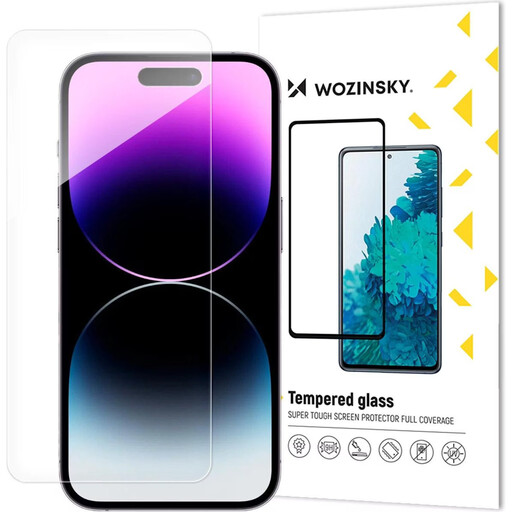
Why this product suits this profile: This model is aimed at users looking for a clear screen protector with 9H hardness and a complete installation kit.
Cleaning cloths and dust-removal stickers support an even, bubble-free installation instead of inaccurate positioning.
9H hardness, clear design, anti-fingerprint properties and installation accessories.
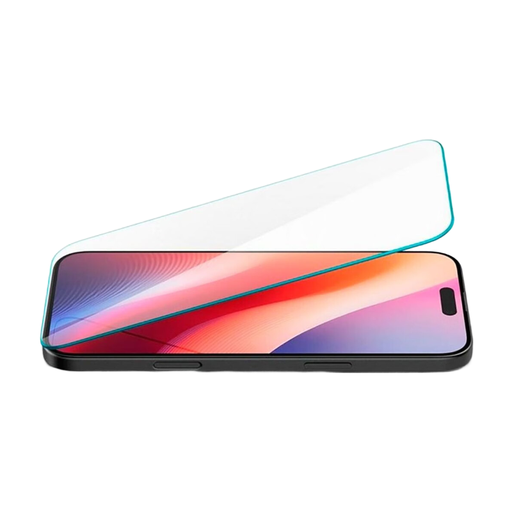
Why this product suits this profile: The stated thickness of 0.2 mm and anti-smudge coating are well suited to users who prefer a slim profile and a clean surface.
The specific thickness makes the profile easier to assess than broad claims about exceptionally thin glass.
0.2 mm material thickness, 9H hardness, anti-fingerprint coating and supplied alignment aid.
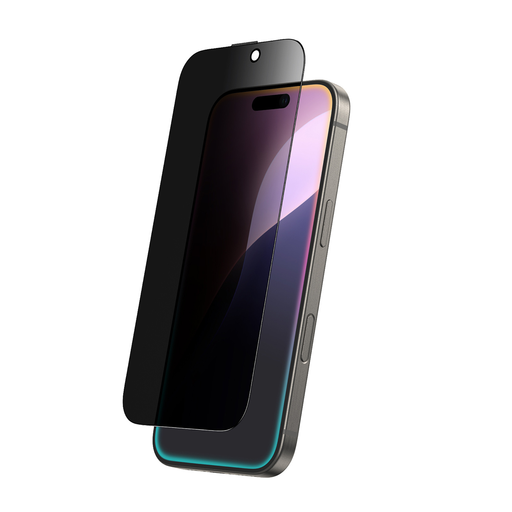
Why this product suits this profile: This privacy glass is designed for commuters and anyone who wants to make messages or work content less visible while out and about.
The stated viewing angle of ±28° provides a specific benchmark when choosing a privacy protector.
9H hardness, 330 µm material thickness, privacy coating and stated case compatibility.
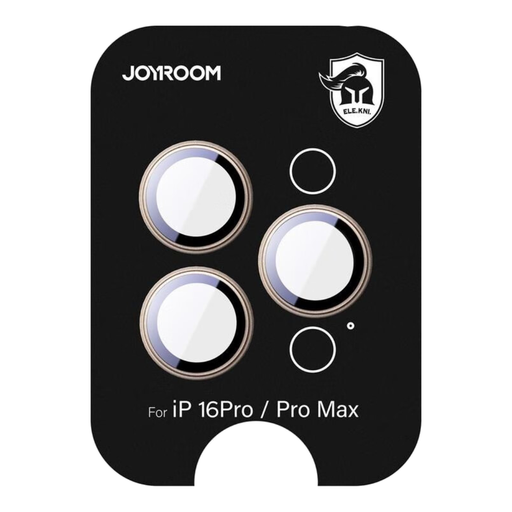
Why this product suits this profile: This camera lens protector is ideal for users who rely on their camera module regularly and want additional surface coating protection.
The product details specify 9H hardness, anti-fingerprint and anti-reflective coatings, as well as full-surface coverage.
Corning glass, 0.30 mm thickness, water- and dust-repellent properties, plus compatibility with most cases.
We have put together a complete, regularly updated list of products that fully meet these strict selection criteria and the safety regulations applicable in the EU.
A glass protector should not be applied to a display that is already damaged. Before installation, all dust, oil and moisture must be completely removed. After application, avoid putting the device under heavy use for a short while so that the adhesive can bond evenly.
A soft, lint-free cloth is all you need for cleaning. Abrasive materials, sharp objects and harsh cleaning products can damage coatings. If there are cracks, chips, lifted edges or reduced clarity, replacing the protector is advisable. A screen protector is a consumable item and does not have an unlimited lifespan.
A bubble-free installation is supported by a clean surface, accurate alignment and even pressure from the centre outwards. Models with an installation frame or applicator make positioning easier. Dust trapped underneath the glass is a common cause of persistent bubbles.
Durability depends on usage, case fit and contact with other surfaces. Visible scratches, cracks, loose edges or damaged coating are practical signs that it is time for a replacement. After a drop, the glass should be checked regardless of its external appearance.
That depends on your everyday use. If you often place your smartphone on rough surfaces or want to protect the protruding camera, you can add an iPhone 16 Pro lens protector or an iPhone 16 Pro camera protector. Before buying, check the cut-outs, flash, LiDAR sensor and compatibility with your case.