
Lieferung heute & morgen

Qualitätsgarantie

Willkommens-Angebote freischalten: KOSTENLOSE Lieferung | Bis zu 80 % RABATT | Kostenlose 30-Tage-JoyPlus-Testphase
App herunterladen
An iPhone 16 Pro or iPhone 16 Pro Max goes with many people on their commute, to the office, out and about and on holiday. Scratches often happen not because of a single drop, but through contact with keys, coins, dust or hard surfaces. The right iPhone 16 Pro screen protector can provide extra everyday protection for your display and camera lenses.
However, some common marketing claims can lead to the wrong choice. Three points are particularly important:
iPhone 16 Pro tempered glass and iPhone 16 Pro screen protectors are often described as toughened glass, 9H hardness or flexible multi-layer materials. Toughened glass provides a firm, smooth surface. Flexible films, on the other hand, can adapt better to slightly curved areas and are less likely to break during fitting.
The term 9H iPhone 16 Pro screen protector isn’t a standard quality mark that applies to every product. You should also check:
Even a scratch-resistant screen protector won’t prevent every kind of damage. Sharp particles trapped between your phone and the protector can still cause pressure marks or scratches.
A clear screen protector should have as little impact as possible on colour reproduction and touch response. With a clear screen protector, details such as high light transmission, an anti-fingerprint coating and precise cut-outs are more useful than broad claims about quality.
If you regularly use your phone on trains, buses or in an open-plan office, you could consider an iPhone 16 Pro privacy screen protector. It makes your screen harder to read from the sides. The trade-off is that the display may look darker when viewed at an angle. For photo and video editing, standard clear glass is often a better choice.
An iPhone 16 Pro camera screen protector, or iPhone 16 Pro camera lens protector, covers the lenses or the entire camera module. Before you buy, check whether the protector is designed for iPhone 16 Pro, iPhone 16 Pro Max or both models.
Key points to check:
Some products list a glass thickness of 0.30 mm or 1.50 mm. These figures should always be considered alongside the camera design and case compatibility. A thicker option may feel sturdier, but it needs enough room inside the case.
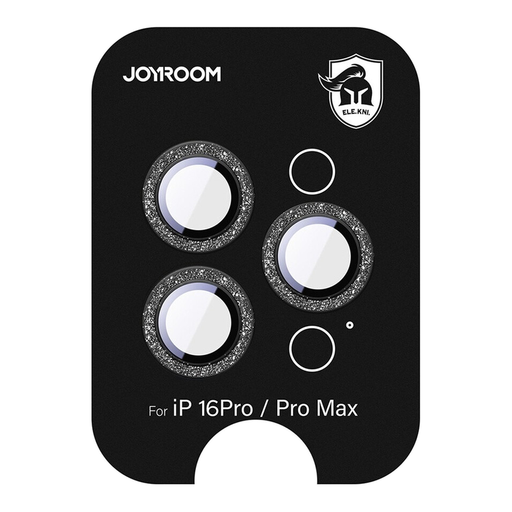
Why it suits this profile: This camera protector is listed as compatible with both models. It’s designed for people looking for black, full-coverage protection that works with a case.
The product details specify 9H hardness, precise coverage and a design intended to work with most cases. This makes it easier to check whether it’s right for you before buying.
Toughened glass, 9H rating, clear surface and centre-out fitting.
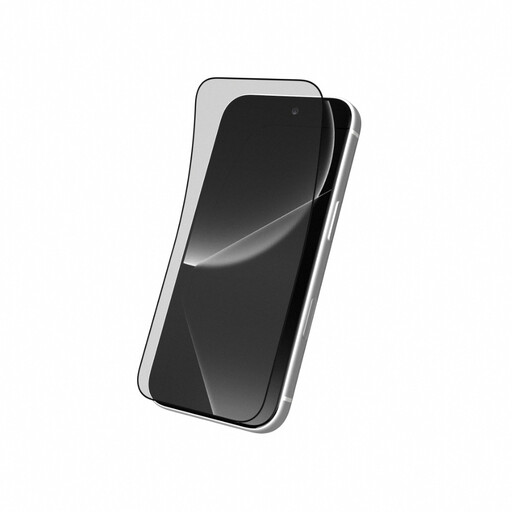
Why it suits this profile: The flexible material combination is a good option if you want a clear screen protector with fitting tools and reduced dust adhesion.
Rather than relying solely on rigid glass, the protector combines flexible and toughened layers, according to the product description. Fitting tools are included.
Clear design, excellent optical clarity, a static-reducing surface and included fitting tools.
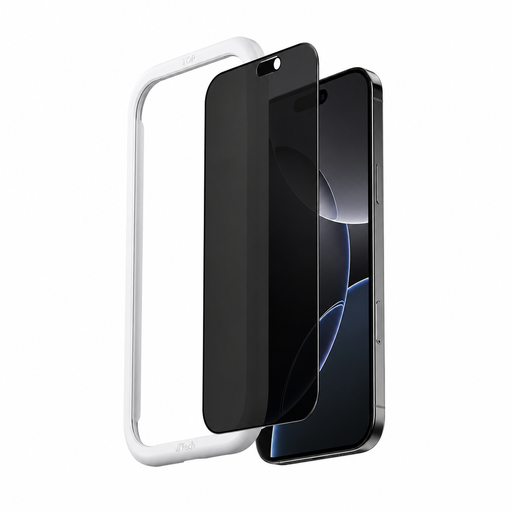
Why it suits this profile: This privacy screen protector is designed for commuters and office workers who want to keep messages and work content hidden from people looking over their shoulder.
The stated 360-degree viewing angle describes the product’s privacy function. Bear in mind, though, that the display may look darker when viewed from the side.
9H rating, anti-fingerprint surface, fitting tools and a design made to limit side-on viewing.
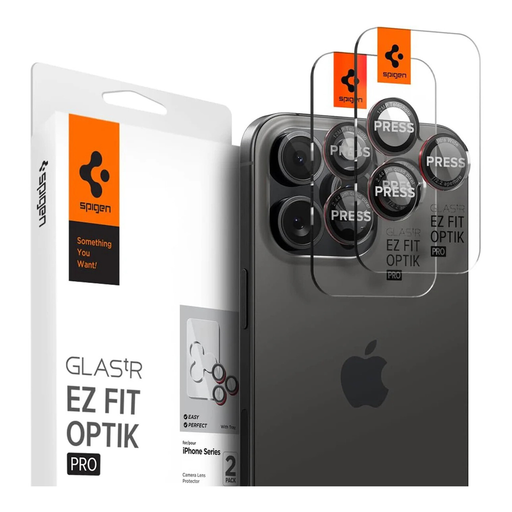
Why it suits this profile: If you take photos often and prefer guided fitting, this set includes two pieces of glass and an EZ Fit frame.
The EZ Fit frame helps reduce the risk of misalignment. The product details also state that it’s compatible with most cases.
Two camera glass protectors, 9H rating, oleophobic coating and a positioning aid for fitting.
We’ve put together a complete, regularly updated list of products that meet these strict selection criteria and the safety requirements applicable in the EU.
To help prevent bubbles, first remove all grease and dust from the display or camera module. It’s best to fit the protector in a quiet, clean room:
Once a glass protector has been removed, it shouldn’t be reapplied. The adhesive can pick up dust and lose its grip.
Not necessarily. The models have different dimensions, so the product details must explicitly list your model. Some camera glass protectors are listed as compatible with both versions, but you shouldn’t assume the same applies to screen protectors.
Its lifespan depends on friction, how you carry your phone and any knocks it takes. Replace the protector if you notice visible scratches, cracks, chipped edges or reduced adhesion. A damaged camera glass protector should also be replaced.
A privacy screen protector can make the display harder to read from the side, which may make it look darker from certain angles. If you often edit photos or need accurate on-screen colours, weigh up privacy against an unobstructed view.