
Lieferung heute & morgen

Qualitätsgarantie

Willkommens-Angebote freischalten: KOSTENLOSE Lieferung | Bis zu 80 % RABATT | Kostenlose 30-Tage-JoyPlus-Testphase
App herunterladen
An iPhone 16 screen protector helps keep scratches, fingerprints and everyday knocks away from your original display. However, not every screen protector suits every user. Unclear dimensions, glass that’s too wide or a complicated installation can often lead to the wrong purchase.
The term 9H screen protector generally describes scratch resistance according to a particular hardness scale. It doesn’t automatically mean the glass will remain intact after every drop. Even tempered glass for iPhone 16 can break on hard impact. Its advantage is that the protective layer can absorb some of the force, helping to keep it away from the display, and can then be replaced.
An iPhone 16 full-cover screen protector extends closer to the edges of the display. This increases coverage, but can put pressure on the edges when used with a close-fitting case. Before buying, check whether the retailer explicitly mentions case compatibility and whether the protector is described as “Classic Fit”, “Ultra Wide Fit” or a similar fit.
An iPhone 16 privacy screen protector limits visibility from the sides. This can be useful on the bus or train, in a café or at the office. At the same time, the image may look darker when viewed at an angle. If you often edit photos or view content with other people, a clear screen protector without a privacy filter is usually a better choice.
Treat the 9H rating as a technical indication of surface hardness, not as a blanket guarantee against cracks or a broken display.
It’s important to check the details for the exact iPhone 16 model. Some products listed for iPhone 15 may also be suitable for iPhone 16, but always check the model name and cut-outs before buying. Look for:
Bubble-free installation depends not only on the adhesive, but also on a dust-free environment and correct alignment. Cleaning wipes, dust removers, alignment frames or a squeegee can make the job easier. An oleophobic coating can help reduce fingerprints and skin oils, but take care when cleaning it. Use a soft, lint-free cloth and avoid harsh cleaning products.
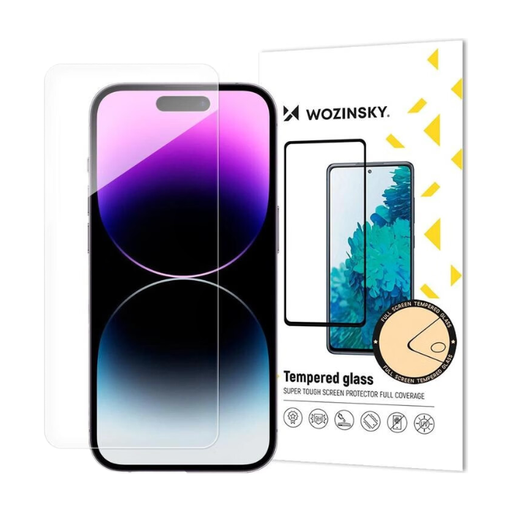
Why it suits this user: Its flexible construction and included cleaning accessories make it easier to get started with fitting a screen protector to your iPhone 16.
The stated 9H hardness rating comes in a flexible design. So, it’s not just promoted on the basis of its hardness rating; ease of handling is taken into account too.
9H hardness, high transparency, plus accessories for cleaning and dust removal.
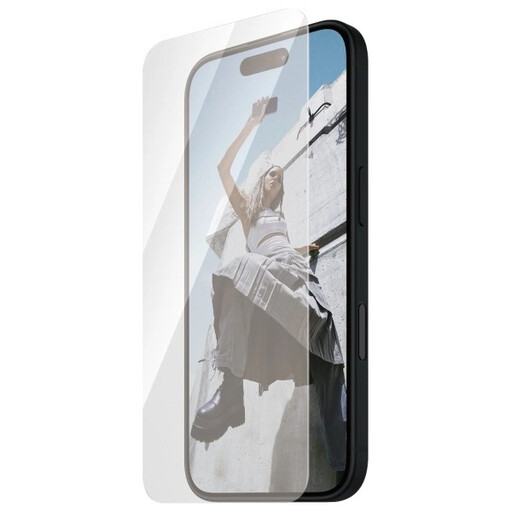
Why it suits this user: The Ultra Wide Fit design is for users who want broad coverage while still being able to use a case.
The stated fit category makes it easier to understand the coverage than a general term such as “Full Cover” with no further sizing details.
Tempered glass, an oleophobic anti-fingerprint coating and stated compatibility with iPhone 16 and iPhone 15.
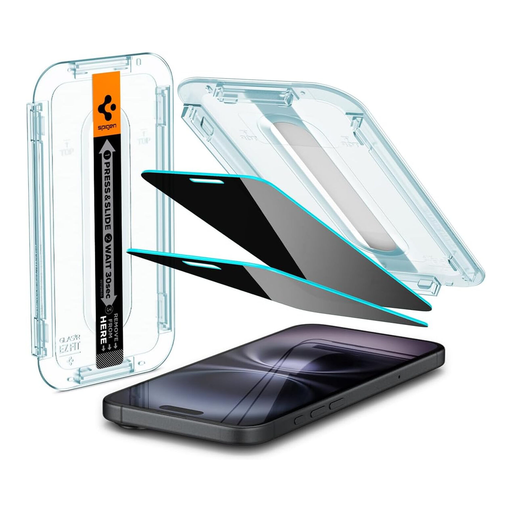
Why it suits this user: For commuters, frequent users and anyone who regularly uses their phone in public places, the side-view privacy feature is another factor to consider.
The privacy feature is clearly distinguished from the protective function. This lets you decide whether the restricted side view suits the way you use your phone.
Two screen protectors included, 9H hardness, a privacy filter and an installation frame with an alignment tool.
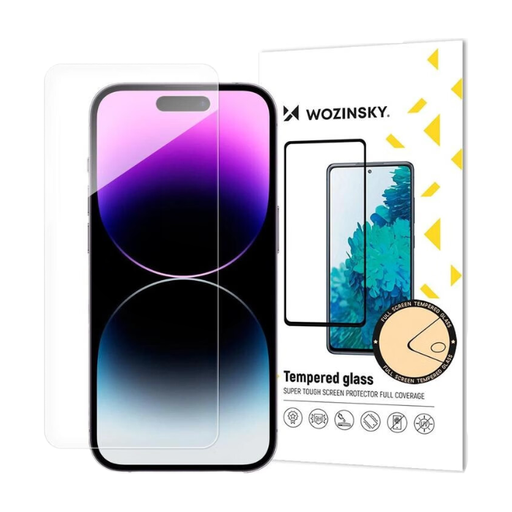
Why it suits this user: Its flexible full-cover design is for users who want to protect the edges of the display as well as the centre.
Edge coverage is specifically listed as a product feature, making it easier to choose a protector that covers the area of the display you want.
Flexible hybrid construction, full-cover design and, according to the product details, installation without applying adhesive separately.
We’ve put together a complete, regularly updated list of products that meet these strict selection criteria and fully comply with the safety regulations in force in the EU.
Replace any glass with cracks or chips. Don’t use sharp objects to remove it, to protect both the display and your fingers.
It depends on the product. Some screen protectors are explicitly listed as suitable for both models. Check the manufacturer’s information, cut-outs and fit. Don’t buy a screen protector that isn’t confirmed as compatible based only on the similar display size.
Its lifespan depends on how you use and carry your phone, and whether it comes into contact with keys or hard objects. Visible scratches, cracks, chipped edges or a loss of adhesion are signs that it’s time for a replacement. There’s no reliable fixed lifespan that applies to every product.
No. Privacy protection is particularly useful in public places and when commuting. If you often share content, view the display from the side or prefer consistent brightness from different angles, choose a clear screen protector without a privacy filter instead.