
Lieferung heute & morgen

Qualitätsgarantie

Willkommens-Angebote freischalten: KOSTENLOSE Lieferung | Bis zu 80 % RABATT | Kostenlose 30-Tage-JoyPlus-Testphase
App herunterladen
An iPhone 16 screen protector is designed to protect the display from scratches, fingerprints and minor knocks during everyday use. The choice ranges from classic tempered glass and ultra-wide variants to privacy glass and separate camera protectors. However, the advertised hardness rating is not the only factor that matters. An ill-fitting cut-out, poorly adhering adhesive or an overly wide edge can significantly affect usability.
This buying guide explains what owners of an iPhone 16, iPhone 16 Plus, iPhone 16 Pro, iPhone 16 Pro Max or iPhone 16e should look out for.
“iPhone 16” is not the same as “iPhone 16 Pro Max”. Display size, casing shape, speaker position and camera area may differ. A screen protector for the iPhone 16 Pro will therefore not automatically fit the iPhone 16 or iPhone 16e.
Before buying, check the full model designation. This is especially important with listings containing details such as “iPhone 15/16”. Make sure the cut-outs and edge shape actually match your device.
The term 9H display protection describes a hardness classification commonly used for tempered glass. It can indicate greater scratch resistance compared with softer films. However, it does not mean that the glass is shatterproof or protected against every fall.
Even scratch-resistant screen protector glass can splinter after a hard impact. A damaged protector should therefore be removed carefully and replaced. The glass is intended as an additional layer of protection and does not replace careful handling of your smartphone.
An edge-to-edge screen protector covers a larger area, but it may lift at the edges when used with a close-fitting case. A narrower Classic Fit version often leaves more space around the frame, making it compatible with many phone cases.
If you use a protective case, look out for terms such as “case-friendly”, “Classic Fit” or “Ultra-Wide Fit”. Check these details against the specific product description.
Tempered glass iPhone 16 usually provides a firm, smooth surface compared with a basic plastic film. Typical specifications include:
Specifications such as “impact resistant” or “shatterproof phone glass” should not be understood as a guarantee against display breakage. The actual level of protection depends, among other things, on the angle of impact, the surface beneath the phone and the condition of the glass.
An oleophobic coating is designed to reduce the adhesion of skin oils. Hydrophobic properties can make it easier to deal with liquids on the surface. These coatings wear off through regular cleaning and intensive use.
The following factors are also important:
An iPhone 16 plastic screen protector can be appealing if you want a very slim design. For users who prefer a glass-like feel, iPhone 16 tempered glass may be the better choice.
A bubble-free installation depends not only on the adhesive but also on the preparation. Cleaning wipes, dust removers and an alignment frame are useful additions. An EZ-Fit system can make precise positioning easier, while manual installation requires greater care.
Installation recommendation:
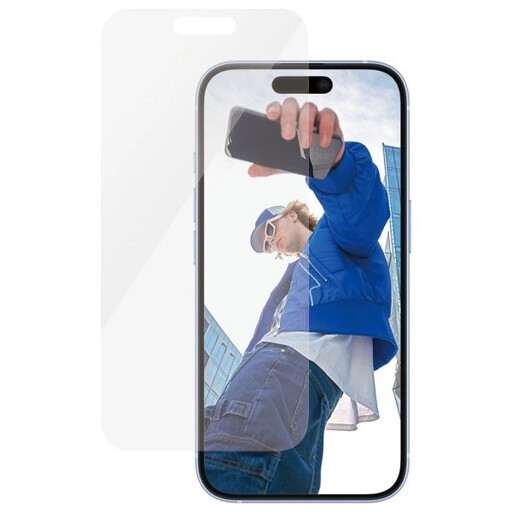
Why this product suits this profile: The Classic Fit design is intended for iPhone 16 owners and is designed to work with many phone cases.
The clear model designation and Classic Fit design reduce the risk of an edge that is too wide and clashes with the case.
Tempered glass, oleophobic anti-fingerprint coating, full touch functionality and a described bubble-free installation.
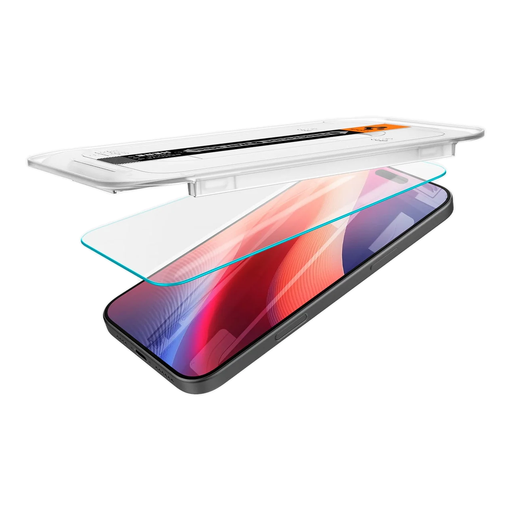
Why this product suits this profile: Frequent iPhone 16 Pro Max users receive two screen protectors and an alignment frame for controlled installation.
The EZ-Fit frame helps prevent misalignment, while the 2.5D edges are designed to create a smooth transition.
0.58 mm tempered glass, 9H rating, oleophobic and hydrophobic coating, plus a 2-pack with cleaning kit.
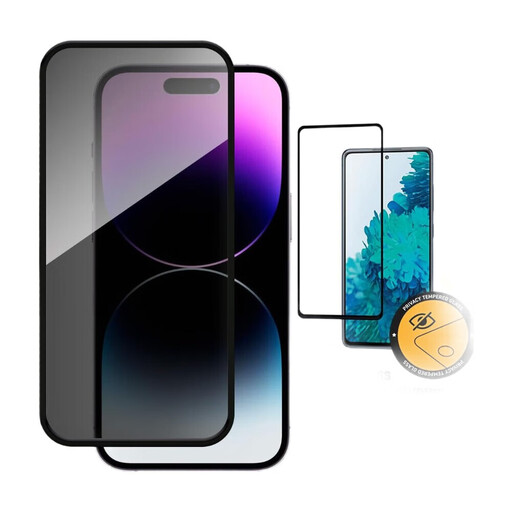
Why this product suits this profile: For commuters, office workers and anyone who regularly uses their display in public places, the side-view privacy filter adds an extra layer of functionality.
The privacy filter is clearly specified as a dedicated feature and is not confused with a general anti-fingerprint coating.
9H rating, anti-spy filter, reinforced frame and an easy alignment system described for the iPhone 16 Plus.
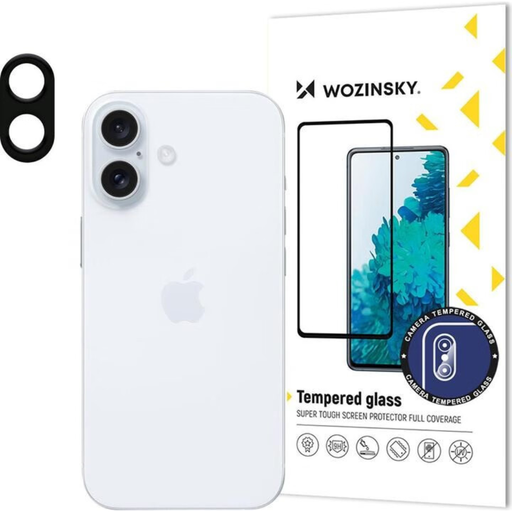
Why this product suits this profile: Anyone who frequently places their camera module on tables or other surfaces can supplement their screen protector with a separate camera protector.
Compatibility with the iPhone 16 Plus is explicitly stated; the camera cover is not mistakenly sold as a screen protector.
9H glass, stated thickness of 0.20 mm, precise cut and protection for the entire camera area.
We have put together a complete, regularly updated list of products that fully meet these strict selection criteria and the safety regulations applicable in the EU.
Clean the display thoroughly with a wet wipe followed by a dry cloth, then remove any remaining dust particles with a dust sticker. Next, align the glass precisely and lower it into place slowly. An alignment frame can make positioning easier. Small air bubbles can usually be pushed from the centre towards the edge with a soft cloth.
Its lifespan depends on use, impacts, cleaning and the condition of the coating. The screen protector should be replaced if it develops visible cracks, chips, deep scratches or reduced adhesion. Damaged glass can only provide limited protection.
iPhone 16 privacy glass can be useful if you often use your smartphone on trains, in cafés, open-plan offices or waiting areas. The filter can restrict the viewing angle from the side. If you prefer the display to look as unchanged as possible from different angles, choose clear screen protector glass without a privacy function instead.