
Lieferung heute & morgen

Qualitätsgarantie

Willkommens-Angebote freischalten: KOSTENLOSE Lieferung | Bis zu 80 % RABATT | Kostenlose 30-Tage-JoyPlus-Testphase
App herunterladen
An iPhone 17 privacy screen protector should do two things: limit side-on views of your messages, passwords and work content, while protecting the screen from everyday scratches. That makes a privacy screen protector especially useful on the train or tram, in an open-plan office or in a café.
However, unclear product descriptions can easily lead to the wrong choice. For example, a label such as ‘360° Privacy’ doesn’t automatically tell you the angle from which the screen is actually darkened. And a 9H or 10H hardness rating doesn’t mean the glass is completely shatterproof. The criteria below will help you tell suitable products apart from exaggerated claims.
An iPhone 17 privacy screen protector limits side-on visibility, but it won’t make the screen invisible from every angle. Its effectiveness depends, among other things, on the viewing angle, brightness, screen content and ambient light. If you want to share what’s on your screen with others, expect side-on visibility to be restricted.
Look for specific information about the viewing or darkening angle. Some products, for example, quote a range of ±28°, while other sellers simply refer to an anti-spy effect in general terms.
9H tempered glass usually refers to the surface hardness rating and protection against everyday scratches. It can make marks from keys, coins or zips less likely. However, this doesn’t guarantee that your screen won’t break if you drop your phone.
A screen protector is no substitute for a suitable case, either. Check whether the protector has a case-friendly edge and leaves enough clearance for your case.
Dust trapped beneath the glass, misaligned cut-outs or bubbles around the edges can affect both appearance and usability. A screen protector with an easy-installation frame can make it easier to position, but you’ll still need to clean the screen carefully.
Be sure to follow the installation instructions, especially for self-adhesive or electrostatic products. If you repeatedly peel off and reapply glass with dust trapped underneath, it may lose its adhesion.
An iPhone 17 anti-spy screen protector should limit side-on visibility without unnecessarily changing how the screen looks from the front. Claims such as ‘high light transmission’ or ‘HD transparent’ are based on the manufacturer’s product description and shouldn’t be taken to mean that the display will look completely unchanged.
A darker side-on view is especially useful for commuters. However, in direct sunlight, a privacy filter can affect perceived brightness more than a clear, non-privacy screen protector.
When choosing an iPhone 17 screen protector, these features are worth considering:
A scratch-resistant iPhone screen protector is still a consumable. For safety, replace it if it develops cracks, sharp edges or obvious lifting.
The model name must match your device exactly. A screen protector for the iPhone 17 Pro, iPhone 17 Pro Max or iPhone 17 Air won’t necessarily fit the iPhone 17. Camera, speaker and edge dimensions may also differ.
Before buying, check:
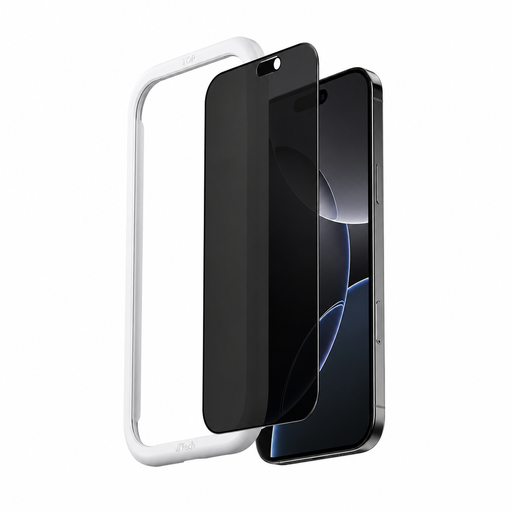
Why this product suits this user: For anyone looking for an iPhone 17 privacy screen protector for their daily commute and who would prefer an installation aid.
The product details specify iPhone 17 compatibility, 9H hardness and a supplied applicator. This makes it easier to check the model and installation details before buying.
Features include 9H glass, fingerprint and oil resistance, and automatic adhesion with a one-click installation aid.
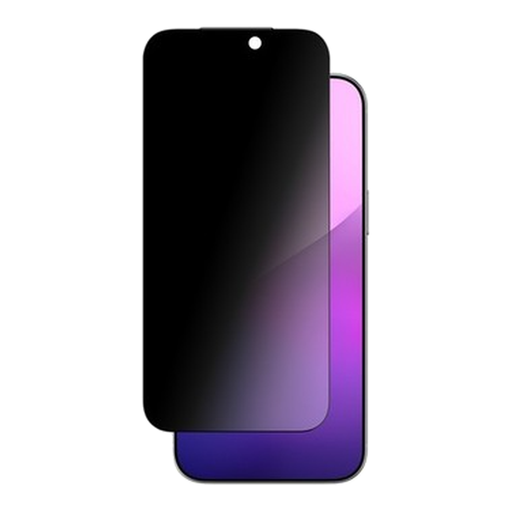
Why this product suits this user: An option for anyone looking to combine built-in privacy, fingerprint protection and a case-friendly design.
The product description explicitly lists iPhone 17 as a compatible model and highlights restricted side-on visibility and case compatibility.
Features include hardened glass, anti-spy functionality, dust protection, a scratch-resistant surface and a glossy finish.
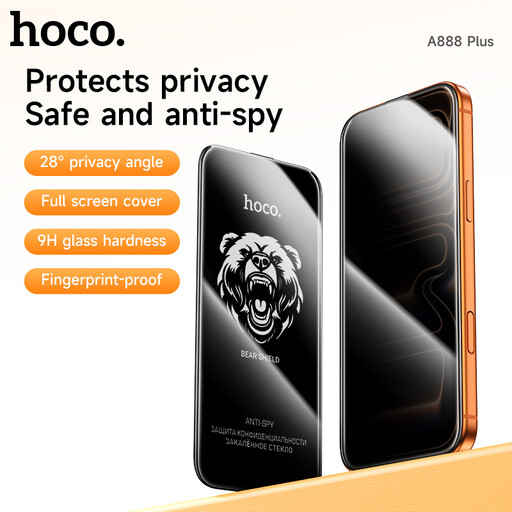
Why this product suits this user: Suitable for anyone looking for a full-screen privacy protector for the office, their commute and frequent everyday use.
The safety information advises against reapplying the glass if dust is trapped underneath, and says to replace it immediately if it’s damaged.
We’ve put together a complete, regularly updated list of products that meet these strict selection criteria and fully comply with the safety regulations in force in the EU.
An integrated privacy filter limits the amount of light emitted to the sides. The screen remains visible from the front, while it looks darker or harder to read from certain side angles. The actual effect varies depending on the design and viewing angle.
There’s no set lifespan that applies to every screen protector. It depends on friction, drops, how well it fits with your case and how often you use your phone. Replace it if it cracks, develops damaged edges or deep scratches, or starts to lose adhesion.
No. Full-screen glass can catch on cases that are especially tight or have raised edges. Look for the term ‘case-friendly’ and, after installation, check that the edges are fully adhered and the case isn’t putting pressure on the glass.