
Lieferung heute & morgen

Qualitätsgarantie

Willkommens-Angebote freischalten: KOSTENLOSE Lieferung | Bis zu 80 % RABATT | Kostenlose 30-Tage-JoyPlus-Testphase
App herunterladen
Anyone looking for an iPhone 17 privacy screen protector will usually want to solve two problems at once: preventing scratches from keys or dust, and stopping people nearby from reading the screen on the bus, train, in the office or in a café. However, not every privacy screen protector performs equally well. The key factors are the correct device dimensions, a clear hardness rating and an installation process that does not affect the touchscreen or sensors.
Claims such as “360° anti-spy” or “complete privacy protection” generally describe a filter that darkens the screen when viewed from certain side angles. The content remains visible from the front but may be much harder to read from the side. This does not guarantee complete privacy in every situation.
A privacy filter can also reduce perceived brightness. In direct sunlight or when the display brightness is low, the screen may therefore appear less clear. If you often share content with other people, you should take this compromise into account.
A screen protector for the iPhone 17 Pro, iPhone 17 Pro Max or iPhone 17 Air will not automatically fit the iPhone 17. Cut-outs for the front camera, speaker and display edges may differ. Before buying, you should therefore compare the model name and screen size in the product description with your own device.
The term 9H tempered glass iPhone 17 generally refers to a hardness classification for the glass surface, often based on a pencil hardness test. It is mainly relevant when assessing scratch resistance. However, it does not guarantee that the smartphone will remain undamaged after every fall. A tempered-glass protector also does not protect the back, frame or corners of the phone.
For an iPhone 17 privacy screen protector or iPhone 17 privacy glass, the description should state the angle at which the screen becomes darker. A specific value such as ±28° is more informative than purely promotional wording.
A stronger filter may be useful for commuters. However, if you regularly look at photos, navigation maps or presentations with other people, you may be better off with a protector that darkens the display less aggressively.
A thin iPhone 17 toughened-glass screen protector can make operation and compatibility with a protective case easier. The AmazingThing Radix Privacy tempered glass for iPhone 17, for example, is described as having a thickness of 330 µm and a case-friendly design. Rounded or finished edges can make the transition to the display more comfortable.
It is also important to check whether the glass fully covers the active display area without being pushed up by the case. An oversized protector may come loose at the corners, while an undersized one leaves more of the edges unprotected.
An iPhone 17 tempered-glass protector that is easy to install should include clear instructions, cleaning accessories and, ideally, an alignment frame or applicator. Dust beneath the adhesive layer often causes bubbles and can affect touch response.
For a clean installation:
A protector should not be applied over a display that is already damaged. If the screen protector breaks later, it should be replaced because it may have sharp edges.
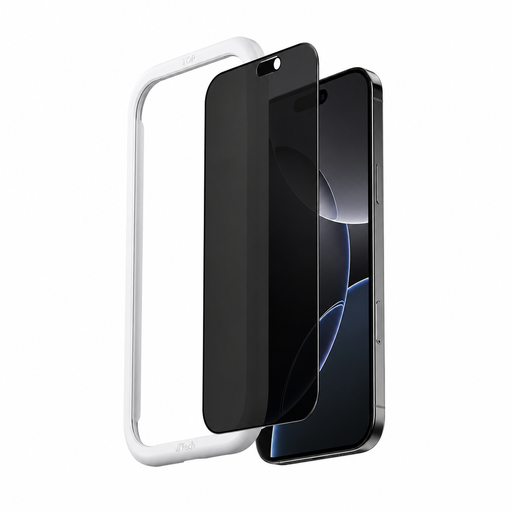
Why this product suits this profile: The glass is specified for the iPhone 17 and combines 9H hardness, side privacy protection and a supplied applicator. The automatic adhesion and one-click installation may make it easier for first-time users.
The product details clearly specify the compatible model, hardness and contents. This makes it easier to check before buying, although you should still compare them with your exact device variant.
9H toughened glass, oleophobic coating and applicator according to the product description.
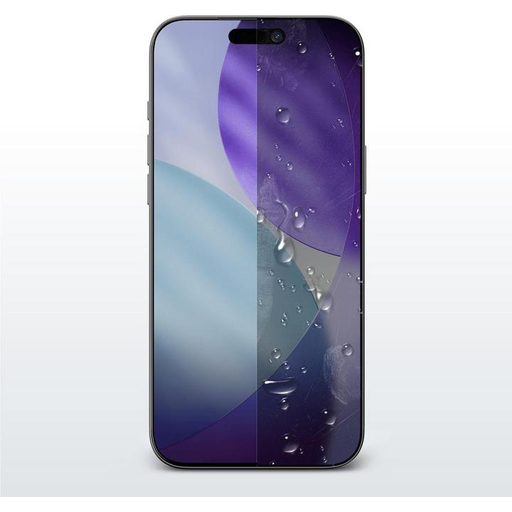
Why this product suits this profile: The product description specifies a thickness of 330 µm, a privacy angle of ±28°, 9H hardness and compatibility with most cases. This allows buyers to compare the technical specifications more precisely.
The specific viewing angle is more informative than the general term “anti-spy”. The case-compatibility information also reduces the risk of the edges coming loose when a protective case is fitted.
330 µm thickness, ±28° privacy angle and 9H hardness according to the product data.
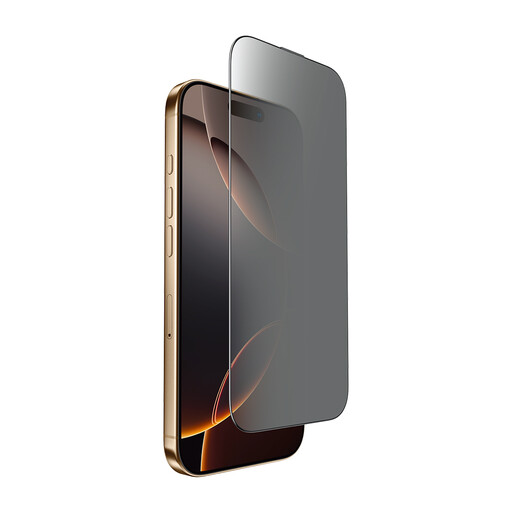
Why this product suits this profile: The design with 2.5D full-screen coverage, a black border, privacy protection and dust protection is aimed at users who regularly use their smartphone on the go. The model variant should be checked carefully before buying.
The safety information explicitly states that the privacy filter reduces side visibility and may make the screen appear subjectively less bright. This gives you a more realistic impression of its everyday practicality.
2.5D design with a black border, privacy protection and dust protection according to the product details.
We have put together a complete, regularly updated list of products that fully meet these strict selection criteria and the safety regulations applicable in the EU.
The display should be completely free from grease and dust. Installing the protector in a low-dust environment, aligning it carefully and pressing slowly from the centre outwards will help to prevent air bubbles. A supplied frame or applicator makes positioning easier.
A suitable glass protector can largely maintain touchscreen functionality. However, dust, uneven adhesion, a protector that is too thick or the wrong model variant can reduce responsiveness. After installation, you should check tapping, swiping, the keyboard and the Face ID area.
Its lifespan depends on how it is used, impacts and the quality of the coating. Scratches, chips, cracks or edges that are coming loose are all reasons to replace it. A damaged glass protector should not continue to be used, as it may develop sharp edges.