
Lieferung heute & morgen

Qualitätsgarantie

Willkommens-Angebote freischalten: KOSTENLOSE Lieferung | Bis zu 80 % RABATT | Kostenlose 30-Tage-JoyPlus-Testphase
App herunterladen
As the owner of an iPhone 17 Pro Max, you hold a piece of sophisticated technology in your hands. Protecting its display is just as important as safeguarding your digital privacy, especially in public. An iPhone 17 Pro Max privacy screen protector is an obvious solution. However, the market is filled with products whose marketing promises often suggest more than their features can deliver.
Many users invest in a screen protector only to find that it renders the display brightness unusable, creates bubbles during installation, or gets scratched after just a few weeks. This guide will show you the three most common pitfalls and explain which technical parameters you need to look for to make an informed decision.
To avoid these problems, you should base your choice on objective criteria. The following three parameters are crucial for the functionality and longevity of an anti-spy screen protector.
A privacy screen protector works using tiny, vertically aligned louvers that only allow light to pass through at a straight angle to the viewer.
Look for a balance: effective protection should kick in at a side angle of about 28 to 30 degrees without significantly impairing the frontal view for you.
The durability of a protector depends on two factors: the base material and the surface finish.
An easy installation is not a marketing gimmick but an essential product feature. High-quality screen protectors come with an applicator frame. This frame is placed on the iPhone and guides the protector precisely onto the display, minimizing the risk of misalignment and air bubbles. Products with auto-adsorption also use an adhesive that bonds to the display from the center outwards, automatically and bubble-free.
Based on the criteria mentioned, we have identified some products that represent a suitable solution for specific user profiles.
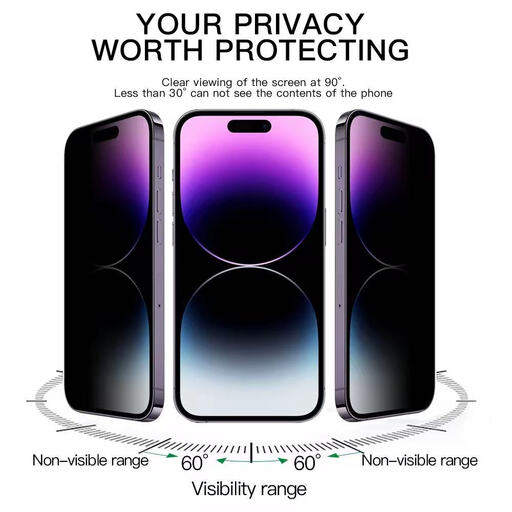
Why This Fits Their Persona: Ideal for users who work in public transport or open-plan offices daily. The 360-degree protection secures sensitive data like emails or passwords from prying eyes from all directions. A typical screen protector for commuters.
This product avoids the "invisible" privacy shield pitfall by using a defined dimming angle that keeps the frontal view clear and bright for the user.
Offers 360-degree privacy protection and combines it with an oleophobic coating to reduce fingerprints.
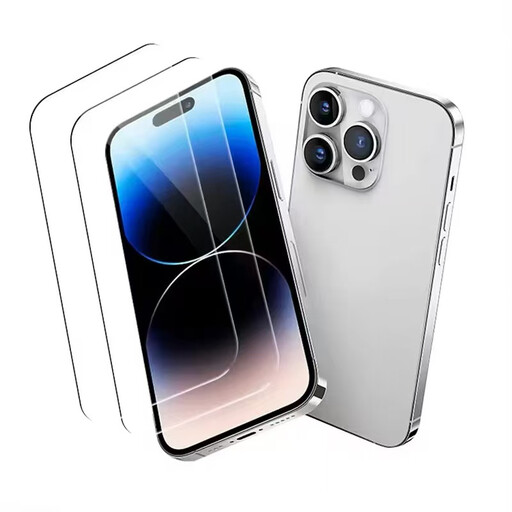
Why This Fits Their Persona: Perfect for anyone worried about applying a screen protector. The focus here is on a stress-free, bubble-free experience without compromising on protective features.
Directly addresses the "chaotic installation" pitfall. The included applicator frame and self-adhering properties minimize the risk of bubbles and misalignment.
The main advantage is the easy installation. The product combines this with 9H tempered glass and an oleophobic coating for comprehensive protection.
We have compiled a complete, real-time updated list of products that fully meet these strict selection criteria and UK safety regulations.
Modern, high-quality privacy screen protectors are designed not to interfere with Face ID functionality. They feature precise cutouts for the sensors. Touch sensitivity also generally remains unaffected, as the thin, tempered glass transmits touch inputs directly to the display.
The 9H hardness rating refers to the material's ability to resist scratches from a 9H pencil, which is the hardest on the pencil hardness scale. It offers reliable protection against scratches from many metal objects like keys or coins, but not necessarily against harder minerals like sand (quartz).
Yes, most privacy screen protectors are designed to be "case-friendly." This means they don't cover the entire screen to the very edge, but leave a minimal gap so that the edges of a phone case do not lift or damage the protector. It is advisable to look for this feature in the product description.