
Lieferung heute & morgen

Qualitätsgarantie

Willkommens-Angebote freischalten: KOSTENLOSE Lieferung | Bis zu 80 % RABATT | Kostenlose 30-Tage-JoyPlus-Testphase
App herunterladen
The right iPhone 17 Pro Max screen protector can help reduce scratches, fingerprints and everyday knocks without affecting how you use your phone or fit its case. At first, choosing one seems straightforward: there’s tempered glass, glass film, privacy protection and flexible film. But the differences often become clear only when you install it and start using it every day.
As a Joybuy Product Recommendation Officer, I look for clear, verifiable details such as material, hardness rating, dimensions, installation aids and model compatibility. Marketing claims alone aren’t enough.
9H tempered glass is designed to resist scratches. However, this rating doesn’t mean your phone’s screen is shatterproof in every situation. A direct impact, a fall onto an edge or damage to the protector itself can still happen. Even a scratch-resistant screen protector is no substitute for careful handling.
Screen protectors made for similar iPhone models won’t necessarily fit the iPhone 17 Pro Max. Even small differences in screen dimensions, speaker cut-outs or edge coverage can cause the protector to lift or catch on your case. Always check that the product explicitly states it’s compatible with your model.
Dust, poor alignment or trapped air bubbles can spoil the look of your screen. A screen protector with an alignment frame, cleaning cloths or a fitting aid can make installation easier. Even so, it’s best to apply it in an area with as little dust as possible.
Traditional iPhone 17 Pro Max tempered glass has a firm, smooth surface. Many models use 9H tempered glass. Flexible, multi-layer films, on the other hand, can adapt more easily to slightly curved edges and won’t shatter like glass if damaged. However, that doesn’t automatically make them better at withstanding every kind of localised pressure.
Also check the material specified. A plastic screen film isn’t the same as iPhone 17 Pro Max protective glass. Details such as 0.33 mm or 0.40 mm can help you gauge thickness and feel, but they don’t tell you everything about the level of protection.
A case-friendly screen protector usually stops just short of the edge of the phone. This makes it less likely that a case will lift the protector. For full-cover models with a black border, check that the covering aligns neatly with the screen.
A privacy screen protector typically darkens the display when viewed from the side. This can be useful on the train, at work or in a café, but it may make the screen harder to read from an angle. Clear protectors are usually more straightforward for gaming, photos and videos. An oleophobic coating can help reduce fingerprints and skin oils, but you’ll need to clean it with suitable cloths.
A screen protector won’t protect the rear camera lenses. If you often carry your iPhone in a bag with keys or put it down on rough surfaces, you may want to consider a separate iPhone 17 Pro Max camera lens protector. Look for precise cut-outs and a design that, according to the product details, won’t interfere with using the camera.
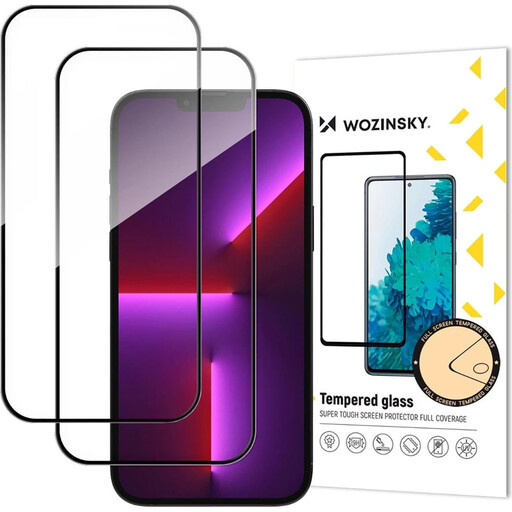
Why it suits this profile: The two-pack gives you a spare protector and is a good choice if you’re after a simple, standard option with installation accessories.
The stated compatibility and included fitting aids help reduce the risk of choosing an unsuitable protector or applying it at an angle.
9H tempered glass, full-adhesive coverage, black border and two protectors per pack.
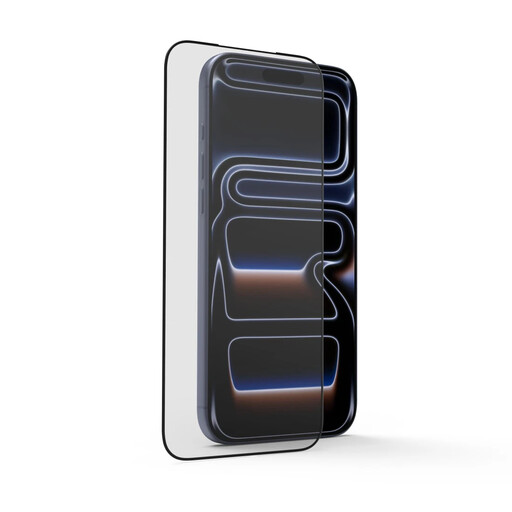
Why it suits this profile: The combination of 10H tempered glass, a full-cover design and an EcoFrame fitting aid is designed for buyers who value clearly specified technical details.
The product details specify the hardness rating, 0.33 mm thickness, dimensions and fitting aid, rather than relying on vague promises of protection.
10H safety glass, electrostatic adhesion, anti-fingerprint coating and a full-cover design described as case-friendly.
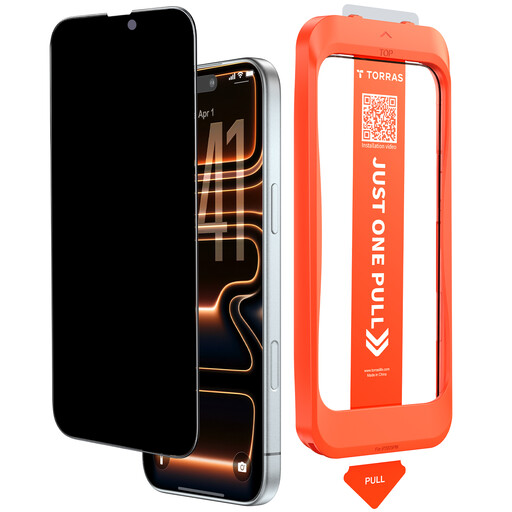
Why it suits this profile: Commuters, professionals and frequent users get a privacy screen protector with alignment aids and, according to the product details, high transparency.
The side-darkening feature helps prevent people on public transport from seeing your screen. Check that it’s suitable for your particular case before buying.
9H tempered glass, privacy function, oleophobic surface and installation aid, according to the product description.
The same applies to a camera lens protector. Before fitting it, make sure the camera module is completely free of grease and dust. A frame supplied with the protector can help you align it.
We’ve put together a complete, regularly updated list of products that meet these strict selection criteria and fully comply with the safety regulations in force in the EU.
How long it lasts depends on scratches, knocks, pressure on the edges and everyday wear. Replace the protective glass if it has visible cracks, chips, deep scratches or edges that are starting to lift. A two-pack means you’ll have a spare ready.
It can make it harder for people nearby to see your texts and passwords. However, the screen may look darker when viewed from an angle. If you often share photos, videos or games, weigh up the privacy benefits against being able to see the screen clearly from all angles.
That depends on how you use your phone. A screen protector won’t cover the rear camera lenses. If you often carry your phone in a bag with other items or put it down on different surfaces, you may want to consider a separate camera lens protector.