
Lieferung heute & morgen

Qualitätsgarantie

Willkommens-Angebote freischalten: KOSTENLOSE Lieferung | Bis zu 80 % RABATT | Kostenlose 30-Tage-JoyPlus-Testphase
App herunterladen
Your iPhone 17 Pro Max screen is exposed to all kinds of everyday wear and tear: keys in your pocket, dust in your bag, fingerprints, knocks on your commute or contact with a phone case. The right iPhone 17 Pro Max screen protector can help protect the surface from the marks that come with everyday use. However, it’s no substitute for careful handling and can’t guarantee that the screen will stay undamaged after every drop.
Ratings such as 9H or 10H usually refer to a material’s scratch resistance under a particular test. They don’t automatically show how well a screen protector will perform if dropped, knocked against an edge or put under sideways pressure. The frame, glass thickness, adhesive layer and fit all affect how well it works in everyday use.
An iPhone 17 Pro Max privacy screen protector can restrict the viewing angle from the side, making the screen appear darker when viewed at an angle. This can affect readability in direct sunlight or when the brightness is turned down. So it’s worth weighing up whether privacy on the train, in the office or in a café matters more to you than keeping the display as clear as possible.
A case-compatible screen protector needs enough clearance around the edges. If the glass is too large or the case extends too far over the screen, it may lift the protector. This can let dust collect around the edges or cause the protector to peel off. Before buying, compare the shape of your case with the product dimensions and compatibility information.
An iPhone 17 Pro Max tempered glass screen protector is usually made from toughened glass. Products rated 9H or 10H are designed to offer greater scratch resistance, according to their product descriptions. That doesn’t mean they’re unbreakable. If the glass is damaged, take care around sharp edges and replace the protector.
A flexible iPhone 17 Pro Max screen film may be better able to fit slight curves and won’t shatter on impact. The 3MK StratCore700, for example, is described as a multi-layer film with a thickness of 0,40 mm and a hardness rating of 7H. According to the product description, it has oleophobic and hydrophobic coatings and is compatible with sensors and most cases.
If you want to enjoy photos, videos or games without any noticeable change to the display, look for information on light transmission, optical clarity and touch sensitivity. The REMAX GL-27 glass lists light transmission of 98 per cent and AR technology to reduce reflections. These figures should be treated as manufacturer claims and aren’t necessarily directly comparable across different products.
A bubble-free installation mainly depends on a dust-free surface, accurate positioning and the adhesive layer. Fitting aids, positioning frames or automatic alignment can reduce the risk of crooked edges. Before applying the protector, clean the screen with the cloth provided. Dust trapped underneath is usually difficult to remove once the film is in place.
An oleophobic coating can help reduce fingerprints and skin oils, but it wears away with frequent wiping and friction. So an anti-fingerprint screen protector should be seen as a surface feature, not a guarantee that the screen will stay clean.
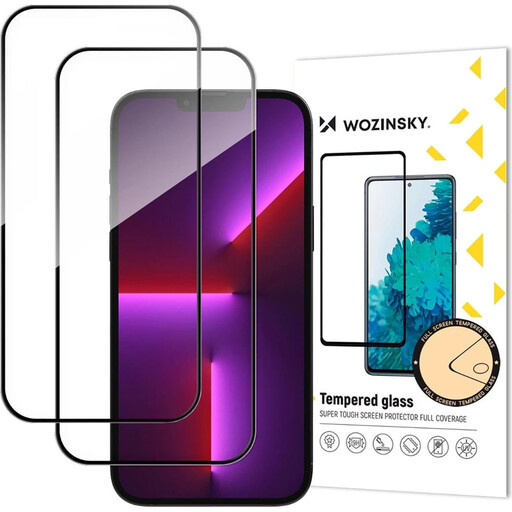
Why this product suits this profile: The twin pack gives you a spare if the first screen protector is damaged during installation or needs replacing later. The full-coverage adhesive is designed to provide an even hold.
The fitting aid and full adhesive surface help address common problems such as misalignment and trapped air bubbles.
9H hardness, two protectors per pack and, according to the product information, a clear surface that preserves touch sensitivity.
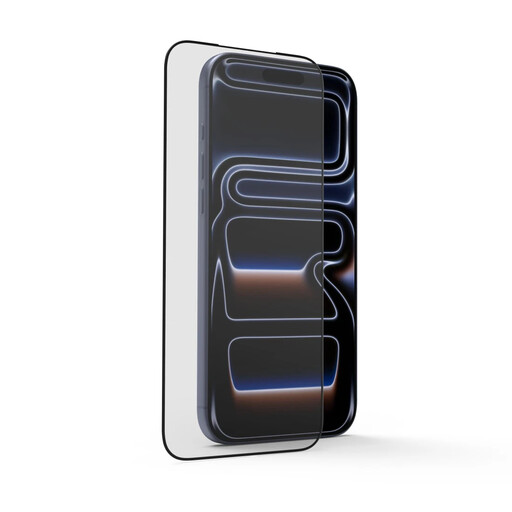
Why this product suits this profile: According to the product information, this protector combines 0,33 mm safety glass, electrostatic adhesion and a fitting aid. It’s a good option for anyone who values residue-free removal and a precise fit.
According to the manufacturer, its electrostatic application doesn’t use a conventional adhesive layer and should come away without leaving residue.
10H hardness, 0,33 mm thickness, 60 per cent recycled glass and, according to the product information, a case-compatible full-cover design.
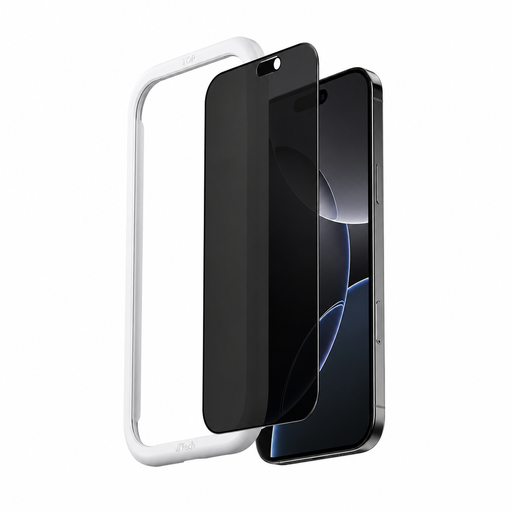
Why this product suits this profile: The privacy version is designed for commuters and professionals who want to make messages, passwords or documents less visible from the side in public places.
The product description mentions a side-view privacy filter, automatic alignment and one-click installation. Bear in mind, though, that the screen may look darker when viewed at an angle.
9H glass, fingerprint and dust protection according to the product information, plus a privacy design for use on the go.
We’ve put together a comprehensive, regularly updated list of products that meet these strict selection criteria and fully comply with the safety regulations in force in the EU.
Don’t use sharp objects to push out bubbles. If the tempered glass is cracked, replace it as soon as possible. Repeatedly removing and reapplying the protector can affect the screen’s coating or the protector’s adhesion.
A privacy screen protector can be useful if you often use your phone on the train, bus or in waiting areas. Bear in mind that the side-view privacy filter can make the screen look darker from certain angles. If you want to see colours and brightness as accurately as possible, choose a clear glass protector with an anti-fingerprint coating instead.
Its lifespan depends on how you use your phone, the shape of your case, your cleaning habits and how often the phone is dropped or knocked. Scratches, chips, cracks or lifted edges are all clear signs that it’s time for a replacement. There’s no reliable way to give a fixed lifespan that applies to every device.
The price depends on factors such as the material, number of protectors in the pack, fitting aid, privacy or AR coating and brand. A twin pack can be better value if you replace your protector regularly. What matters most is that the model compatibility, edge coverage and installation method suit the way you use your phone.