
Lieferung heute & morgen

Qualitätsgarantie

Willkommens-Angebote freischalten: KOSTENLOSE Lieferung | Bis zu 80 % RABATT | Kostenlose 30-Tage-JoyPlus-Testphase
App herunterladen
The right iPhone 17 Pro Max screen protector helps protect your screen from scratches, fingerprints and dirt in everyday use. But choosing one involves more than looking for terms such as ‘9H’, ‘military-grade’ or ‘ultra-clear’. What really matters is the fit, the material and whether it can be installed alongside the case you use.
These three buying and marketing pitfalls are particularly common:
An iPhone 17 Pro Max tempered glass screen protector is generally made from toughened glass. It provides a firm, smooth surface and is a good option if you often carry your phone alongside keys, coins or other items. However, glass can be damaged by a heavy impact and should be replaced if it cracks or chips.
An iPhone 17 Pro Max screen protector film made from layered plastic is more flexible. It can adapt better to slight movement and the contours of the screen, and won’t shatter like glass. However, it may offer less resistance to a very direct impact from a sharp edge. For example, the 3MK StratCore700 is described as 0.40 mm thick, with a flexible multi-layer construction and a stated hardness rating of 7H.
Treat 9H tempered glass or 10H as a technical point of comparison for surface hardness. Also check for:
An iPhone 17 Pro Max screen protector with a black border may blend in with your phone, but it could cover a small part of the screen edges. Check the model name and dimensions before buying.
A case-friendly screen protector leaves enough room around the edges for your phone case. Installation guides, electrostatic adhesion or an applicator can also be useful. These features can make a bubble-free installation more likely, but they don’t remove the need to prepare the screen in a dust-free environment.
Be sure to check compatibility with the iPhone 18 Pro Max too. Some products are listed by the manufacturer as suitable for both the iPhone 17 Pro Max and iPhone 18 Pro Max, while others are designed exclusively for the iPhone 17 Pro Max.
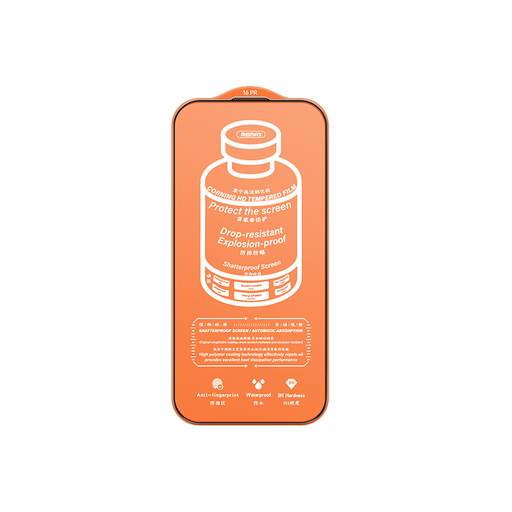
Why it suits this profile: This screen protector is aimed at users looking for clear front-screen coverage and basic scratch resistance in a straightforward design.
The product details specify a precise fit, 0.4 mm glass thickness and an oleophobic coating, rather than relying solely on generic marketing claims.
Corning glass, a clear display and stated fingerprint resistance.
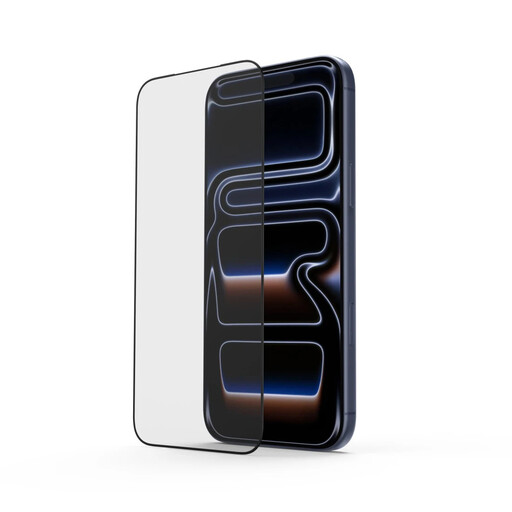
Why it suits this profile: With 10H safety glass, an anti-reflective coating and a case-friendly design, it’s a good fit for professionals who often move between indoor spaces and daylight.
The supplied box doubles as an installation aid, helping you align the protector more precisely than when fitting it by hand.
10H hardness, AR coating, 0.33 mm thickness and 60% recycled glass, according to the product details.
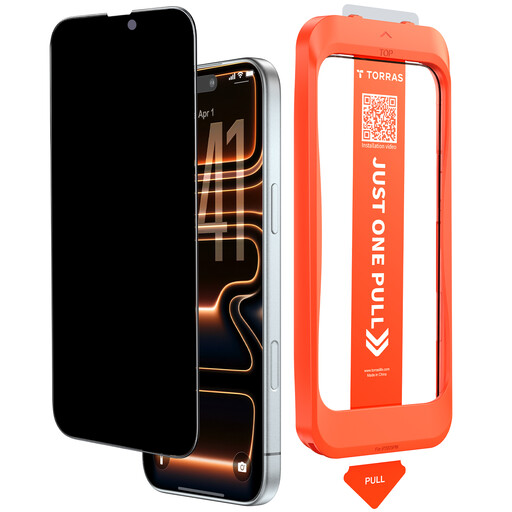
Why it suits this profile: This iPhone 17 Pro Max privacy screen protector is designed for commuters, office workers and anyone who wants to make it harder for people nearby to see their messages or passwords.
The product description explicitly lists privacy functionality, an installation aid, 9H hardness and case compatibility. Side visibility may still vary depending on the viewing angle and surroundings.
Privacy finish, stated 9H hardness and bubble-free installation with an installation system.
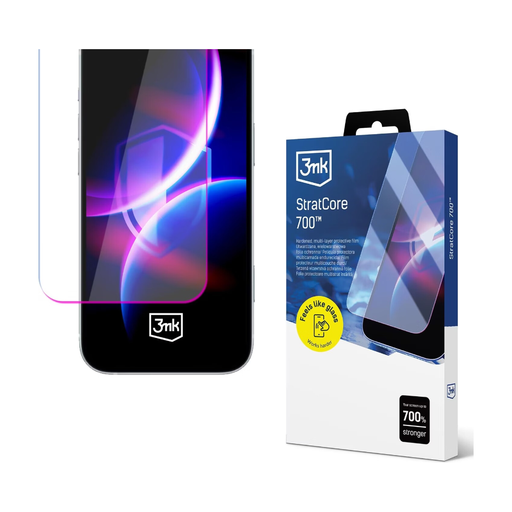
Why it suits this profile: This flexible screen protector film is a good option for heavy users who want a glass-like surface but prefer a material that won’t shatter.
The description clearly states that this isn’t glass, helping you make an informed choice about the material before buying.
0.40 mm multi-layer film, oleophobic and hydrophobic coatings, plus compatibility with sensors and most cases, according to the product details.
A screen protector safeguards the front of your phone, but not the rear camera module. iPhone 17 Pro Max camera lens protectors can be useful if you often place your phone on rough surfaces or use it without a camera case. The Wozinsky Full Camera Glass is sold as a two-pack of 0.2 mm-thin 9H glass protectors. Clean the lens area and frame thoroughly before installation. Position the protector carefully to avoid affecting photos or the flash.
We’ve put together a complete, regularly updated list of products that meet these strict selection criteria and fully comply with the safety regulations in force in the EU.
First, clean the screen with the cloth provided and remove any dust. Install the protector in an environment with as little dust as possible. Alignment guides or installation frames make it easier to position accurately. You can often smooth small air bubbles outwards from the centre towards the edges. If particles are trapped underneath, avoid repeatedly lifting and reapplying the protector.
Its lifespan depends on how you use your phone, the edge of your case, how you carry it and how often it is exposed to impacts. Scratches, cracks, chips or lifting edges are signs that it’s time for a replacement. Even if the glass looks intact, its adhesion may weaken after being removed frequently. Replace a screen protector film too if it shows visible signs of wear.
The price depends on the material, coating, installation aid, pack size and extra features such as privacy or anti-reflective protection. So don’t compare the price per item alone: check what’s included, compatibility, whether spare protectors are provided and the installation instructions.