
Lieferung heute & morgen

Qualitätsgarantie

Willkommens-Angebote freischalten: KOSTENLOSE Lieferung | Bis zu 80 % RABATT | Kostenlose 30-Tage-JoyPlus-Testphase
App herunterladen
Your iPhone 17 Pro goes everywhere with you – in your hand, bag or jacket pocket. Keys, grains of sand and other hard objects can scratch the screen, while drops onto edges and prying eyes on the train are further reasons to choose the right screen protector. Options range from thin films and iPhone 17 Pro tempered glass to privacy protectors and separate iPhone 17 Pro camera protection.
However, not every product description lives up to its promises at first glance. Three common buying mistakes can be particularly costly:
An iPhone 17 Pro screen protector made from tempered glass provides a firm surface and can reduce direct contact between the screen and things that might scratch it. Available products include 9H tempered glass, models with 10H ratings and multi-layer screen protectors.
However, the hardness rating is only one factor to consider. Also check:
A flexible film may fit curved areas or areas close to the edge more comfortably. Tempered glass, on the other hand, usually feels firm and glass-like to the touch. The right choice depends on how you use your phone and the feel you prefer.
A full-screen protector should cover as much of the display as possible without interfering with the speaker, sensors or front camera. Precisely cut openings can improve the fit. At the same time, a case-compatible screen protector needs a small gap around the edge of the phone so the case does not catch under the glass.
Before buying, check:
Changing your case can affect the fit. Particularly sturdy outdoor cases and models with raised edges need enough clearance.
If you often work outdoors or watch videos on the train, check the optical properties. A clear screen protector with an HD or anti-reflective coating can reduce reflections. However, what you see will also depend on the light, screen brightness and viewing angle.
An iPhone 17 Pro privacy screen protector limits visibility from the side. This can be useful for commuters, professionals and anyone viewing sensitive content in public places. However, a privacy filter can make the display look darker when viewed at an angle. Consider whether you’d prefer stronger privacy or a clearer view from different angles.
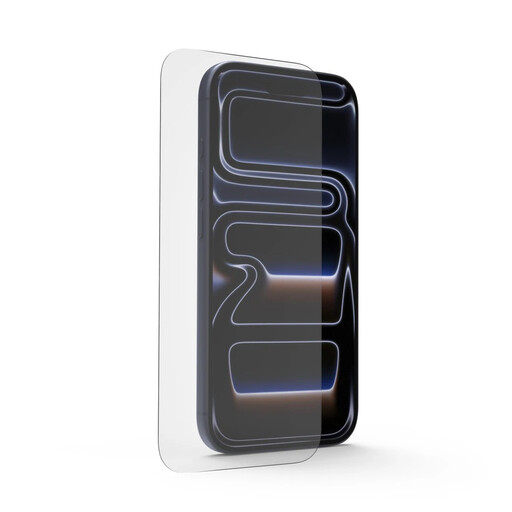
Why it suits this user: The clear design focuses on everyday scratch protection, with straightforward installation using EcoFrame.
The 9H rating is described as surface hardness, not an unlimited guarantee against drops. Case compatibility is stated explicitly.
9H tempered glass, 0.33 mm thickness, electrostatic adhesion and anti-fingerprint coating.
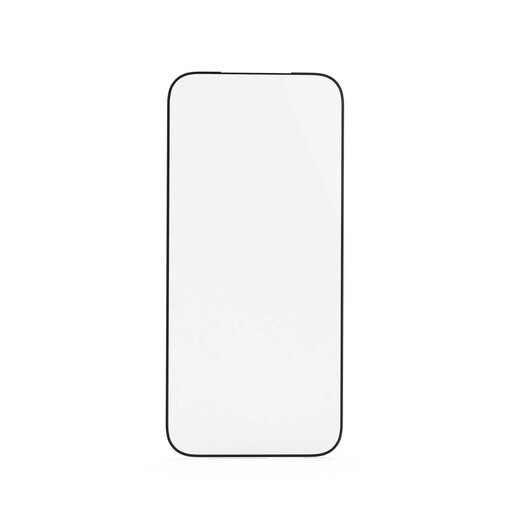
Why it suits this user: For anyone looking to combine a clear display with reduced reflections, this model features an AR coating and 10H hardness.
The product details list specific dimensions, a thickness of 0.33 mm and an installation aid in the packaging, rather than making a vague claim about fit.
D3O material, 10H hardness, anti-reflective coating and a full-coverage design that is compatible with cases.
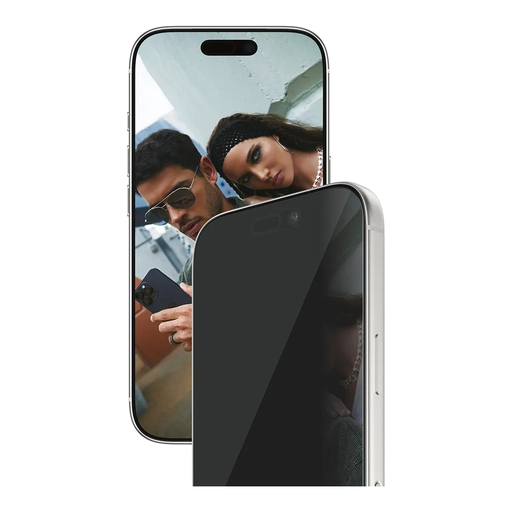
Why it suits this user: The side-view privacy filter is ideal for commuters, meetings and viewing sensitive content in public places.
Its limited viewing angle is clearly identified as a side-view privacy filter, making it easy to distinguish from a standard clear screen protector.
Ultra-Wide-Fit, EasyAligner, oleophobic coating and, according to the product details, 100 per cent touch sensitivity.
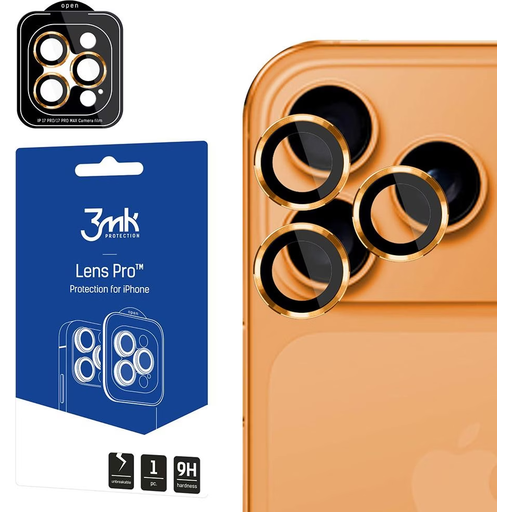
Why it suits this user: If you want to protect the delicate camera lenses as well as the screen, this is a separate lens protector.
It is clearly sold as camera lens protection, not screen protection, so it’s clear which component it covers.
Tempered glass, a precise fit, residue-free removal and compatibility with iPhone 17 Pro and iPhone 17 Pro Max.
For a bubble-free installation, preparation matters more than pressure. First, clean the screen with the supplied damp cloth, then dry it with a lint-free microfibre cloth. Use a dust removal sticker to pick up any remaining specks.
Install the screen protector in a low-dust environment if possible. An alignment frame or box-style installation helps reduce the risk of fitting the glass at an angle. Once it’s in place, gently push any remaining air bubbles from the centre towards the edges. Replace any glass that is damaged or cracked.
We’ve put together a complete, regularly updated list of products that meet these strict selection criteria and fully comply with the safety regulations in force in the EU.
Its lifespan depends on how you use your phone, as well as any knocks, scratches and the quality of the edge adhesive. Replace the glass if you notice cracks, chips or edges starting to lift. There’s no reliable way to give a set number of months.
Tempered glass has a firm, glass-like surface and is often chosen for its scratch resistance. A flexible film may feel thinner and can fit more easily with certain cases. The best choice depends on the material, fit, installation and the feel you prefer.
It depends on the model. Check the manufacturer’s specific claims about touch sensitivity, and bear in mind that the display may deliberately look darker or less clear when viewed from the side.