
Lieferung heute & morgen

Qualitätsgarantie

Willkommens-Angebote freischalten: KOSTENLOSE Lieferung | Bis zu 80 % RABATT | Kostenlose 30-Tage-JoyPlus-Testphase
App herunterladen
A new iPhone 17 Pro, iPhone 18 Pro or Pro Max model is a significant investment. The right iPhone 17 Pro screen protector can help protect the display from scratches, fingerprints and minor knocks in everyday use. But the label “tempered glass” alone isn’t enough to go on. The dimensions, material, coating and fitting method all affect how practical your screen protector will be over time.
A screen protector for the iPhone 17 Pro won’t necessarily fit the iPhone 17 Pro Max. The dimensions, cut-outs or edge contours may also differ between the iPhone 17 Pro and iPhone 18 Pro. A protector that isn’t made for your model may overhang at the edges, lift under your case or leave important areas uncovered.
Before buying, read the compatibility information in full. Check that it specifies:
9H tempered glass is designed to resist scratches. A 10H screen protector is advertised with a higher hardness rating. However, these figures don’t guarantee protection against every drop or impact. Tempered glass can still be damaged by a direct knock.
A screen protector is no substitute for a suitable phone case, either. The corners and frame can still be vulnerable in many drops.
A clear screen protector can preserve the display’s appearance. But without an anti-fingerprint screen protector, grease and smudges can build up quickly. If you often use your phone outdoors, an anti-reflective coating may also be useful.
So don’t just look for transparency. Check for:
Depending on the model, the products in this selection are made from tempered safety glass or flexible, multi-layer material. Hama lists a glass thickness of 0,33 mm and a hardness rating of 9H or 10H for several models. These are technical product specifications, not a guarantee against display damage.
A flexible protector may suit you if you’re looking for a less brittle alternative to glass. Traditional tempered glass, on the other hand, offers a firm surface and can help reduce everyday scratches from keys or coins.
A case-friendly screen protector shouldn’t be pushed right up to every outer edge of the display if that means your phone case presses against the glass. That’s why manufacturers often use a slightly inset design. With full-cover models, check that the black border lines up with both the display and your case.
Camera cut-outs matter, too. A camera-friendly screen protector shouldn’t cover the sensors or front camera. For the rear camera lenses, you’ll need a separate lens protector. The JOYROOM lens protector models listed in the product specifications are for iPhone 16 Pro and iPhone 16 Pro Max, so they won’t necessarily fit the iPhone 17 Pro or iPhone 18 Pro.
A screen protector with an installation aid reduces the risk of fitting it crookedly. Dust trapped under the glass can cause bubbles and affect adhesion around the edges. Before fitting, make sure the display is clean, dry and as dust-free as possible.
Electrostatic adhesion doesn’t require a traditional adhesive layer. According to the product information, the relevant Hama models can be removed without leaving residue. If the glass is damaged, don’t continue using it: replace it carefully. Follow the manufacturer’s safety instructions.
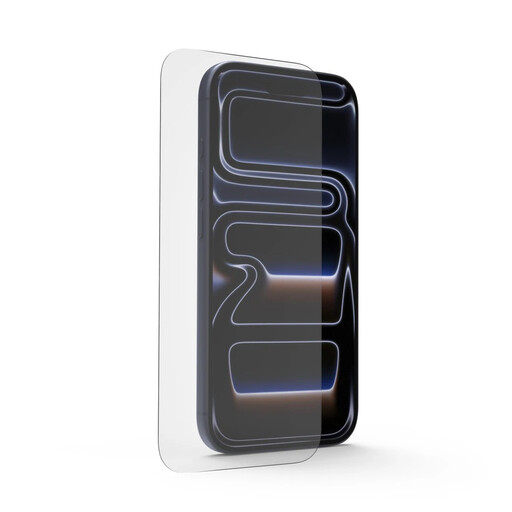
Why it suits this type of user: This clear screen protector combines 9H safety glass with electrostatic adhesion and a supplied EcoFrame installation aid.
Compatibility is specified for the iPhone 17 Pro and iPhone 18 Pro only, avoiding vague claims that it fits a range of models.
The product specifications list 9H hardness, a thickness of 0,33 mm, an anti-fingerprint surface and an installation aid.
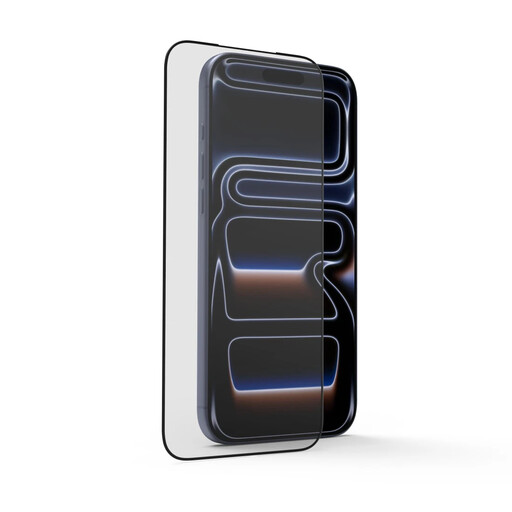
Why it suits this type of user: According to the product description, this model uses 10H glass, D3O material and a black Ultra-Wide edge for Pro Max models.
Compatibility with Pro Max models is listed separately, so you don’t have to work it out from a general iPhone list.
10H hardness, electrostatic fitting, an anti-fingerprint coating and stated case compatibility.
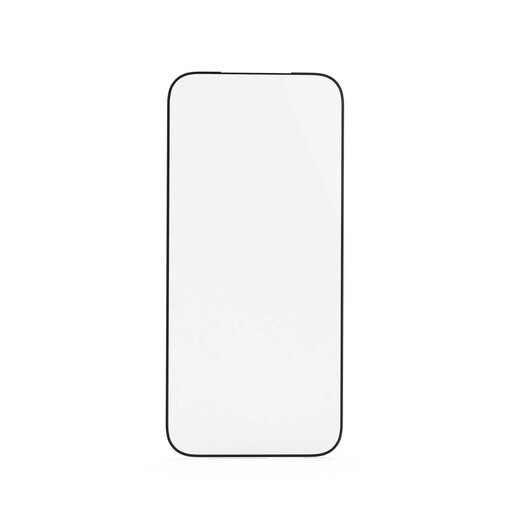
Why it suits this type of user: The AR coating is worth considering if you often use your iPhone outdoors or in changing light conditions.
The product specifications explicitly mention the anti-reflective coating, making it easy to distinguish from a standard clear protector.
10H safety glass, AR coating, an anti-fingerprint surface and an installation box.
We’ve put together a complete, regularly updated list of products that meet these strict selection criteria and the safety regulations in force in the EU.
Fit the protector in a clean room if possible, and avoid touching the adhesive side with your fingers.
Its lifespan depends on how you use your phone, your case, any drops and how you clean it. Visible cracks, chips along the edges, deep scratches or weakening adhesion are signs that it’s time for a replacement. Don’t continue using damaged glass.
Not necessarily. 10H is a higher stated hardness rating, but fit, edge quality, coating and installation also affect how well a protector works in everyday use. The key is to choose one that fits your iPhone model and case exactly.
It depends on how you use your phone and the case you have. A camera lens protector can help protect the rear lenses from scratches, but it needs to be designed for your exact iPhone model. Products for older Pro models aren’t necessarily suitable for the iPhone 17 Pro, iPhone 18 Pro or the corresponding Pro Max models.