
Lieferung heute & morgen

Qualitätsgarantie

Willkommens-Angebote freischalten: KOSTENLOSE Lieferung | Bis zu 80 % RABATT | Kostenlose 30-Tage-JoyPlus-Testphase
App herunterladen
An iPhone 17 wallet case promises to simplify your daily life: smartphone, ID, and bank cards all in one place. But the reality is often different. Many users quickly find their new case is impractical, bulky, or wears out fast. As a Joybuy Product Recommendation Officer, I'll help you cut through the noise and find a case that masterfully combines functionality and protection, without falling for empty marketing promises.
Before you make a purchase, you should be aware of the typical weak points that can render a once-promising case useless.
To avoid these problems, you should check three core aspects. These objective criteria will help you identify a durable and functional protective case for your iPhone 17.
The choice of material determines durability and feel.
A modern iPhone 17 wallet case can do more than just hold cards.
The case must be designed specifically for your iPhone model—be it the iPhone 17, iPhone 17 Pro, or iPhone 17 Air. There is no universal fit. A good protective case fits the device snugly and features slightly raised edges around the display and camera unit. This lip ensures that the sensitive glass surfaces do not rest directly on flat surfaces.
Here are some recommendations tailored to different needs, all of which meet the quality criteria mentioned above.
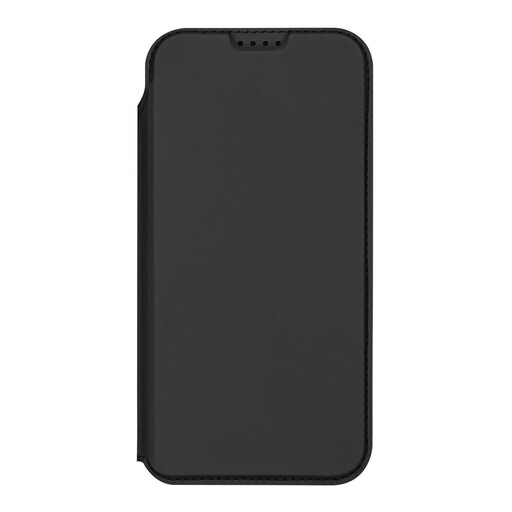
Why it's a great fit: Ideal for users seeking a reliable, straightforward solution. This case focuses on the core functions: protection, a card slot, and a stand feature, without any unnecessary frills.
The single-slot design intentionally prevents overstuffing, keeping the case slim. The proven magnetic clasp and flexible TPU inner shell provide a solid foundation without the typical weaknesses of cheaper models.
Combination of PU leather and a TPU inner shell for balanced protection. Integrated stand function for media viewing.
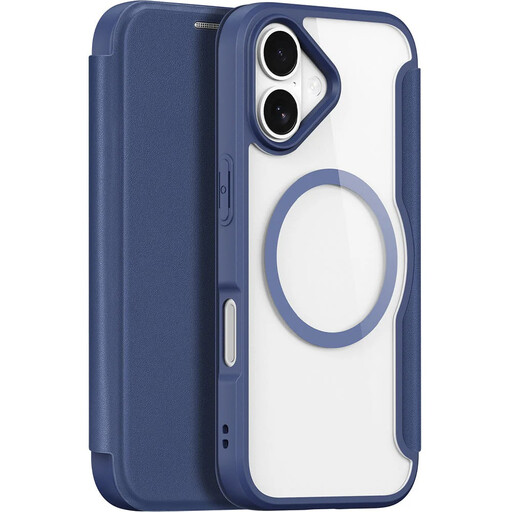
Why it's a great fit: Perfect for users who embrace modern tech like MagSafe and also prioritise security. This case integrates advanced features into a classic folio design.
Full MagSafe compatibility ensures there's no loss of functionality. The integrated RFID protection addresses a modern security risk that is often ignored in simpler cases.
Full MagSafe compatibility via an integrated magnetic ring. RFID-blocking technology to protect card data.
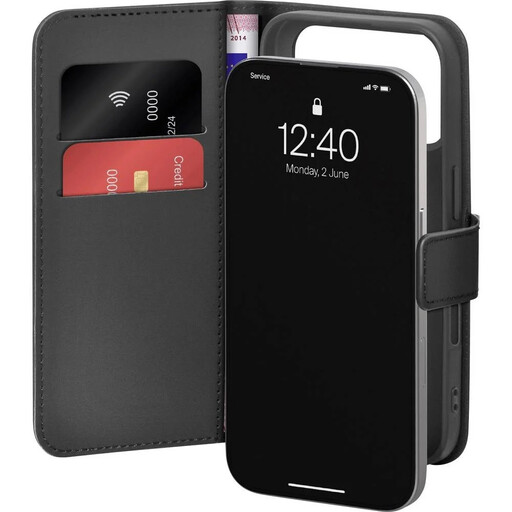
Why it's a great fit: For users who appreciate an elegant, professional look. This case combines a slim profile with the feel of high-quality eco-leather and offers space for multiple cards without adding bulk.
The design focuses on maintaining a slim profile, even when the card slots are used. Its description as "premium eco-leather" and the smooth, matte finish suggest a more durable material that resists peeling.
Elegant design with a slim profile. Multiple card slots plus a cash pocket for maximum organisation. Compatible with wireless charging (with cards removed).
We have compiled a complete, up-to-date list of products that fully meet these strict selection criteria and safety standards.
1. Does a wallet case interfere with wireless charging (Qi or MagSafe)? Yes, it can. Metal parts in the magnetic clasp or the cards themselves (especially those with metal strips or RFID chips) can interfere with or slow down wireless charging. With MagSafe cases, the problem is less pronounced because the magnets optimise alignment. However, many manufacturers recommend removing the cards before charging to ensure optimal performance and safety.
2. How many cards can an iPhone 17 wallet case really hold without getting damaged? Stick to the number specified by the manufacturer. Most cases are designed for 1-3 cards. If you try to force more cards in, the pockets can overstretch and lose their grip. Additionally, the case will become bulkier, and the magnetic clasp may no longer close properly, compromising the screen's protection.
3. What is RFID protection, and is it necessary for a phone case? RFID (Radio-Frequency Identification) is a technology that enables contactless payments and data exchange. RFID protection in a case includes a special layer that blocks radio signals, preventing your card data from being read by unauthorized parties. Whether this is necessary depends on your personal sense of security. In busy public areas, it can be a worthwhile additional security measure.