
Lieferung heute & morgen

Qualitätsgarantie

Willkommens-Angebote freischalten: KOSTENLOSE Lieferung | Bis zu 80 % RABATT | Kostenlose 30-Tage-JoyPlus-Testphase
App herunterladen
When you use your iPhone on the train, in a café or at work, you probably do not want to share messages, login details and business information with the person sitting next to you. An iPhone privacy screen protector can reduce side-on viewing while protecting the front of your phone from scratches. However, the word “privacy” alone is not enough. The viewing angle, model compatibility, glass quality and installation aid all determine whether the protection is genuinely suitable for everyday use.
Terms such as “360° Anti-Spy” or “complete privacy protection” can refer to different filter technologies depending on the supplier. The display is often darkened when viewed from the side, while remaining readable from the front. However, the precise angle at which content becomes harder to see is not always stated.
If you frequently use public transport, look for a clear indication of the privacy viewing angle. A product with a specified angle limitation is easier to assess than a purely promotional claim.
A screen protector for the iPhone 17 Air will not automatically fit the iPhone 17, iPhone 17 Pro or iPhone 17 Pro Max. Older devices can also differ in their dimensions, camera cut-outs and display edges. Before buying, make sure the iPhone model and variant exactly match the product description.
This also applies to an iPhone privacy screen protector advertised as suitable for several generations. A shared compatibility statement can be useful, but it does not replace checking it against your own device.
The term 9H hardened glass for iPhone usually refers to the hardness rating of the surface. It can indicate scratch resistance, but it is not a guarantee against every breakage or fall. The edge design, glass thickness, adhesive layer and fit with your case also play a part.
A screen protector therefore does not replace a protective case and should be replaced if it develops cracks or chips.
First, check:
Glass that is cut too large may catch on the case and lift at the edges. A model that is too small, on the other hand, will leave visible areas around the edges unprotected. The product description should therefore say more than simply “suitable for iPhone”.
A privacy filter limits visibility from the side, but it can also affect the display when viewed at an angle and, depending on the design, may reduce front-facing brightness. The following details are relevant for everyday use:
If you often look at photos, maps or videos, consider the balance between privacy protection and brightness. An anti-spy iPhone screen protector is particularly suitable for confidential content in public places, but it cannot prevent people from seeing the screen if you hold the device directly in front of them.
An oleophobic coating can reduce fingerprints and skin oils on the surface. However, it will not prevent every type of dirt. To install a screen protector easily, an alignment frame, dust remover and cleaning cloths are helpful.
Installation is generally more reliable in an environment with minimal dust:
If the glass is removed and reapplied several times, its adhesion may deteriorate. If the glass is damaged, replacement is recommended.
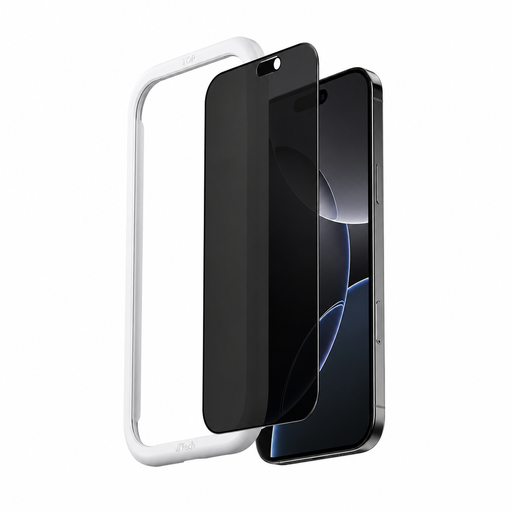
Why this product suits this profile: This option is aimed at iPhone 17 users looking for a self-adhesive protector with an installation aid for everyday use.
The specific iPhone 17 model is stated. The product description also specifies 9H hardness and side privacy protection.
According to the product details, the concept includes an applicator, OCA adhesive, fingerprint protection and a 9H surface.
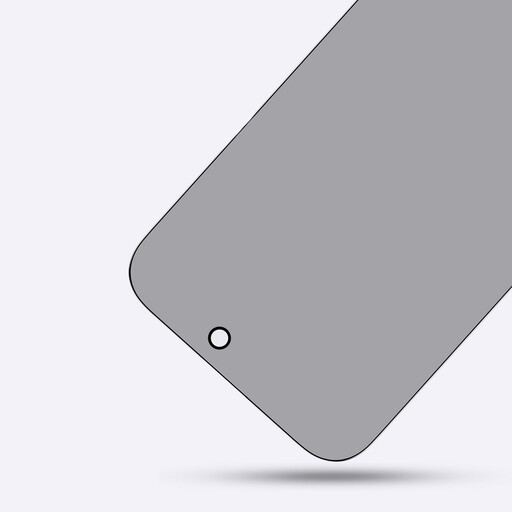
Why this product suits this profile: Suitable for people who prefer a clearly specified viewing angle and defined material details for their iPhone 16 Pro Max.
Rather than simply promoting “Anti-Spy”, the description specifies a privacy viewing angle of ±28°, a glass thickness of 330 µm and 9H hardness according to ASTM D3363.
According to the product data, the glass is case-compatible and designed to withstand pressure of up to 25 kg and drops of up to 1.2 m.
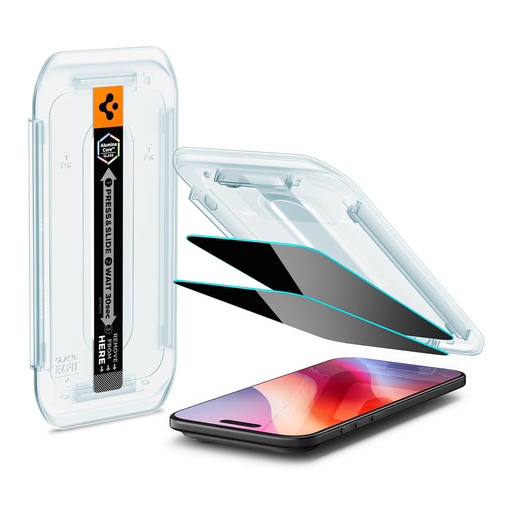
Why this product suits this profile: Two screen protectors and an EZ-Fit frame are practical for commuters, frequent users and anyone who wants to keep a spare readily available.
Compatibility with the iPhone 17 Air and the case-friendly design are explicitly stated. The frame reduces the risk of misaligned installation.
According to the product description, the set includes two 9H glasses, an EZ-Fit frame, cleaning accessories and dust-removal tools.
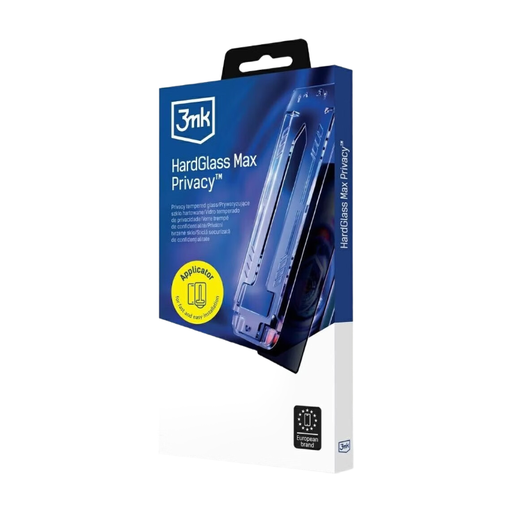
Why this product suits this profile: This model is aimed at iPhone 17 Pro users who value clearly explained installation steps and a suitable alignment aid.
The product description names the specific Pro model, an installation applicator and a low-dust application process. This helps avoid the common problem of an incorrect fit.
According to the product details, the tempered glass offers privacy protection, scratch protection and a transparent surface with touch support.
We have put together a complete, regularly updated list of products that fully meet these strict selection criteria and the safety regulations applicable in the EU.
The iPhone display should be completely free from dust, grease and fibres. Applying the protector in a room with as little dust as possible, using an alignment frame and pressing from the centre towards the edges can reduce the risk of bubbles. Small remaining bubbles may disperse depending on the adhesive layer; larger particles should not be removed by repeatedly lifting the protector.
There is no standard service life that applies in every case. It depends on impacts, scratches, the case and everyday use. The glass should be replaced if it develops cracks, chips or sharp edges, or if its adhesion begins to weaken. Replacing the screen protector regularly without a specific reason may put unnecessary strain on the display’s oleophobic coating.
Compatible glass is generally designed for touch operation. However, an incorrect model size, dust beneath the adhesive layer or a damaged surface can affect input. After installation, check the edges, keyboard, swipe gestures and Face ID cut-outs. Privacy protection also reduces visibility from the side; when working directly on the display, viewing it from the front remains essential.